20
Premium Large Formats: IMAX, Dolby Cinema, and How They Boost Ticket Sales
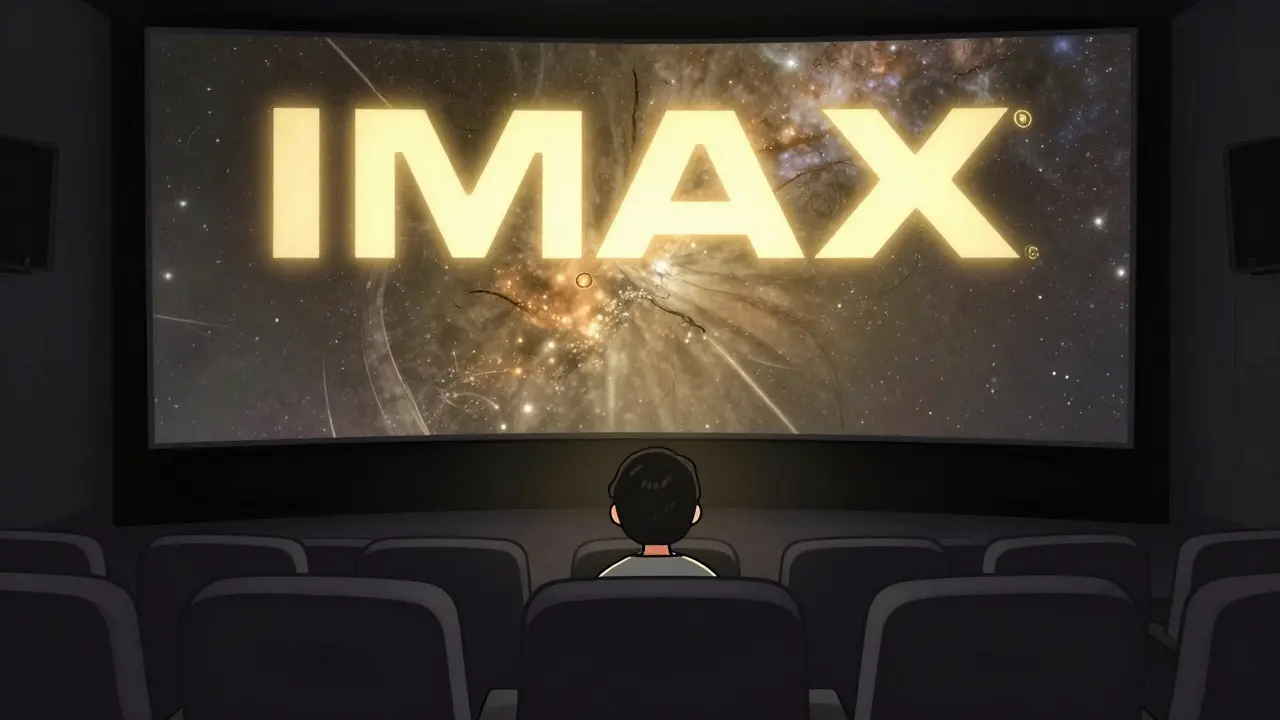
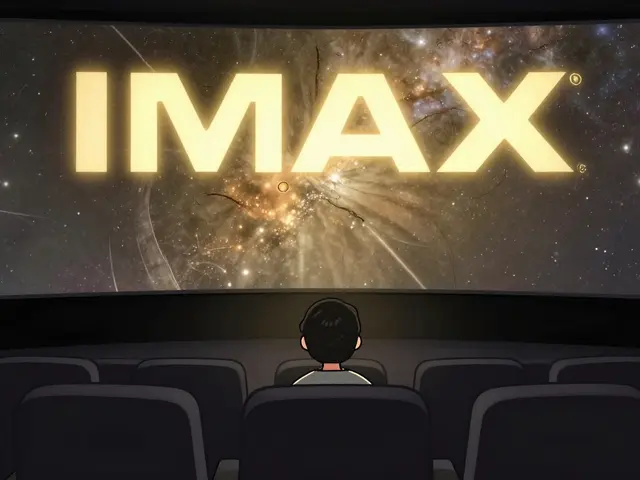
When you walk into a theater and the screen fills your entire vision, the sound wraps around you like a wave, and every explosion feels like it’s happening right next to your seat-you’re not just watching a movie. You’re paying for an experience. And that experience? It’s driving ticket sales up, sometimes by more than 50% compared to standard screens.
What Makes a Premium Large Format Different?
IMAX and Dolby Cinema aren’t just bigger screens and louder speakers. They’re engineered systems built from the ground up to change how you see and hear film. IMAX uses proprietary 15/70mm film projectors or dual 4K laser systems, delivering a 1.90:1 aspect ratio that fills the entire wall. Dolby Cinema, on the other hand, pairs 4K dual-laser projection with Dolby Vision HDR and Dolby Atmos sound-224 speakers placed precisely around the room, including overhead, to create sound that moves with the action.
Both formats cost theaters more to install. IMAX screens can run $1 million or more. Dolby Cinema setups often exceed $1.5 million. But the numbers don’t lie: audiences are willing to pay more. In 2025, IMAX tickets in Australia averaged $24.50, while standard digital screenings were $16.80. That’s a 46% price premium-and theaters still sell out.
Why People Pay More
It’s not just about size. It’s about immersion. A 2024 survey by the Australian Film Institute found that 68% of moviegoers who tried IMAX or Dolby Cinema said they’d pay extra again. Why? Because they felt like they were inside the movie. For blockbusters like Mad Max: Fury Road or Dune: Part Two, that feeling matters. Directors shoot with these formats in mind. Denis Villeneuve even shot Dune using IMAX-certified cameras, knowing the footage would only look right on an IMAX screen.
There’s also the social factor. Going to IMAX isn’t just about watching a film-it’s an event. People plan date nights around it. Families treat it like a special outing. It’s not a chore. It’s a reward.
IMAX vs. Dolby Cinema: What’s the Real Difference?
People often confuse them. They’re both premium. But they’re not the same.
IMAX is about scale. Its screens are taller, wider, and often curved to reduce distortion. The sound system uses 12 channels, with speakers mounted directly behind the screen. The image is brighter, with deeper blacks than standard digital, but Dolby Vision pushes contrast further.
Dolby Cinema is about precision. Dolby Vision HDR can display over a billion colors and contrast ratios up to 1,000,000:1. That means you see details in shadows that other screens lose-like the texture of sand in a desert scene or the glint of a blade in low light. Dolby Atmos doesn’t just play sound from speakers-it places each sound object in 3D space. A helicopter flies overhead. Raindrops land around you. A whisper comes from the back corner. It’s not surround sound. It’s spatial audio.
Here’s how they stack up:
| Feature | IMAX | Dolby Cinema |
|---|---|---|
| Screen Size | Up to 52 ft wide, taller aspect ratio | Standard large format, optimized for height |
| Projection | 15/70mm film or dual 4K laser | 4K dual-laser with Dolby Vision HDR |
| Sound System | 12-channel, screen-based speakers | Dolby Atmos with 224 speakers |
| Contrast Ratio | ~2,500:1 | Up to 1,000,000:1 |
| Seat Design | Reclining, steep rake for unobstructed view | Ultra-comfortable, noise-dampening materials |
| Typical Price Premium | 40-50% over standard | 45-60% over standard |
IMAX wins for spectacle. Dolby Cinema wins for detail. Most people can’t tell the difference in a single viewing. But after a few visits, they start to notice. And they start to choose.
Ticket Uplift: The Numbers Behind the Hype
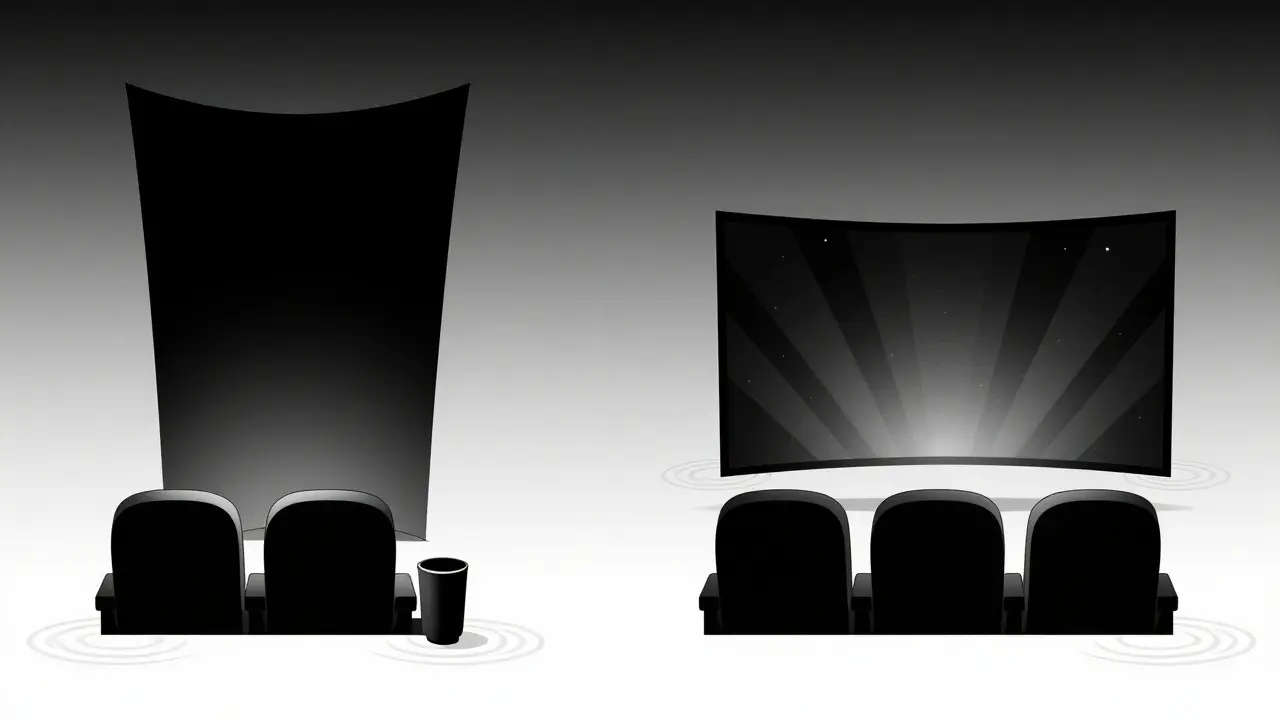
Box office data from 2025 shows that premium formats consistently lift ticket sales. In Australia, The Marvels earned 37% of its total box office from IMAX and Dolby screens alone-despite those screens making up only 18% of total seats. Wicked saw 52% of its opening weekend revenue come from premium formats, even though they accounted for just 15% of showtimes.
That’s not an accident. Studios now release exclusive content for these formats. IMAX gets extended scenes. Dolby Cinema gets color-graded versions with higher dynamic range. You won’t see those cuts on a standard screen. That exclusivity drives demand.
And theaters know it. Major chains like Event Cinemas and Hoyts now prioritize premium screens in new builds. They’re replacing four standard auditoriums with two IMAX and two Dolby Cinema rooms. The math works: higher ticket prices, fewer seats, same foot traffic, higher revenue per customer.
What’s Next for Premium Formats?
Streaming killed the middle ground. Why watch a movie on a 55-inch TV when you can sit in a chair that reclines to 160 degrees, with sound that makes your ribs vibrate, and a screen that fills your peripheral vision?
IMAX is rolling out new laser systems that support 8K resolution. Dolby is testing AI-enhanced audio that adapts to your seating position. Some theaters are even testing scent systems-like the smell of rain in a forest scene or smoke in a war film.
But the real driver isn’t tech. It’s experience. People aren’t paying for pixels. They’re paying for the feeling that they’re part of something bigger. And in a world where everyone’s glued to their phones, that’s rare.
Is It Worth It?
For a blockbuster with big visuals and sound design? Absolutely. For a quiet indie drama? Maybe not. But if you’re seeing something like Oppenheimer, Avatar: The Way of Water, or Mission: Impossible - Dead Reckoning Part One, you’re missing half the story if you’re not in a premium format.
And if you’re a theater owner? The answer is clear. Premium formats aren’t a luxury. They’re the future of cinema. Theaters that stick with standard screens are losing money-slowly, but surely.
Are IMAX and Dolby Cinema the same thing?
No. IMAX focuses on massive screens and immersive sound with a taller image format. Dolby Cinema emphasizes extreme contrast, color accuracy, and 3D spatial audio. They’re both premium, but they deliver different experiences. Some theaters even offer both.
Why are premium tickets so expensive?
Because the technology costs more. IMAX projectors, Dolby laser systems, specialized seating, and acoustic treatments all add up. Theaters also pay licensing fees to use the brands. The higher price covers those costs-and reflects what audiences are willing to pay for a better experience.
Do I need to book premium seats in advance?
Yes. Premium screens have fewer seats, and they sell out fast. Especially for new releases. If you want a good seat in IMAX or Dolby Cinema, book online as soon as tickets go live. Walk-ins often get stuck in the back row-or worse, get turned away.
Is Dolby Cinema better than IMAX for action movies?
It depends. IMAX makes explosions feel bigger because the screen is larger. Dolby Cinema makes them feel more real because of the sound precision and contrast. For fast-paced action, Dolby’s clarity helps you follow the motion. For sheer scale, IMAX wins. Try both and decide for yourself.
Can I watch any movie in IMAX or Dolby Cinema?
Technically, yes. But not all movies are optimized for them. Studios only send special versions of big-budget films to these theaters. A low-budget comedy might play on a standard screen even if it’s shown in an IMAX auditorium. Look for the IMAX or Dolby logo on the showtime listing to know you’re getting the full experience.
Final Thought: The Future of Moviegoing
The cinema isn’t dying. It’s evolving. People still want to gather. They still want to be amazed. Premium formats are the answer to streaming’s quiet dominance. They’re not just better screens. They’re better reasons to leave the house.
If you’ve only ever watched movies at home, you haven’t seen them yet. Go to an IMAX. Go to Dolby Cinema. Feel the difference. Then decide if it’s worth it.
Because the next time you watch a movie, you’ll know.