16
Production Budget Guide: Why Films Cost What They Do

You’ve probably watched a blockbuster and wondered why it cost $200 million while an indie darling managed to tell a compelling story for $5 million. The answer isn’t just about big explosions or A-list salaries. It’s about how money flows through the complex ecosystem of filmmaking.
Understanding a production budget is the financial blueprint that dictates every creative and logistical decision in a film project, from casting choices to shooting schedules changes how you view cinema. It transforms a movie from mere entertainment into a high-stakes business operation where art meets arithmetic.
This guide breaks down exactly where your ticket money goes, explaining the hidden costs behind the camera and why some films burn cash while others stretch every dollar.
The Two Worlds of Film Financing: Above and Below the Line
In Hollywood accounting, budgets are split into two distinct categories. If you want to understand why a film costs what it does, you need to grasp this division immediately.
Above-the-line costs are fixed expenses negotiated before production begins, primarily covering the creative talent such as actors, directors, producers, and screenwriters. These are called "above" because they sit at the top of the budget sheet. Think of them as the star power. If you cast a superstar who demands $20 million plus backend points, that number is locked in early. It doesn’t change whether you shoot for 30 days or 60. This category also includes the rights to the underlying material-like buying the rights to a bestselling novel or a true crime case file.
On the flip side, Below-the-line costs are variable expenses related to the physical production of the film, including crew wages, equipment rentals, locations, set construction, catering, and post-production work. These costs fluctuate wildly based on logistics. Shooting in New York City during winter costs significantly more than shooting in Georgia in summer due to location fees, weather delays, and union rates. Below-the-line is where most surprises happen. A simple scene might require a crane rental, a special effects rig, and three extra days of editing, all adding up quickly.
The ratio between these two buckets tells you everything about a film’s strategy. Big studio tentpoles often have massive above-the-line costs to guarantee box office draw, while indie films keep those low to invest heavily in below-the-line quality, ensuring good sound, lighting, and cinematography.
Pre-Production: Where Money Is Saved or Lost
Most people think filming starts when the cameras roll. In reality, the most expensive mistakes are made months earlier during pre-production. This phase involves planning every second of the shoot to avoid costly delays later.
Script development is the first investment. Rewrites can be expensive if the studio hires multiple ghostwriters to fix pacing issues or character arcs. Then comes casting. Auditions take time and money, but securing the right actor prevents reshoots. Imagine hiring a lead actor who clashes with the director; that tension can derail a schedule, costing thousands per hour in idle crew wages.
Location scouting is another major expense. Production designers visit dozens of potential sites, negotiating permits and insurance. Filming in a real hospital requires shutting down wings, paying security, and managing patient privacy laws. Alternatively, building a set in a warehouse allows total control but requires carpenters, painters, and props. Each choice has a price tag.
Scheduling is perhaps the most critical financial tool. The unit production manager creates a detailed call sheet for every day. If a scene requires a large crowd, it must be scheduled efficiently. Poor scheduling leads to "overtime," where crews work beyond standard hours at premium rates. One bad day of disorganization can wipe out weeks of savings.
Principal Photography: The Daily Burn Rate
Once cameras start rolling, the clock ticks loudly. The daily burn rate-the amount spent each day-is driven by several key factors.
- Crew Wages: A feature film crew can range from 50 to over 200 people. Unionized workers (like IATSE members in the US) have strict minimum pay scales. A gaffer, key grip, or best boy earns significant hourly wages, plus health and pension contributions.
- Equipment Rentals: High-end digital cinema cameras like the ARRI Alexa or RED Komodo cost thousands per day to rent. Lenses, lighting kits, dollies, and cranes add up. You’re not just renting the camera; you’re renting the entire support system.
- Locations and Permits: Shooting on location involves permit fees, police presence for traffic control, and sometimes bribes or community donations. Indoor stages offer consistency but come with high daily rental rates.
- Catering and Craft Services: Feeding 100+ people three times a day plus constant snacks is a massive logistical and financial undertaking. Happy crews work faster; hungry crews cause delays.
Weather is the silent budget killer. Rain can shut down outdoor shoots for days. Studios buy insurance against this, but premiums rise with risk. A tropical storm in Florida or snow in Canada can pause production entirely, keeping expensive equipment and staff on standby without progress.

Post-Production: Polishing the Diamond
Filmmaking doesn’t end when the director calls "cut." Post-production is where the raw footage becomes a coherent story, and it’s surprisingly expensive.
Visual Effects (VFX) are digital enhancements added after filming, ranging from removing modern signage from period pieces to creating entire fantasy worlds, often costing hundreds of dollars per frame. A single second of screen time contains 24 frames. If a VFX shot takes 10 hours to render and refine, the cost multiplies rapidly. Blockbusters with heavy CGI budgets can spend over $100 million just on visual effects.
Sound design and mixing are equally vital. Bad audio ruins a film faster than bad visuals. Sound editors layer dialogue, ambient noise, Foley effects (footsteps, cloth movement), and music. Dolby Atmos mixing requires specialized theaters and engineers to ensure immersive audio experiences.
Color grading sets the mood. A colorist adjusts contrast, saturation, and hue to create visual consistency across different shooting conditions. This artistic touch can transform a flat image into a cinematic masterpiece, but it requires expensive software and skilled labor.
Music licensing adds another layer. Using a famous song can cost tens of thousands of dollars for synchronization rights. Original scores composed by renowned musicians also command high fees. Independent filmmakers often opt for royalty-free libraries to save money, but studios invest heavily in iconic themes.
Contingency and Insurance: The Safety Net
No matter how well-planned a production is, things go wrong. That’s why budgets always include a contingency fund, typically 10% of the total budget. This reserve covers unexpected costs: an actor getting sick, equipment breaking, or a location becoming unavailable last minute.
Insurance is non-negotiable. Productions carry completion bond insurance, which guarantees investors that the film will be finished even if the director quits or the lead actor drops out. Without it, no studio would finance the project. Liability insurance protects against accidents on set, from minor injuries to property damage.
Tax incentives and rebates play a huge role in modern budgeting. Many regions, like Georgia, New Zealand, and various Canadian provinces, offer tax credits to attract productions. These rebates can reduce effective costs by 20-30%, influencing where films are shot. A movie might be set in London but filmed in Vancouver to maximize these financial benefits.
Marketing and Distribution: The Hidden Half
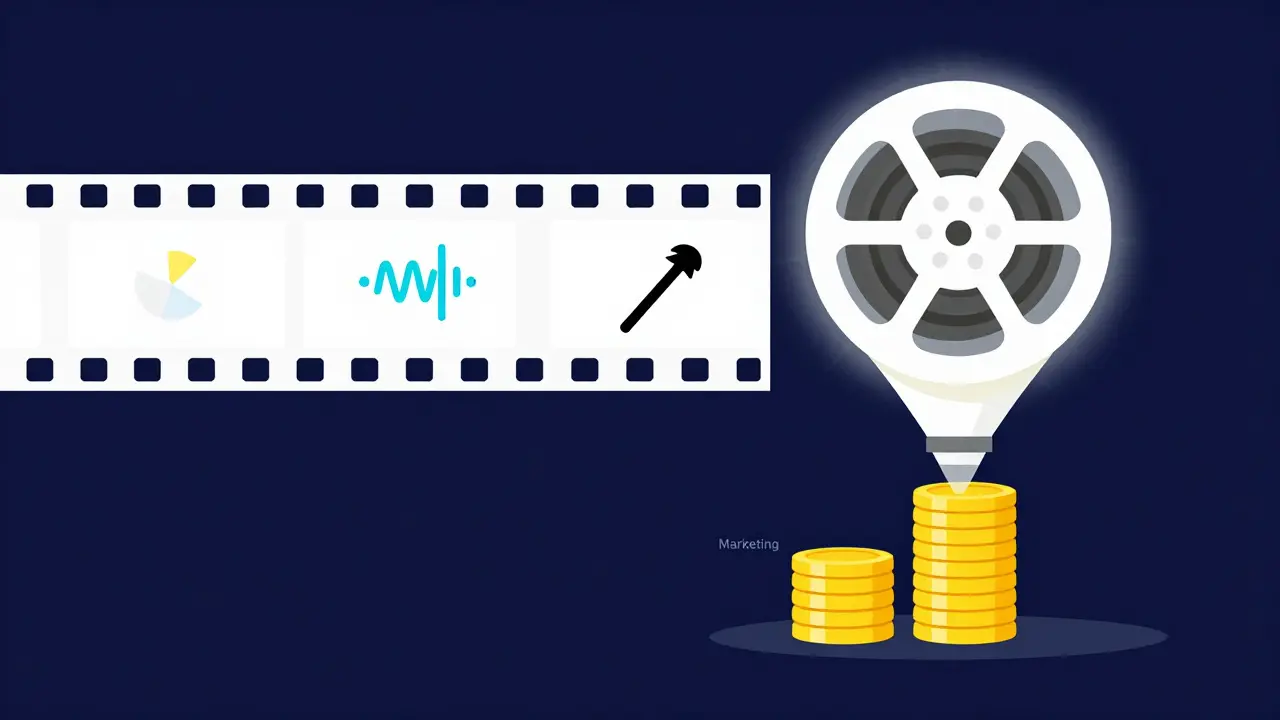
A common misconception is that the production budget equals the total cost of a film. In reality, marketing and distribution often match or exceed production costs. For every dollar spent making a movie, another dollar may be spent selling it.
Trailers, TV spots, social media campaigns, and premiere events require substantial funding. Global releases mean translating materials into multiple languages and tailoring ads to different cultures. Streaming platforms now handle much of this internally, but theatrical releases still rely heavily on traditional advertising.
Distribution deals determine how revenue is shared. Theaters take a cut, usually around 50%, leaving the rest for distributors and producers. Recoupment curves show how long it takes for a film to earn back its costs. Most movies don’t turn a profit until they hit streaming, DVD, or television syndication years later.
| Category | Estimated Cost | Percentage |
|---|---|---|
| Above-the-Line (Talent & Rights) | $15,000,000 | 30% |
| Below-the-Line (Production Crew & Gear) | $20,000,000 | 40% |
| Post-Production (VFX, Sound, Edit) | $8,000,000 | 16% |
| Contingency Fund | $5,000,000 | 10% |
| Insurance & Legal | $2,000,000 | 4% |
Why Indie Films Feel Different
Independent films operate under different constraints. With limited budgets, they prioritize storytelling over spectacle. Directors like Greta Gerwig or Barry Jenkins achieved critical acclaim with modest means by focusing on strong scripts and naturalistic performances.
Indie productions often use smaller crews, fewer locations, and available light to reduce costs. They might shoot on digital formats that eliminate film stock expenses. However, they sacrifice scale. No massive car chases or alien invasions. Instead, they rely on dialogue, emotion, and intimate settings.
This approach allows creative freedom. Without studio interference, filmmakers can explore niche topics or unconventional structures. While their budgets are tiny compared to blockbusters, their impact can be profound, launching careers and sparking cultural conversations.
What is the biggest expense in a movie budget?
For big studio films, talent salaries (above-the-line) and visual effects (below-the-line) are usually the largest costs. For independent films, crew wages and equipment rentals dominate since they lack star power and heavy CGI.
How do tax incentives affect where movies are filmed?
Tax credits can reduce production costs by 20-30%. Regions like Georgia, New Zealand, and Toronto offer generous rebates, making them popular shooting locations regardless of the story's setting.
What happens to the contingency fund if it isn't used?
Unused contingency funds typically return to the investors or producers. It serves as a buffer, so any leftover money improves the final profit margin rather than being wasted.
Do actors get paid more for bigger budgets?
Generally yes. Higher budgets allow studios to afford A-list stars whose names help sell tickets. However, some actors take lower pay for passion projects or equity stakes in exchange for future profits.
Is post-production really that expensive?
Yes, especially for VFX-heavy films. Complex digital effects require teams of artists working for months. Even simpler films spend significantly on sound design, color grading, and editing to achieve professional quality.