12
The Seventh Seal Explained: Ingmar Bergman’s Medieval Meditation on Death
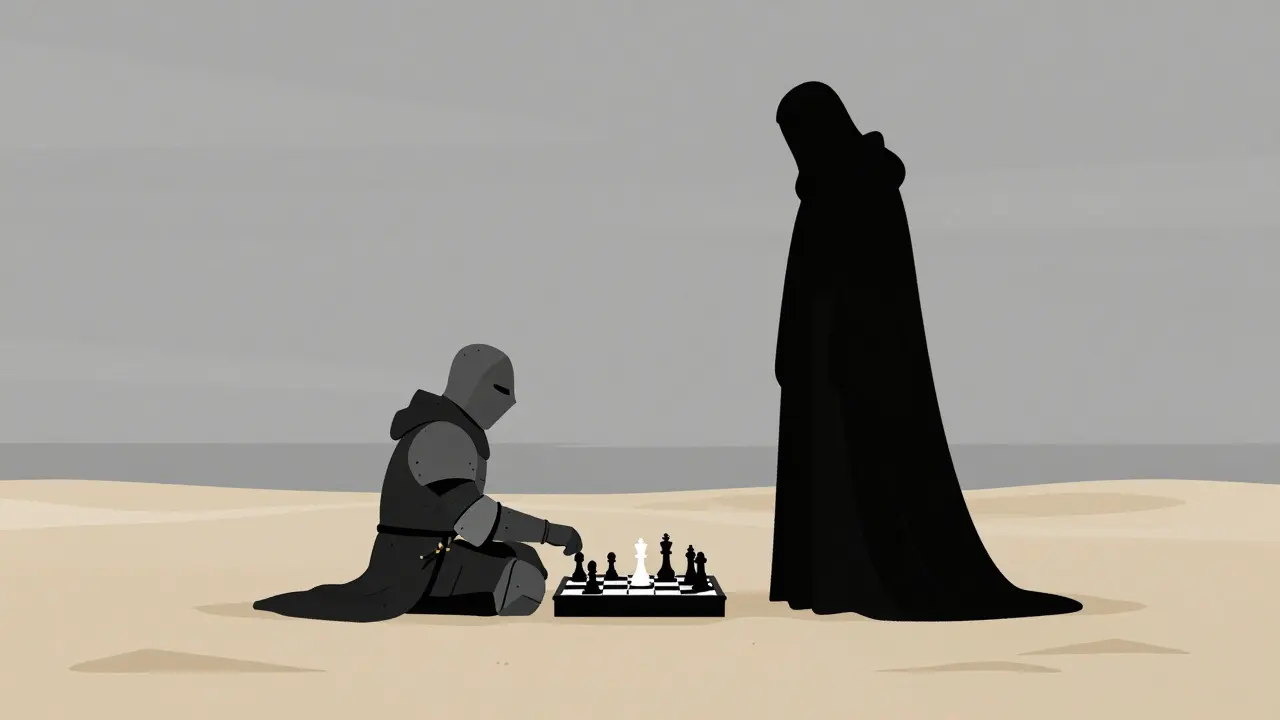
The Seventh Seal isn’t just a movie. It’s a silent conversation between a knight and death, played out on a barren beach under a gray sky. Released in 1957, this Swedish film by Ingmar Bergman has haunted audiences for decades-not because of special effects or fast pacing, but because it asks the hardest question humans have ever faced: What does it mean if there’s no God?
What happens in The Seventh Seal?
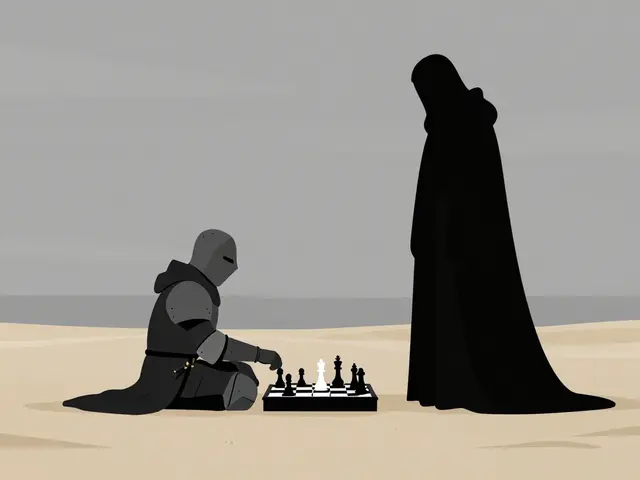
The story follows Antonius Block, a knight returning home from the Crusades. Europe is ravaged by the Black Death. The land is empty. Fields are silent. People are dying. And on the shore, Block meets Death himself-tall, cloaked, and calm. They play a game of chess. Not for money or glory. For time. Every move buys him another hour. Each move is a chance to find meaning before the final checkmate.
Along the way, Block meets a traveling actor, his wife, a jester, and a young couple. They talk about faith, fear, and whether anything we do matters if death is the only truth. One man claims he saw a miracle-a child brought back to life. Another says he saw nothing but smoke. No angels. No divine voice. Just silence.
The chess game isn’t metaphorical. It’s real. You see Death. You hear his voice. You watch him move pieces with cold precision. And you realize: this isn’t fantasy. This is what doubt looks like when it’s not whispered in a church, but shouted across a wasteland.
Why does the film feel so heavy?
Bergman didn’t make this film to entertain. He made it because he was terrified.
In interviews, he said he wrote The Seventh Seal during a period of deep spiritual crisis. He had been raised in a strict Lutheran household. His father was a harsh, silent minister. Bergman spent childhood nights praying for God to speak. He never heard anything. By his 30s, he was convinced God didn’t exist-or worse, didn’t care.
The film’s black-and-white visuals aren’t just artistic. They’re emotional. The shadows are thick. The sky is always overcast. The trees look dead. Even the sea feels like a tomb. There’s no music except for the occasional lute or church bell. No grand orchestras. No heroic themes. Just silence. And the sound of footsteps on gravel.
When Block finally loses the game, he doesn’t scream. He doesn’t beg. He just nods. He accepts it. That’s the most chilling part. Not the death. The peace.
What’s the real meaning behind the chess game?
The chess game is the film’s core. But it’s not about winning. It’s about playing.
Block doesn’t play to escape death. He plays to prove he’s still alive. Every move is a question: Does my life mean anything? When he shares a quiet moment with his wife, when he helps a young couple make love under the stars, when he protects a child from a mob-he’s not doing it for heaven. He’s doing it because it’s all he has left.
Bergman said, "I don’t believe in God. But I believe in the human act." That’s the heart of the film. You don’t need divine approval to matter. You just need to care. To touch someone. To hold their hand in the dark.
The knight’s journey isn’t about finding God. It’s about finding himself. And that’s why, even today, people still watch this film. Not because they want answers. But because they need to know they’re not alone in asking the question.
How does the film connect to medieval history?
The Seventh Seal is set in 14th-century Sweden, during the Black Death. Around 60% of Europe’s population died between 1347 and 1351. Churches were empty. Priests fled. People burned witches, blamed Jews, and turned to wild religious rituals. No one knew why God let this happen.
Bergman didn’t invent this world. He pulled from real records. Medieval frescoes. Church paintings. The Dance of Death murals that showed kings, bishops, and peasants all dancing with skeletons. Death didn’t care who you were. You were all just meat waiting to rot.
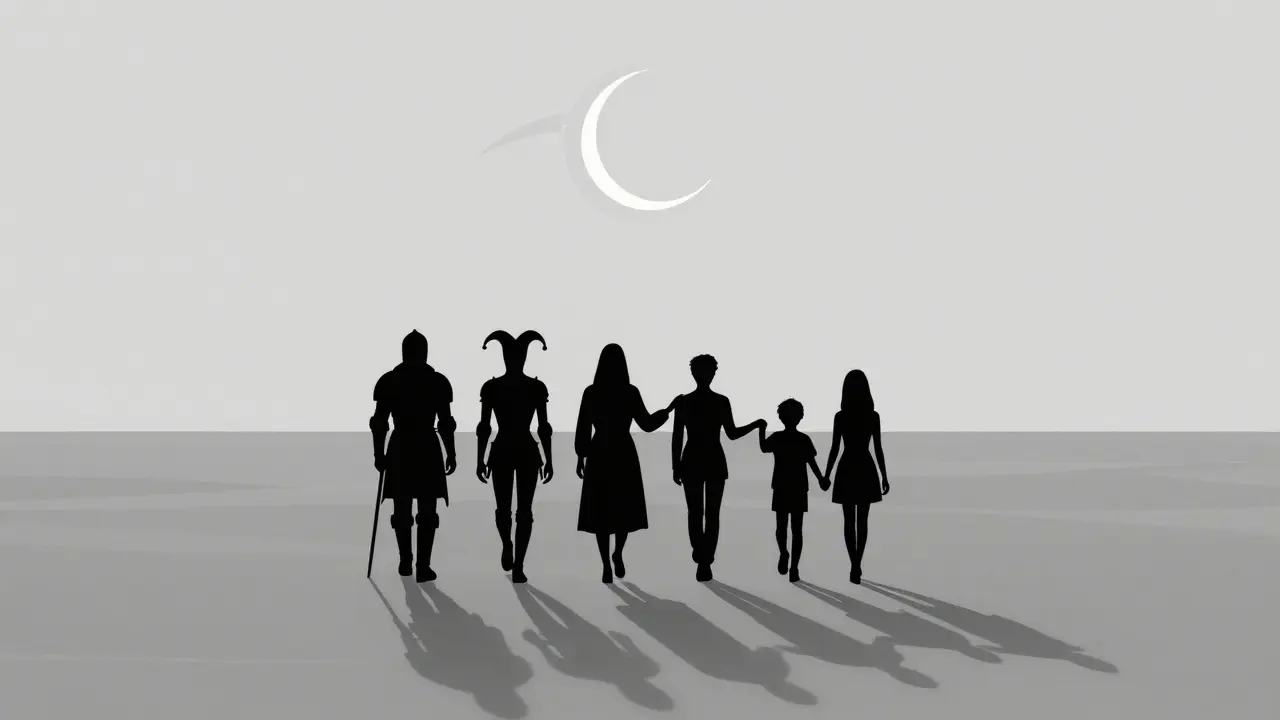
The film’s characters are based on real archetypes: the knight (faith in action), the jester (laughter as armor), the actress (art as survival), the couple (love as rebellion). They’re not symbols. They’re people trying to live while the world crumbles.
Even the final scene-where the whole group walks into the distance, carried by Death’s shadow-is taken from a 15th-century Swedish church painting. Bergman didn’t invent the image. He just made it move.
Why is this film still relevant today?
It’s 2026. We don’t have the plague. But we have other silences.
People scroll through feeds filled with curated happiness while their hearts feel hollow. We’re told to "find your purpose," "manifest your destiny," "be your best self." But what if none of that works? What if the universe doesn’t answer? What if you wake up one day and realize no one is listening?
The Seventh Seal doesn’t offer comfort. It offers truth. And sometimes, truth is the only comfort left.
Block doesn’t get a miracle. He doesn’t hear God’s voice. He doesn’t get a second chance. But he shares a meal. He kisses his wife. He holds a child. He makes someone laugh. In a world where everything is falling apart, those are the only things that matter.
That’s why this film still lives. It doesn’t tell you what to believe. It asks: What will you do while you’re still here?
What makes Bergman’s style unique?
Bergman didn’t use flashy cameras or quick cuts. He used silence. Long takes. Faces. Eyes.
Watch the scene where Block and Death play chess. The camera doesn’t move. It just watches. Their faces. Their hands. The board. The wind. No music. No narration. Just two men in a quiet world, playing a game that means everything and nothing.
His actors didn’t perform. They lived. Max von Sydow, as Block, didn’t act like a knight. He moved like a man who’d seen too much. His eyes weren’t filled with drama. They were filled with exhaustion. That’s why we believe him.
Bergman’s films aren’t about plot. They’re about presence. You don’t watch them to be entertained. You watch them to feel something real.
What did critics and audiences say at the time?
When The Seventh Seal premiered at the Cannes Film Festival in 1957, it won the Grand Prix. Critics called it "profound," "terrifying," "a masterpiece." But audiences? Many walked out. One man shouted, "I came to see a movie, not a sermon!"
It took years for the film to find its audience. In the U.S., it became a cult favorite in college dorms and art house theaters. By the 1970s, it was required viewing in film schools. Today, it’s in the Criterion Collection. It’s taught in philosophy classes. It’s referenced in songs, books, and other films-from Blade Runner 2049 to Black Mirror.
It’s not popular. But it’s essential.
What’s the legacy of The Seventh Seal?
Bergman didn’t change cinema with explosions or special effects. He changed it with a quiet question: Is there meaning in a world without God?
He gave us a knight who plays chess with Death. Not to win. But to prove he’s still alive.
That’s why we still watch it. Not because we want answers. But because we’re still asking the same questions.
The film doesn’t tell you what to believe. It just asks: What will you do before the last move?