13
The Shining Review: Why Stanley Kubrick’s The Shining Remains a Horror Masterpiece
There is a specific kind of dread that comes from watching The Shining, Stanley Kubrick's 1980 adaptation of Stephen King's novel. It isn’t the jump scare of a ghost popping out from behind a door. It is the slow, creeping realization that the man you are watching is unraveling, piece by piece, in front of your eyes. Even decades later, this film holds a mirror up to domestic violence, isolation, and the fragility of sanity.
You might have seen it once as a child, terrified by the twin girls or the blood-filled elevator. But if you watch it now, with fresh eyes, you see something else entirely. You see a masterclass in visual storytelling where every frame is calculated, every color chosen for its psychological impact, and every sound designed to make your skin crawl. This isn't just a movie about a haunted hotel; it is a study of how environment shapes behavior.
The Overlook Hotel: A Character in Its Own Right
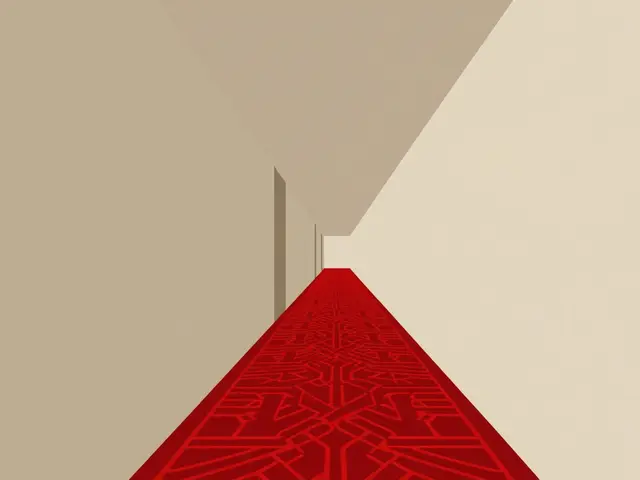
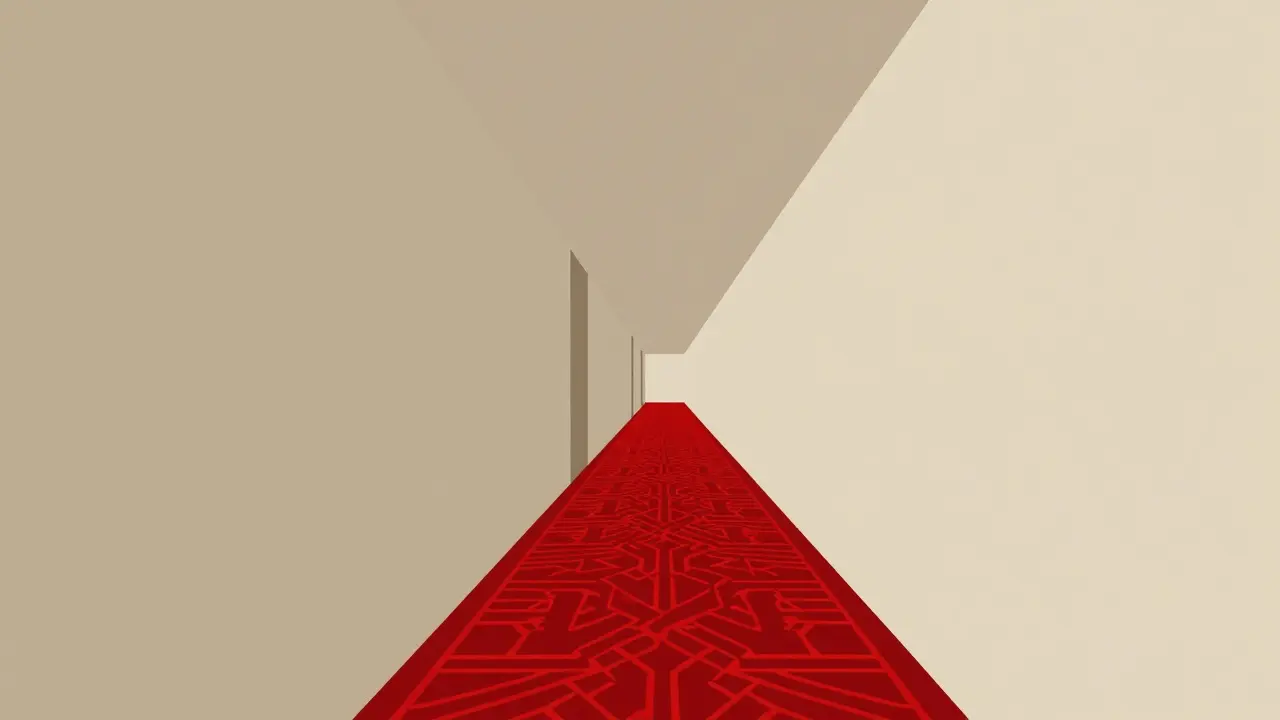
To understand why this film works, you first have to look at the setting. The Overlook Hotel is not merely a backdrop. It is the antagonist. Kubrick didn't want a spooky castle on a hill. He wanted a place that felt modern, sterile, and yet deeply wrong. The architecture is brutalist, with long, symmetrical corridors that stretch into infinity. These hallways create a sense of disorientation. You never quite know which way is forward or backward.
The design of the hotel draws heavily from real-world structures like the Timberline Lodge on Mount Hood, but Kubrick twisted it. He added impossible geometry. If you map the layout, it doesn't make sense. Rooms appear on floors that shouldn't exist. Doors lead to nowhere. This spatial confusion mirrors the mental state of the protagonist. As the family gets deeper into winter, the hotel seems to grow around them, trapping them in a labyrinth of their own making.
The color palette is equally deliberate. Kubrick used muted earth tones-browns, beiges, and creams-for most of the interior. This creates a feeling of warmth that feels fake, like a trap. Then, he introduces stark contrasts. The bright yellow wallpaper in the children's room screams against the dull surroundings. The red carpet pattern, known as the 'Holly' motif, pulses with energy. It looks almost like brain matter or neural pathways, hinting at the madness taking root in the walls.
Jack Torrance: More Than Just a Madman
Let’s talk about Jack Nicholson’s performance as Jack Torrance. In Stephen King’s book, Jack is more sympathetic, a victim of circumstance who tries hard to resist the evil. Kubrick stripped that away. His Jack is already broken before he arrives at the hotel. He is an alcoholic, a failed writer, and a man prone to violent outbursts.
Nicholson plays him with a terrifying subtlety at first. Watch his eyes in the early scenes. There is a flatness there, a lack of empathy. When he hits his son Danny with a wrench, it is casual, almost bored. This establishes that the danger isn't coming from outside; it is coming from within. The hotel doesn't create the monster; it reveals it.
The famous line, "Here's Johnny!" is often parodied today, but in context, it is horrifying. It represents the complete shattering of social norms. Jack bursts through the drywall, grinning wildly, holding a baseball bat. It is chaotic, messy, and visceral. Unlike the polished elegance of the rest of the film, this moment is raw violence. It signals the point of no return.
Danny and Wendy: The Victims of Isolation
While Jack descends into madness, his wife Wendy Torrance, played by Shelley Duvall, becomes increasingly fragile. Duvall’s performance is intense and sometimes criticized for being too hysterical, but that hysteria is exactly what makes it realistic. Imagine being trapped in a frozen wasteland with a husband who is slowly turning into a killer, while your young son communicates with ghosts. Her breakdown is a rational response to an irrational situation.
Then there is Danny, played by Danny Lloyd. He is the audience surrogate. Through his eyes, we see the supernatural elements. His ability to "shine" allows him to perceive the hotel's dark history. The scene where he rides his tricycle through the empty corridors is iconic. The camera follows him at a low angle, making the vast, empty spaces feel predatory. We feel his vulnerability because we are literally looking up at the looming threat.
Visual Storytelling and Symbolism
Kubrick was obsessed with symmetry and precision. He used a Steadicam extensively, allowing for smooth, gliding shots that follow characters through the hotel. This technique creates a voyeuristic feeling. You feel like you are floating behind them, unable to intervene. It also emphasizes the scale of the hotel compared to the smallness of the humans inside it.
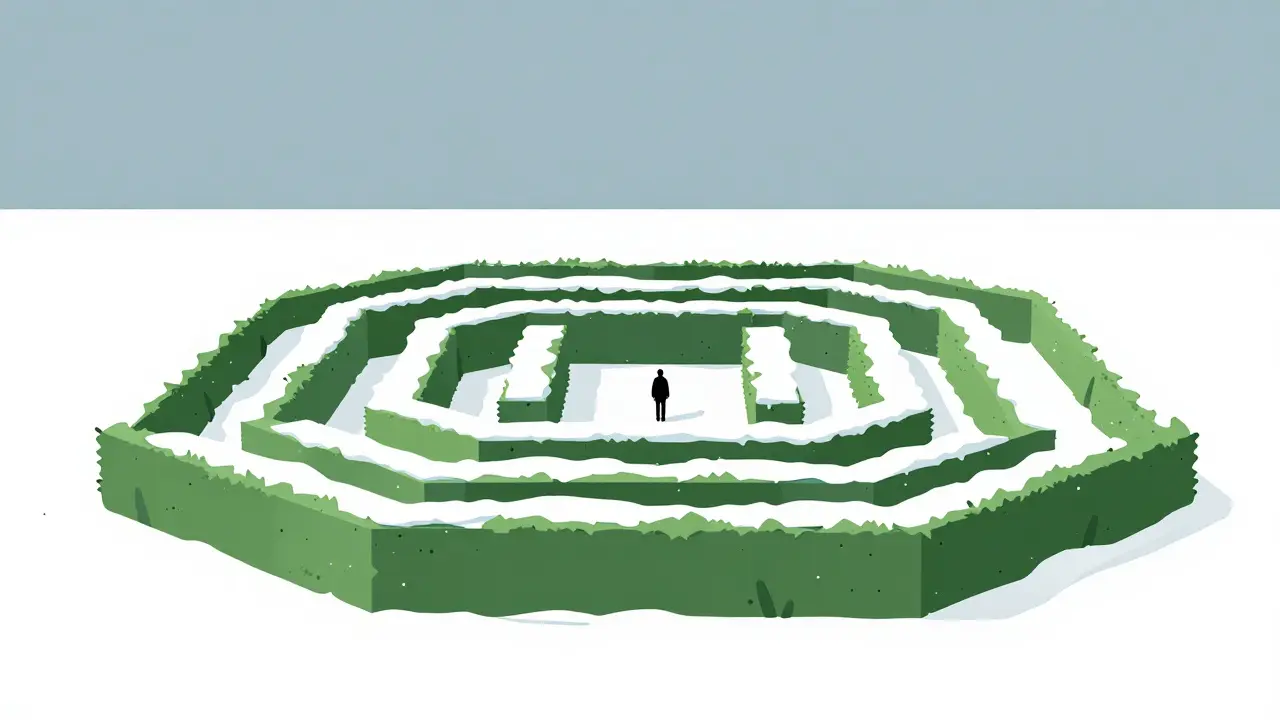
Consider the maze. The hedge maze outside is a physical manifestation of the mental traps the characters face. In the final chase scene, the snowstorm obscures visibility, turning the maze into a white void. Jack wanders blindly, lost in his own mind, while Wendy navigates by instinct and love. The maze represents the complexity of human psychology-easy to enter, nearly impossible to leave without getting lost.
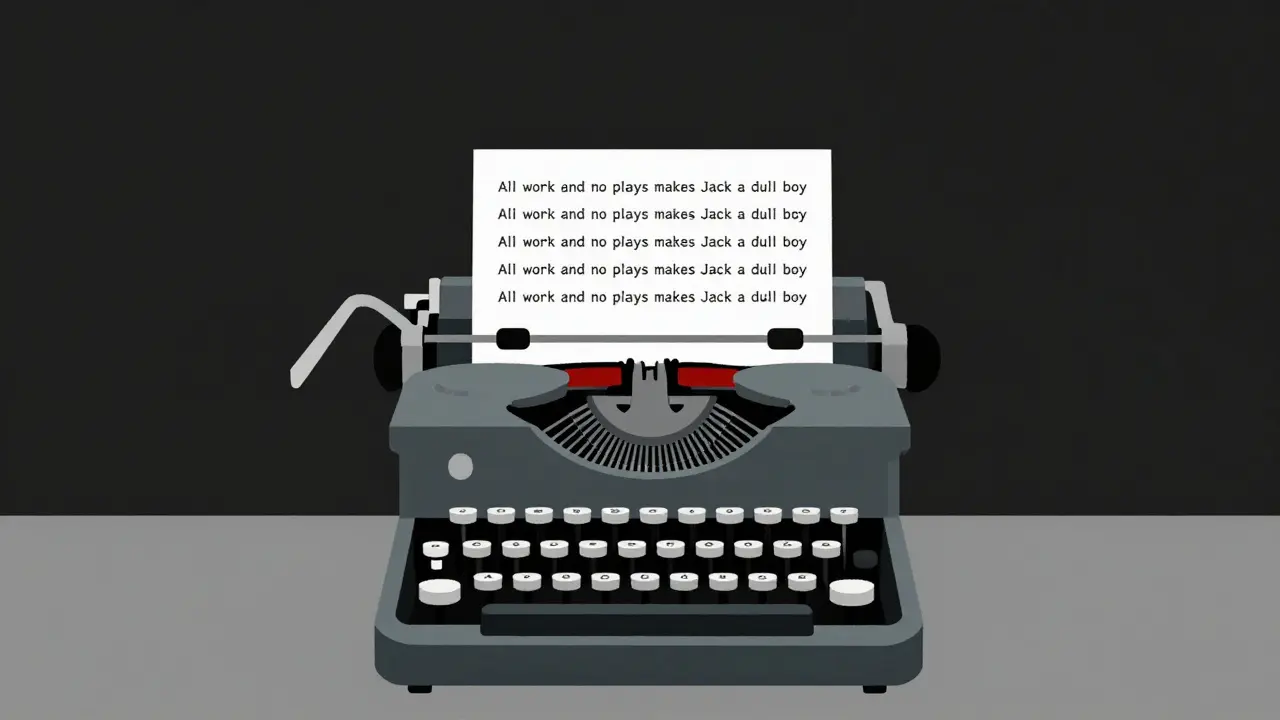
Another key symbol is the typewriter. Jack spends hours staring at a blank page, typing the same sentence over and over: "All work and no play makes Jack a dull boy." This repetition drives him insane. It highlights the futility of his creative efforts and his growing obsession. The typewriter becomes a tool of torture, both for Jack and for the audience who watches his sanity erode with each keystroke.
Sound Design: The Silence Speaks Volumes
You can’t talk about this film without mentioning the sound. Or rather, the lack of it. Composer Wendy Carlos and Rachel Elkind created a score using synthesizers, which was unusual for a horror film at the time. Instead of traditional orchestral swells, they used eerie, droning sounds that mimic the hum of electricity or the wind outside.
The use of silence is even more powerful. In many scenes, there is no music at all. Just the creaking of floorboards, the distant echo of footsteps, or the heavy breathing of the characters. This forces you to listen closely, heightening your anxiety. Every small noise becomes a potential threat. The sound design makes you feel physically uncomfortable, as if the air itself is thick with tension.
Kubrick vs. King: Two Different Stories
If you read Stephen King’s novel, you’ll notice significant differences. King loved the story but hated the film. He felt Kubrick misunderstood the core theme. For King, the hotel was evil, and Jack was fighting against it. For Kubrick, the hotel was neutral, reflecting Jack’s inner darkness.
This difference changes everything. In the book, the ending is hopeful. The hotel burns down, and the family escapes, scarred but alive. In the film, the ending is ambiguous. The photo from 1921 shows Jack standing in the bar, smiling. Did he die? Was he always part of the hotel? Kubrick leaves it open to interpretation, inviting viewers to debate the meaning. This ambiguity is what keeps the film relevant. It doesn’t give you easy answers; it gives you questions.
| Aspect | Film (Kubrick) | Novel (King) |
|---|---|---|
| Source of Evil | Internal (Jack's psyche) | External (Hotel's malevolence) |
| Jack's Character | Already unstable, abusive | Struggling, sympathetic |
| Ending | Ambiguous, cyclical | Hopeful, resolution |
| Tone | Cold, detached, surreal | Emotional, gothic, visceral |
Why It Still Haunts Us Today
Decades after its release, The Shining remains a cultural touchstone. It has been referenced, parodied, and analyzed endlessly. But beyond the memes and trivia, it endures because it taps into universal fears. Fear of losing control. Fear of isolation. Fear of the people closest to us.
In our modern world, where remote work and digital isolation are common, the themes of the film feel more relevant than ever. We spend more time alone, surrounded by screens, disconnected from others. The Overlook Hotel is a metaphor for any place that isolates us from reality, whether it’s a physical building or a mental state.
Kubrick didn’t just make a scary movie. He made a psychological thriller that challenges you to look deeper. He invites you to question what you see, to doubt your perceptions, and to confront the shadows within yourself. That is why, forty years later, we are still talking about it. That is why it remains a masterpiece.
Is The Shining based on a true story?
No, The Shining is not based on a true story. It is a work of fiction adapted from Stephen King's 1977 novel. However, some elements were inspired by real places, such as the Timberline Lodge on Mount Hood in Oregon, which served as inspiration for the exterior of the Overlook Hotel.
What does the photo at the end mean?
The photo from the Winter Dance Party of 1921 shows Jack Torrance standing in the bar, smiling. This suggests that Jack has always been part of the hotel's history, implying a cyclical nature of time and evil. It implies that Jack died in the past and is trapped in the hotel forever, or that the hotel consumes men like him across different eras.
Why did Stephen King hate the movie?
Stephen King disliked the film because he felt Stanley Kubrick changed the fundamental character of Jack Torrance. In the book, Jack is a sympathetic figure battling external evil. In the film, Jack is portrayed as inherently flawed and abusive from the start, which King felt undermined the tragedy of his downfall.
What is the significance of the number 237?
Room 237 is a mysterious room in the hotel that appears to change depending on who enters it. For Danny, it is a safe space with a woman in the bathtub. For Dick Hallorann, it is a storage room. For Jack, it is a brothel. The number itself may reference various historical events or simply serve as a symbol of the hotel's shifting reality and hidden secrets.
Did Stanley Kubrick intend for the film to be ambiguous?
Yes, Kubrick was known for his preference for ambiguity. He rarely explained his films explicitly, preferring to let viewers interpret the symbols and endings for themselves. This approach encourages multiple viewings and ongoing discussion, keeping the film relevant and engaging for new audiences.