23
First-Person vs. Third-Person Reviews: How to Choose the Right Voice
The Voice Behind Your Words Matters
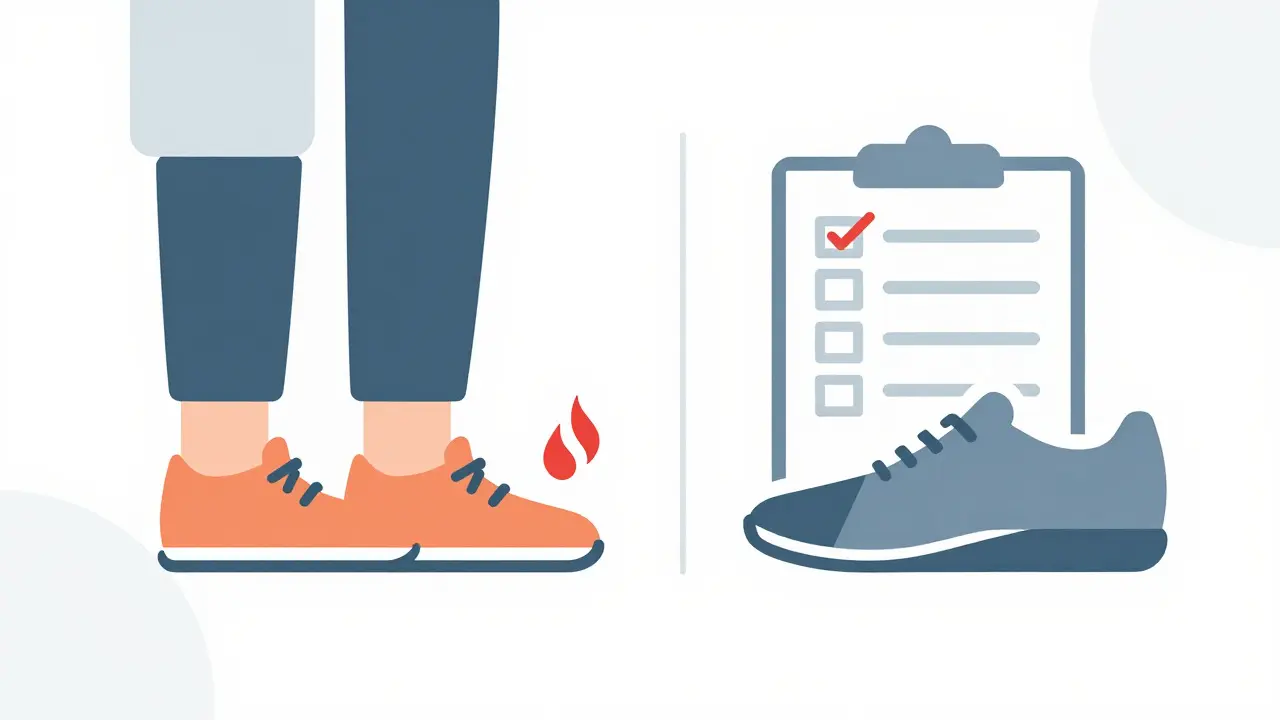
Imagine you just bought a new pair of running shoes. You lace them up, hit the pavement, and after three miles, your heel blisters. You want to warn others. Do you write, "I hated these shoes because they ruined my feet," or do you write, "These shoes are known for causing discomfort"? The difference isn't just grammar. It’s the difference between sharing an experience and stating a fact. This choice defines how readers trust you.
When you sit down to write a product review that evaluates features, performance, and value, the perspective you choose shapes the entire narrative. First-person reviews rely on personal experience. Third-person reviews aim for objective analysis. Neither is inherently better. They serve different purposes, audiences, and platforms. Picking the wrong one can make your advice feel irrelevant or untrustworthy.
Let’s break down when to use each voice, why it works, and how to switch between them without confusing your reader.
Understanding First-Person Review Writing
First-person review writing is a style where the author uses pronouns like 'I', 'me', and 'my' to describe their direct interaction with a product or service. This approach puts the writer front and center. It tells the reader exactly what happened during your specific encounter.
This style thrives on authenticity. Readers connect with stories, not just specifications. When you say, "The battery died on me during my flight," you create a vivid scenario. The reader imagines themselves in that situation. If they travel often, they care. If they never fly, they might skip over it. That specificity is both the strength and the limitation of this voice.
First-person writing builds authority through vulnerability. Admitting that you struggled to set up a router makes your eventual success more credible than claiming it was "easy." People trust humans who admit flaws. In the world of online reviews, especially on platforms like Amazon or Yelp, this personal touch is expected. Users want to know if the product fits *their* life, and your story helps them visualize that fit.
- Best for: Consumer goods, lifestyle products, services, apps, and experiences (restaurants, hotels).
- Tone: Conversational, subjective, anecdotal.
- Key Benefit: High relatability and emotional connection.
The Case for Third-Person Objectivity
Third-person review writing is a detached style that avoids personal pronouns, focusing instead on observable facts, technical specifications, and generalized user consensus. Here, the writer disappears. The product takes center stage. You don’t say, "I found the interface confusing." You say, "The interface lacks intuitive navigation cues."
This approach feels more scientific. It strips away bias-or at least pretends to. For high-stakes purchases, readers often prefer this distance. If someone is buying enterprise software or a medical device, they don’t care about your weekend project. They care about compatibility, uptime, and clinical trials. Third-person writing signals professionalism and rigor.
However, pure objectivity is a myth. Every reviewer has biases. The trick in third-person writing is to acknowledge data sources rather than personal feelings. Instead of saying, "It’s fast," you cite benchmarks: "Independent tests show a 15% speed increase over the previous model." This shifts the authority from "me" to "the data," which can be more persuasive for skeptical buyers.
- Best for: Technical hardware, B2B software, academic critiques, and industry reports.
- Tone: Formal, analytical, neutral.
- Key Benefit: Perceived credibility and broad applicability.

Comparing the Two Approaches
| Feature | First-Person (Subjective) | Third-Person (Objective) |
|---|---|---|
| Pronouns Used | I, Me, My, We | It, They, The Product, Users |
| Primary Goal | Share personal experience | Provide factual analysis |
| Trust Factor | Relatability & honesty | Expertise & data accuracy |
| Reader Expectation | "Will this work for me?" | "Is this technically sound?" |
| Risk | Perceived as biased or niche | Perceived as dry or impersonal |
Notice how the risks differ. First-person reviews risk being too narrow. If you review a coffee maker based solely on your love for dark roast, espresso lovers might find your critique useless. Third-person reviews risk being boring. A list of specs doesn’t tell you if the machine is loud enough to wake your baby. Both styles have blind spots. Smart writers mix them strategically.
When to Blend Perspectives
You don’t always have to pick one lane. Many successful tech blogs and consumer guides use a hybrid approach. They start with third-person context-market position, price point, competitor landscape-and then pivot to first-person testing results.
For example, a laptop review might begin: "The XYZ Laptop targets professional video editors with its dedicated GPU." (Third-person). Then it transitions: "During my four-hour rendering test, the fans grew audible but manageable." (First-person). This structure gives the reader the big picture before zooming in on the human element.
This blend works because it answers two different questions. The third-person part answers, "What is this thing?" The first-person part answers, "How does it feel to use?" By separating these sections clearly, you avoid the confusion that comes from jumping back and forth mid-sentence.

Avoiding Common Pitfalls
One major mistake writers make is mixing voices within the same paragraph. It creates cognitive dissonance. If you’re telling a story about your morning routine, stick to "I." If you’re listing battery stats, stick to "It." Switching abruptly breaks the flow.
Another pitfall is assuming first-person means "unprofessional." You can be personal and precise. Saying, "I measured the noise level at 40 decibels," is still first-person, but it includes hard data. Conversely, don’t assume third-person means "boring." You can write engagingly without using "I." Focus on active verbs and clear descriptions of the product’s behavior.
Also, consider your audience’s intent. If they are browsing Reddit or a forum, they expect raw, first-person opinions. If they are reading a publication like *The Verge* or *Consumer Reports*, they expect a structured, third-leaning analysis. Match the platform’s culture.
Practical Tips for Choosing Your Voice
- Define your goal. Are you trying to help someone decide if they’ll *like* the product (first-person) or if it will *work* for their needs (third-person)?
- Know your expertise. If you’re a certified technician, lean into third-person data. If you’re a power user, share your workflow struggles and wins.
- Check the competition. Look at top-ranking reviews for similar products. What voice do they use? Differentiating slightly can help you stand out, but deviating too far can confuse readers.
- Be transparent. If you’re writing in first-person, disclose conflicts of interest. Did the company send you the product? Honesty boosts credibility in subjective reviews.
Ultimately, the best review is the one that helps the reader make a decision. Sometimes that requires a heartfelt story about how a jacket kept you warm in Brisbane rain. Other times, it requires a cold, hard look at thread count and water resistance ratings. Know which tool you need for the job.
Can I switch between first-person and third-person in one review?
Yes, but do it deliberately. Use third-person for general facts, specs, and market context. Switch to first-person when describing your specific usage experience, testing results, or personal preferences. Avoid switching mid-sentence or within short paragraphs to maintain clarity.
Which voice is better for SEO?
Search engines favor content that satisfies user intent. For "best [product]" queries, users often want comparisons and specs (third-person). For "is [product] worth it" or "experience with [product]," users seek personal anecdotes (first-person). A balanced approach usually performs best by capturing both informational and experiential search intents.
Does first-person writing seem less professional?
Not necessarily. First-person writing can be highly professional if supported by evidence. Sharing detailed, measurable experiences (e.g., "I tested the camera in low light for three hours") adds credibility. The key is consistency and transparency about your testing methods.
How do I handle bias in first-person reviews?
Acknowledge your background. If you’re a photographer reviewing a lens, state that. Explain why certain features matter to you specifically. This contextualizes your opinion and helps readers determine if your priorities align with theirs. Transparency turns potential bias into valuable context.
Should B2B reviews use third-person exclusively?
Mostly yes, but not entirely. B2B buyers value ROI and integration capabilities, which are best described objectively. However, including brief case studies or team testimonials (first-person elements) can demonstrate real-world application. Use third-person for the core analysis and first-person for illustrative examples.