28
Rating Systems in Reviews: Stars, Scales, and Recommendations

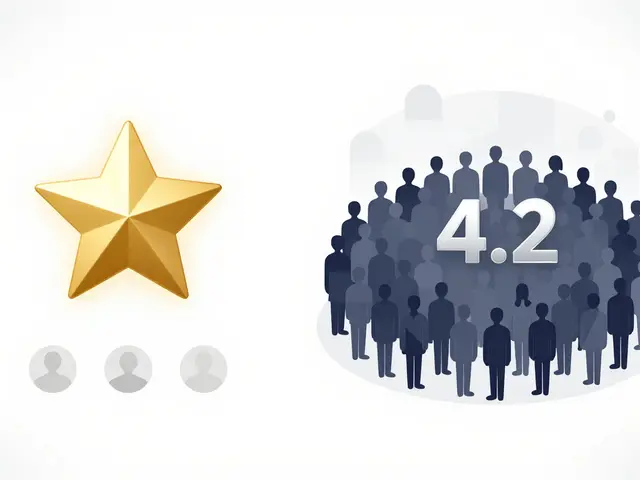
Picture this: you’re scrolling through a hotel booking site. One listing has 4.8 stars based on 10 reviews. Another has 4.2 stars but boasts 5,000 reviews. Which one do you pick? Most people grab the first one without thinking twice. But here’s the catch-that 4.8 might be from friends of the owner, while the 4.2 reflects real-world consistency. This is the power and the peril of rating systems. They are the silent gatekeepers of our digital decisions, influencing everything from what restaurant we eat at to which software our company buys.
We’ve all been conditioned to trust numbers. A five-star rating feels like a gold medal; a one-star feels like a slap in the face. But have you ever stopped to wonder why we use stars in the first place? Why not just say "good" or "bad"? The truth is, these systems aren’t just about measuring quality-they’re psychological tools designed to simplify complex experiences into digestible data points. In this guide, we’ll break down how different rating mechanisms work, why some fail spectacularly, and how you can interpret them to make smarter choices in 2026.
The Psychology Behind the Star Rating
Let’s start with the most ubiquitous symbol in e-commerce: the star. It’s simple, visual, and universally understood. But its simplicity is also its biggest flaw. When a business uses a five-star system, they are asking customers to perform a mental gymnastics routine. Is the product okay (3 stars)? Is it great (4 stars)? Or is it life-changing (5 stars)?
Most users don’t think that deeply. We tend toward the extremes. This is known as the "halo effect." If one thing about a product is good-maybe the packaging was pretty-we rate the whole thing five stars. Conversely, if the shipping was two days late, we drop it to one star, ignoring the fact that the product itself works perfectly. This binary thinking skews data heavily. Studies in consumer behavior show that over 70% of online reviews cluster at either 1 or 5 stars, leaving the middle ground empty. This makes it nearly impossible for buyers to distinguish between "good" and "excellent."">
For businesses, this creates a dangerous feedback loop. They chase the five-star metric, often incentivizing happy customers to review while ignoring negative feedback. As a result, the average rating becomes inflated and meaningless. You need to look beyond the aggregate number. Check the distribution. If a product has a 4.9 average but half the reviews are 5 stars and the other half are 1 star, that’s a red flag. It suggests inconsistency or polarized opinions, not universal excellence.
Numerical Scales: Precision vs. Paralysis
To fix the ambiguity of stars, some platforms switched to numerical scales. Amazon, for instance, uses a 1-to-10 scale for certain categories, while movie sites often stick to 1-to-10 or even 1-to-100. The idea is that more granularity equals more accuracy. If you can choose between a 7 and an 8, you must be being more precise than if you chose between 3 and 4 stars.
In theory, yes. In practice, it causes "decision fatigue." Asking a user to differentiate between a 6 and a 7 is like asking them to measure the temperature of their coffee with a scientific thermometer instead of just tasting it. Most people default to round numbers. On a 10-point scale, you’ll see spikes at 5, 8, and 10. The numbers in between get ignored. This defeats the purpose of having a finer scale.
Furthermore, cultural differences mess with numerical interpretations. In some European countries, a grade of 6 out of 10 is failing. In the US, it’s a passing D. When global brands use a single numerical scale, they risk miscommunicating quality across borders. A 7/10 from a German reviewer might mean "adequate," while an American reviewer might mean "very good." Without context, these numbers are just noise.
| System Type | Best For | Main Flaw | User Cognitive Load |
|---|---|---|---|
| Five-Star Scale | Quick judgments, retail products | Bimodal distribution (extremes only) | Low |
| Numerical (1-10) | Professional services, detailed critiques | Decision fatigue, cultural variance | High |
| Binary (Thumbs Up/Down) | Content relevance, quick filtering | Lacks nuance, no quality gradient | Very Low |
| Attribute-Based | Complex products (electronics, cars) | Takes longer to complete | Medium |
The Rise of Attribute-Based Ratings
If stars are too vague and numbers are too confusing, what’s the solution? Enter attribute-based ratings. Instead of giving a product one overall score, you rate specific aspects. Think about booking a flight. You might rate the seat comfort, the food, the staff friendliness, and the on-time performance separately. This approach acknowledges that a product is rarely uniformly good or bad.
This method is gaining traction in B2B software reviews. When evaluating a CRM platform, a sales manager cares about ease of use, while an IT director cares about security integration. A single star rating hides these divergent needs. By breaking down the review into components, platforms like G2 or Capterra provide actionable insights. You can see that a tool might have poor customer support (2/5) but excellent functionality (5/5). That trade-off is valuable information that a generic 3.5-star average obscures completely.
However, this system requires effort. Users are lazy by nature. If you ask them to fill out ten different fields, they will bounce. The key is to keep it minimal. Three to five core attributes are usually enough to capture the essence of the experience without overwhelming the reviewer. For example, a restaurant app might ask for Food Quality, Service Speed, and Ambiance. Anything beyond that is likely unnecessary detail.
Recommendation Engines: Beyond Human Opinion
Human reviews are subjective. They’re influenced by mood, weather, and whether the person had coffee that morning. To counter this, many platforms now blend human ratings with algorithmic recommendations. These systems analyze patterns across millions of data points to suggest what you might like, regardless of the star count.
Take Netflix or Spotify. You don’t really care about the "star rating" of a movie or song. You care about whether it fits your taste profile. These recommendation engines use collaborative filtering-looking at what similar users liked-to predict your preferences. This shifts the focus from "is this objectively good?" to "will I personally enjoy this?"
This is particularly useful for niche interests. A highly rated mainstream movie might bore you, but a poorly rated indie film might be exactly what you’re looking for. Recommendation algorithms dig deeper than surface-level metrics. They consider watch time, skip rates, and repeat listens. In 2026, with AI-driven personalization becoming standard, these systems are getting eerily accurate. They don’t just tell you what’s popular; they tell you what’s right for you.
But there’s a downside: the echo chamber effect. If the algorithm only shows you things similar to what you’ve already liked, you miss out on discovering new genres or perspectives. That’s why hybrid models are emerging-combining algorithmic suggestions with curated editorial picks to maintain diversity in content exposure.
How to Read Reviews Like a Pro
So, how do you cut through the noise? Here’s a practical checklist for interpreting any rating system:
- Check the Volume: A 5.0 rating with three reviews means nothing. A 4.2 rating with 1,000 reviews is statistically significant. Look for the law of large numbers.
- Read the Middle Ground: Ignore the raving fans and the angry trolls. Sort by "3 stars" or "4 stars." These reviewers are usually the most balanced and provide the most honest pros and cons.
- Look for Recency: A product might have improved or degraded over time. A 4.5 average from two years ago might mask a recent batch of defective units. Always filter by date.
- Verify the Reviewer: Do the reviews come from verified purchases? Are the profiles real, with history and photos? Fake reviews often lack detail and use repetitive language.
- Contextualize the Score: Compare the rating against industry averages. A 4.0 in luxury hotels is mediocre. A 4.0 in budget hostels is exceptional.
Don’t just accept the headline number. Dig into the data. The truth is almost always hidden in the details, not the summary.
The Future of Trust Signals
As we move further into the 2020s, trust in online reviews is eroding. Consumers are becoming savvy to fake reviews and paid endorsements. This is pushing platforms toward new verification methods. Blockchain technology is being explored to create immutable records of transactions and reviews, ensuring that every rating comes from a genuine purchase.
We’re also seeing a shift toward video reviews. Text can be faked; video is harder to manipulate. Platforms like TikTok and YouTube Shorts are becoming primary sources for product validation. Seeing a real person interact with a product in real-time provides a level of authenticity that static stars cannot match. This multimodal approach-combining text, video, and data-creates a richer, more trustworthy picture of quality.
Ultimately, rating systems are tools, not truths. They help us navigate complexity, but they require critical thinking to use effectively. Whether you’re a buyer trying to find the best deal or a seller trying to improve your service, understanding the mechanics behind the stars is essential. Don’t let the numbers dictate your decisions. Use them as a starting point for deeper investigation.
Why do most online reviews cluster at 1 or 5 stars?
This phenomenon is due to the "halo effect" and emotional bias. Users tend to rate based on their strongest emotion-either extreme satisfaction or extreme frustration. Neutral experiences are often forgotten or deemed not worth reviewing, leading to a bimodal distribution where middle scores are rare.
Are numerical scales (1-10) better than star ratings?
Not necessarily. While numerical scales offer more granularity, they often cause decision fatigue for users. People tend to default to round numbers anyway, negating the benefit of precision. Star ratings are faster and easier for quick judgments, making them more effective for high-volume e-commerce.
How can I spot fake reviews on a product page?
Look for several red flags: generic language lacking specific details, multiple reviews posted on the same day, and profiles with no purchase history. Also, check if the reviews are marked as "verified purchases." Real reviews often mention minor flaws alongside positives, whereas fake ones are usually overly enthusiastic or aggressively negative.
What is an attribute-based rating system?
An attribute-based rating system breaks down a product or service into specific components, such as quality, durability, and customer service. Instead of one overall score, users rate each aspect individually. This provides more nuanced feedback, helping buyers understand exactly where a product excels or fails.
Do recommendation algorithms replace human reviews?
No, they complement them. Algorithms predict what you might like based on your past behavior and similar users' preferences. Human reviews provide qualitative context and real-world usage scenarios. The best platforms combine both, using algorithms to surface relevant reviews and personalized suggestions.