18
Special Effects vs. Visual Effects: What’s the Difference in Movie Magic

Ever watched a dragon breathe fire over a city skyline and wondered how they did it? Was it a giant puppet on set? Or did a team of digital artists paint it in after the fact? You’re not alone. Most people think special effects and visual effects are the same thing. They’re not. And understanding the difference changes how you see every action movie, sci-fi epic, or fantasy adventure you watch.
What Are Special Effects (SFX)?
Special effects - or SFX - are created on set, in real time, while the cameras are rolling. These are physical, tangible tricks you can touch. Think explosions, rain machines, prosthetic makeup, animatronic creatures, practical stunts, and miniatures. They’re the stuff that happens right in front of you.
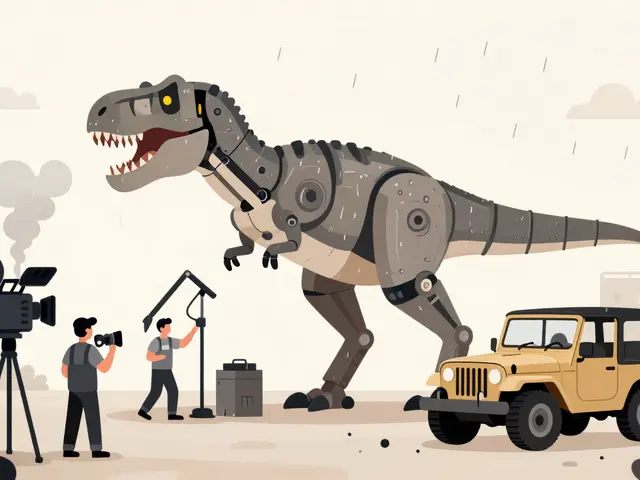
Take Jurassic Park. The T. rex that charges the jeep? That was a 12-ton mechanical puppet, operated by 50 technicians. It moved with hydraulics, had real rubber skin, and even had internal heaters to make it look like it was breathing. That’s SFX. No computers. Just metal, silicone, and sweat.
Another classic example? The blood squibs in Breaking Bad. Those tiny explosive packets strapped to actors’ shirts that burst when shot? They’re real. Each one is triggered manually. The blood spray? A mix of corn syrup, food coloring, and air pressure. No CGI. Just good old-fashioned physics.
SFX are expensive, risky, and time-consuming. But they have something digital effects can’t replicate: weight. Real smoke rises. Real glass shatters with unpredictable fragments. Real rain soaks through clothes. That’s why directors like Christopher Nolan and Denis Villeneuve still fight to use as many practical effects as possible - even in 2025.
What Are Visual Effects (VFX)?
Visual effects - or VFX - are added after filming. They’re digital. Created in post-production using software like Maya, Houdini, Nuke, or Blender. VFX artists take live-action footage and layer on computer-generated imagery (CGI), environment replacements, digital doubles, or entire worlds.
Think of the alien city in Avatar: The Way of Water. Not one brick was built on set. Every structure, every glowing plant, every ripple in the water was painted into the shot frame by frame. That’s VFX.
Or remember the scene in The Irishman where Robert De Niro, Al Pacino, and Joe Pesci appear decades younger? That wasn’t makeup. It was digital de-aging - a process that scans an actor’s face, maps their movements, and replaces their skin texture with a younger version. It’s VFX.
VFX gives filmmakers total control. Need a 500-foot-tall robot to smash a skyscraper? Done. Want to erase a modern building from a 1940s street? Easy. Need to make a character fly without wires? No problem. But it’s also easy to overdo it. When VFX looks fake, it breaks the spell. That’s why the best films blend SFX and VFX seamlessly.
The Key Difference: When It Happens
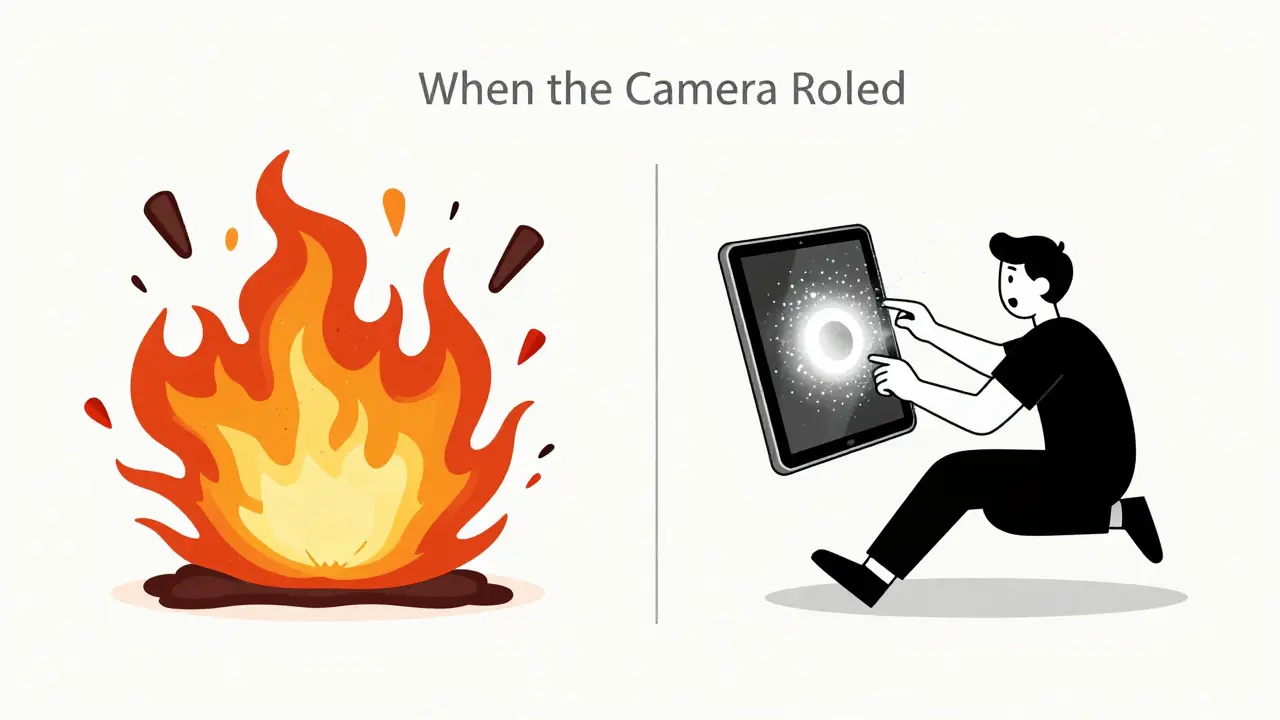
The simplest way to tell them apart? Ask: Was it there when the camera rolled?
- If yes → Special Effect
- If no → Visual Effect
Here’s a real-world example from Mad Max: Fury Road. The flaming guitar played by the War Boy? That’s SFX. A real guitar rigged with propane lines, set on fire on set. The massive sandstorm that engulfs the convoy? That’s VFX. A digital storm layered over footage shot in the Namib Desert.
Another one: In Avengers: Endgame, Thanos snaps his fingers and half the universe turns to dust. The snap? Real hand motion from Josh Brolin. The dust? 100% digital. Each particle was simulated. That’s VFX. But the way his fingers move? That’s SFX - because it was captured live.
Modern films rarely use one or the other. They mix them. That’s where the magic happens.
Why the Blend Matters
The best movies don’t just use effects - they make you forget they’re there. That’s the goal. And the best way to do that? Combine physical reality with digital perfection.
Look at 1917. The entire film looks like one continuous shot. But it’s not. There are hidden cuts. Some scenes use VFX to extend hallways or erase wires. But the mud, the bullets, the explosions - those are real. The actors were covered in real mud. The explosions were triggered on set. The smell? Real gunpowder. That tactile truth is why the film feels so immersive.
Compare that to a film like Avatar (2009). Almost everything was CGI. The characters, the world, the animals. But the motion capture suits, the facial performance tracking, the real-time rendering on set - those were physical tools. Even in a digital world, real human performance anchored it.
When SFX and VFX work together, you get something that feels alive. A dragon that breathes real fire but whose scales shimmer with digital light. A car chase where the tires screech on real asphalt but the background city melts into a futuristic skyline. That’s the sweet spot.
How Filmmakers Decide What to Use
It’s not about what’s cooler. It’s about what serves the story.
Here’s how they choose:
- Emotion - Real actors touching real objects creates empathy. A hand shaking on a real lever feels more urgent than a mouse click in a digital panel.
- Lighting - Real explosions cast real shadows. CGI fire often glows too evenly. That’s why VFX teams spend weeks matching light direction, color temperature, and reflections.
- Cost - Building a full-scale spaceship? $10 million. Creating it digitally? $2 million. But if you need 20 of them? VFX wins.
- Safety - No stuntman wants to jump off a 100-foot bridge. So they film a safe 10-foot drop and extend the fall with VFX.
- Time - If you need a city to explode in 30 seconds? You can’t build it. You render it.
Some directors, like Guillermo del Toro, insist on SFX first. He built real mechanical monsters for Pacific Rim - even when the studio wanted everything digital. He knew: if the actor believes it’s real, the audience will too.

Common Myths About SFX and VFX
Myth 1: “VFX is cheaper than SFX.” - Not always. A poorly done VFX shot can cost more than a practical effect. Cleaning up bad CGI takes weeks. A real explosion? One take, done.
Myth 2: “All CGI looks fake.” - That’s outdated. In 2025, VFX can mimic skin texture, eye reflections, and even sweat droplets with near-perfect accuracy. Look at the lead character in The Creator (2023). He’s 100% digital. But you forget he’s not real.
Myth 3: “SFX are outdated.” - Far from it. Studios are hiring more practical effects teams than ever. Why? Because audiences are tired of plastic-looking CGI. Real textures, real weight - that’s what sells tickets now.
What You Can Watch For Next Time
Next time you watch a movie, pause right after a big effect. Ask yourself:
- Is that smoke rising naturally? (SFX)
- Does the shadow match the light source? (VFX check)
- Are the debris pieces all the same size? (That’s CGI - real debris is random)
- Did the actor flinch when the thing hit them? (That’s SFX)
Look at the hands. Real hands move differently than digital ones. Look at the eyes. Real eyes reflect light in tiny, unpredictable ways. CGI eyes often look glassy.
Watch Oppenheimer. The Trinity test explosion? Almost entirely practical. Real explosives. Real fire. Real shockwaves. The only digital part? The sky behind it. That’s why it feels so terrifying.
Watch Dune: Part Two. The sandworms? 80% practical. Real rigs with hydraulic jaws, real sand kicked up by fans. The rest? Digital enhancement. The result? You feel the ground shake.
Final Thought: The Magic Isn’t in the Tool - It’s in the Story
Special effects and visual effects are just tools. Like a brush or a camera. The magic isn’t whether it’s real or digital. It’s whether it makes you feel something.
A real explosion can be thrilling. A digital dragon can be awe-inspiring. But if the story doesn’t matter, neither does the effect.
So the next time you’re watching a movie and a giant robot crushes a building - don’t ask how they did it. Ask why it mattered.
Are special effects and visual effects the same thing?
No. Special effects (SFX) are created on set with physical props, explosions, makeup, or stunts while filming. Visual effects (VFX) are added later using computers - like digital creatures, environments, or de-aging. SFX is real; VFX is digital.
Which is more expensive: SFX or VFX?
It depends. Building a full-scale practical set or animatronic can cost millions upfront. But VFX can get even more expensive if it requires hundreds of hours of rendering and revision. A poorly executed VFX shot might cost more than a real explosion because it takes weeks to fix. Often, the best films use a mix to balance cost and realism.
Why do some directors prefer practical effects?
Practical effects give actors real things to react to - smoke, wind, heat, weight. That creates more authentic performances. Real light reflects off real surfaces, making lighting easier to match. Directors like Christopher Nolan and Denis Villeneuve use SFX because they believe audiences feel the difference - even if they can’t explain why.
Can you tell if a movie uses too much CGI?
Yes. Look for unnatural lighting, floating objects, or characters that don’t cast proper shadows. If the motion looks too smooth - like a video game - or if textures look too perfect, it’s likely over-reliant on VFX. Real things have imperfections. Dust, scratches, uneven reflections. CGI often misses those details unless artists specifically add them.
What’s an example of perfect SFX and VFX blending?
In Mad Max: Fury Road, the War Rig’s engine smoke and explosions are real. The sandstorm and the distant desert landscape are digital. The result? You feel the heat, hear the roar, and believe the vehicle is real - even though half the scene was added in post. That’s the gold standard.