9
Arrival Review: How Linguistics and Communication Shape Science Fiction
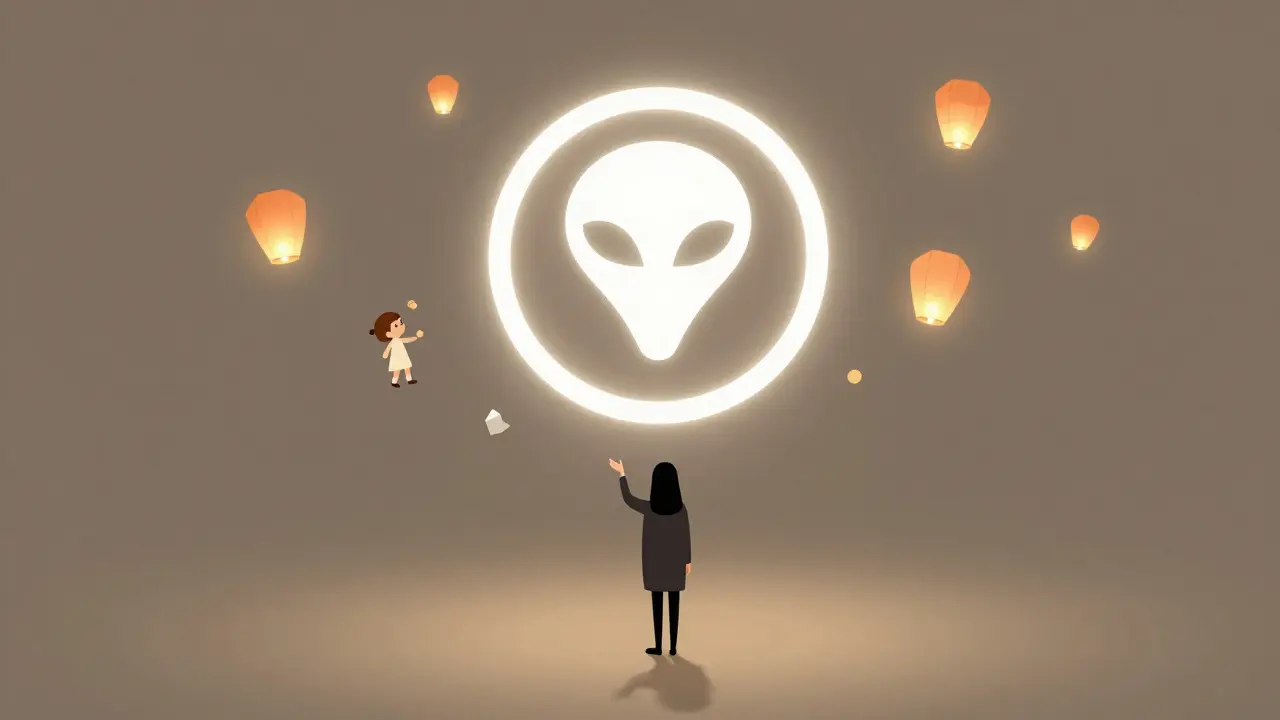
When you first watch Arrival, you might think it’s a movie about aliens landing on Earth. But by the end, you realize it’s really about how we think, how we speak, and what happens when language changes the way we see time. It’s not just science fiction-it’s a deep dive into the power of words.
Language Isn’t Just Words, It’s Reality
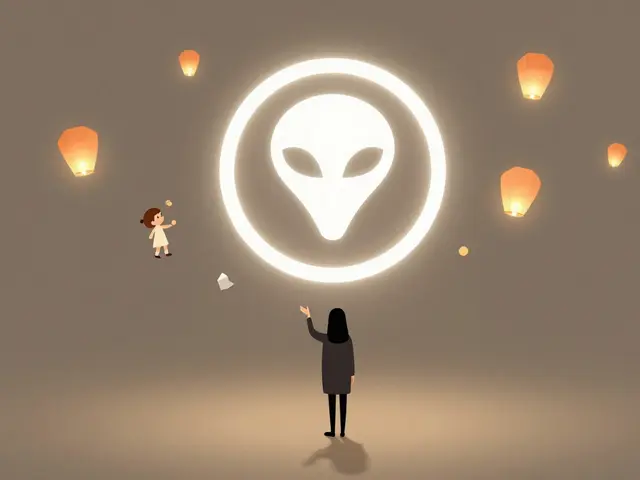
Most sci-fi movies show aliens with big eyes and broken English. Arrival flips that. The heptapods don’t speak in sentences. They write in circular symbols-complex, nonlinear, and beautiful. These aren’t just alien graffiti. Each symbol is a full thought, packed with meaning. And when the linguist, Louise Banks, learns to understand them, her brain rewires. Time stops being linear. Past, present, and future blur.
This isn’t fantasy. It’s based on the Sapir-Whorf hypothesis-the idea that the language you speak shapes how you perceive the world. In real life, speakers of languages without future tense (like Mandarin or some Indigenous Australian languages) tend to plan for the future differently. They save more, act more proactively. Arrival takes this idea and turns it into a mind-bending experience. The aliens don’t just communicate-they change how humans experience existence.
The Science Behind the Fiction
The movie worked with real linguists to build the heptapod language. The symbols were designed by science fiction author Ted Chiang, who wrote the original short story, Story of Your Life. The team didn’t just make random squiggles. They created a writing system with internal logic: symbols combine to form meaning, context changes interpretation, and the circular form reflects a non-linear perception of time.
Real-world linguistics shows that writing systems can influence thought. Ancient Sumerians used cuneiform for accounting-so their early texts were full of numbers and transactions. The Chinese writing system, with its logographic characters, encourages holistic thinking. Arrival mirrors this. The heptapod script isn’t just a code to crack-it’s a cognitive tool. Learning it doesn’t just let Louise understand them. It lets her see her daughter’s entire life before it happens.
Communication Is More Than Translation
What makes Arrival stand out isn’t just the alien language. It’s how humans fail to communicate with each other. Military leaders panic. Governments distrust each other. Nations prepare for war based on misread signals. One alien symbol, interpreted as a threat, triggers global panic. But the heptapods weren’t threatening-they were offering. Their message wasn’t about invasion. It was about cooperation. A gift of language, meant to help humanity survive a crisis 3,000 years from now.
This mirrors real-world diplomacy. In 2014, a misinterpreted message between India and Pakistan nearly sparked nuclear conflict. In 2020, WHO’s early warnings about COVID-19 were dismissed because the language used was too technical, too calm, too non-alarming. Arrival shows that the biggest danger isn’t the alien-it’s our own inability to listen, to pause, to understand context.

Why This Matters Now
In 2026, we’re drowning in information but starving for understanding. Social media reduces complex ideas to 280 characters. AI chatbots give quick answers but miss nuance. Political debates are built on soundbites, not sentences. Arrival doesn’t just predict the future-it reflects our present. We need more Louise Banks. Not just translators, but people who can sit with ambiguity, who can learn to see the world through another’s structure of thought.
When Louise chooses to have her daughter, knowing she’ll die young, she’s not being tragic. She’s being brave. She’s choosing love despite knowing the outcome. That’s the heart of the movie. Language doesn’t just describe reality-it lets us live in it differently. And sometimes, knowing the pain ahead doesn’t make it worse. It makes the moments before it more precious.
The Bigger Picture: Sci-Fi as a Tool for Human Understanding
Good science fiction doesn’t predict robots or spaceships. It predicts how we’ll handle change. Arrival is one of the few sci-fi films that treats language as a force as powerful as gravity. It doesn’t need explosions or laser guns. The tension comes from silence, from hesitation, from the fear of not understanding.
Compare it to other alien movies. In Independence Day, aliens come to destroy. In Close Encounters, they come to marvel. In Arrival, they come to teach. And the lesson isn’t about technology. It’s about patience. About listening. About seeing time not as a line, but as a circle.
This is why the movie still matters. In a world where misinformation spreads faster than truth, where AI generates convincing lies, and where we argue over definitions of words like “truth” and “fact,” Arrival reminds us: communication isn’t about speaking louder. It’s about listening deeper.
What the Movie Gets Right About Linguistics
- Language isn’t just vocabulary-it’s structure, context, and perception.
- Writing systems can shape thought patterns (as seen in real-world examples like Chinese characters or Arabic script).
- Non-linear language doesn’t mean illogical-it means differently logical.
- Translation isn’t word-for-word. It’s meaning-for-meaning.
- Learning a new language can change how you remember the past and anticipate the future.
These aren’t movie tricks. They’re grounded in decades of research from linguists like Benjamin Lee Whorf and Noam Chomsky. Even the idea that symbols can carry emotional weight? That’s real. Think of how a single word like “home” or “freedom” can carry decades of cultural history.

What the Movie Takes Creative Liberty With
- Humans don’t physically rewire their brains overnight from learning a new language. Neuroplasticity is real, but it takes years.
- There’s no evidence that language can alter perception of time in the way shown. But the idea is philosophically valid.
- Real linguists wouldn’t decode an alien language in weeks. It took decades to decode Linear B and Mesoamerican glyphs.
But Arrival isn’t trying to be a documentary. It’s using science as a springboard for emotion. And in that, it’s perfect.
Why You Should Watch It Again
Most people watch Arrival once and think, “Wow, that was deep.” But the second time? You notice the quiet moments. The way Louise touches her daughter’s hair before she leaves the room. The way the heptapod symbol for “weapon” also means “tool.” The way the military’s fear mirrors our own reactions to the unknown.
It’s not a movie about aliens. It’s a movie about us. About how we respond to the unfamiliar. About whether we choose fear or curiosity. About whether we’re willing to learn-even if the learning changes us forever.
Is Arrival based on a true story?
No, Arrival is not based on a true story. It’s adapted from the 1998 short story "Story of Your Life" by Ted Chiang. While the science and linguistics are grounded in real theories-like the Sapir-Whorf hypothesis-the alien contact and non-linear time perception are fictional. The film uses real science to explore emotional truths, not to document actual events.
Do real linguists study alien languages?
No one has studied an actual alien language-because we haven’t found any. But linguists do study unknown human languages, especially those with no written records or that are endangered. The methods used in Arrival-pattern recognition, context analysis, iterative testing-are exactly how real linguists decoded ancient scripts like Linear B or Rongorongo. The movie’s approach is realistic, even if the subject isn’t.
Can learning a language really change how you think?
Yes, but not as dramatically as in Arrival. Studies show that speakers of languages with grammatical gender (like Spanish or German) describe objects differently based on gender associations. People who speak languages without future tense tend to save more money. Learning a new language can shift how you categorize colors, remember events, or even feel emotions. Arrival takes this to a sci-fi extreme-but the core idea is scientifically supported.
Why did the aliens give humans their language?
The heptapods aren’t helping us for altruistic reasons-they’re helping their own future. In their non-linear perception of time, they already know we’ll help them 3,000 years from now. By giving us their language, they ensure their own survival. It’s a closed loop: we learn their language, we help them, they gave us the language to make that happen. It’s a beautiful, circular cause-and-effect, like their writing system.
Is Arrival a good movie for people who don’t like sci-fi?
Absolutely. It has no space battles, no aliens shooting lasers, and no explosions. It’s quiet, thoughtful, and emotional. If you like movies about relationships, grief, choice, or human connection-like Eternal Sunshine of the Spotless Mind or Her-you’ll connect with Arrival. It’s sci-fi for people who don’t usually like sci-fi.
What to Watch Next
If Arrival made you think about language and time, try these:
- Arrival’s source material: Ted Chiang’s Story of Your Life-short, powerful, and even more philosophical.
- Ex Machina-another quiet sci-fi film about understanding something beyond human limits.
- Annihilation-explores transformation through language, biology, and perception.
- Her-how communication changes when the other side isn’t human.
- The Midnight Sky-a lonely, reflective story about connection across time and space.
Arrival doesn’t just tell a story. It changes how you see stories. And that’s the rarest kind of science fiction.