8
Christopher Nolan Essay: The Director Who Changed Action Cinema
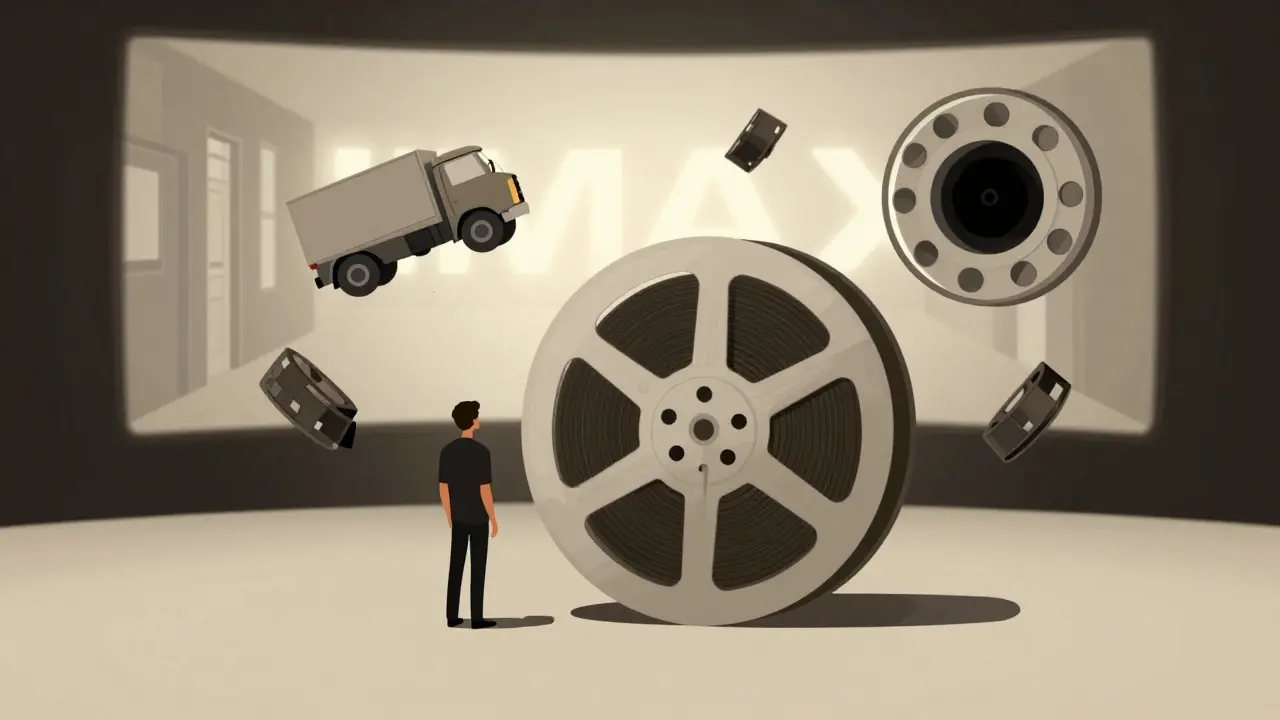
Christopher Nolan didn’t just make big movies-he rebuilt how action films feel, sound, and move. Before he came along, Hollywood action was all about green screens, shaky cam, and explosions that looked like video games. Nolan swapped that for real planes, real explosions, and cameras that didn’t shake unless the ground was actually shaking. He didn’t just direct films; he forced the industry to rethink what action could be when it’s grounded in physics, not pixels.
He Brought Realism Back to Big Budget Action
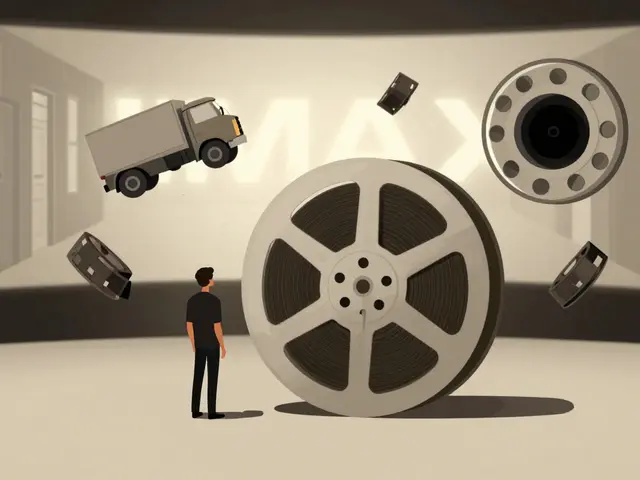
In 2002, Insomnia proved Nolan could handle tension with subtlety. But it was The Dark Knight in 2008 that changed everything. The scene where a truck flips end-over-end? No CGI. They used a real 18-wheeler, rigged with explosives, and filmed it with a 70mm IMAX camera. The result? A moment that felt dangerous, unpredictable, and terrifyingly real. Audiences didn’t just watch it-they flinched.
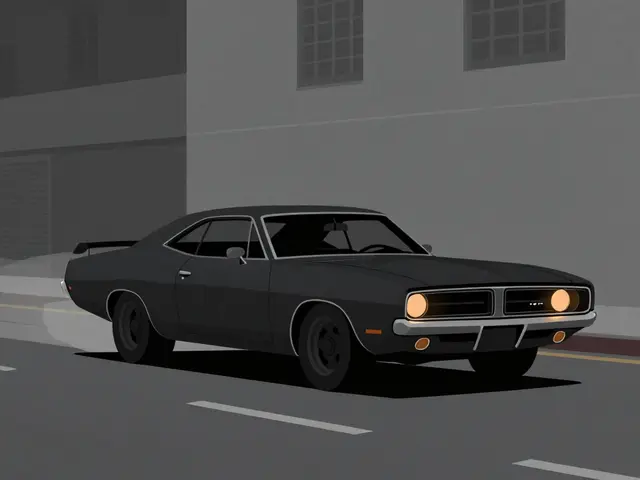
Other directors were using digital doubles and motion capture. Nolan used stunt drivers, engineers, and 300 crew members to flip a semi-truck on a real street in Chicago. He didn’t care if it cost $10 million. He cared if it looked like it could happen. That mindset spread. When Mad Max: Fury Road came out in 2015, George Miller didn’t need to explain why he used practical stunts-he just pointed to Nolan and said, ‘He proved it could be done.’
He Made Time a Character in His Films
Action films used to be about who hits hardest. Nolan made them about who understands time best. In Inception, he didn’t just layer dreams-he layered time. One second in the real world equals ten minutes in the first dream, and hours in the next. The hallway fight scene? It wasn’t just cool-it was math. The characters moved slower because gravity was bending. The audience didn’t just follow the story; they had to calculate it.
Even Dunkirk, a war film with no traditional villain, turned time into the enemy. The land, sea, and air storylines unfold over different durations-one week, one day, one hour. The ticking clock isn’t a sound effect; it’s the rhythm of survival. You don’t feel like you’re watching a battle. You feel like you’re running out of air.
He Killed the Green Screen
By 2010, most blockbusters were 80% digital. Nolan’s response? Build a rotating hallway in a warehouse and spin it with real motors. For Inception, he spent six months constructing a 100-foot-wide, 50-ton rotating set. The actors didn’t pretend-they were actually dizzy. The camera didn’t fake motion-it captured real physics.
He didn’t just avoid green screens. He made them look bad. When Interstellar needed a black hole, he didn’t use a pre-made CGI model. He hired a theoretical physicist, Kip Thorne, to write equations for how light bends around a real black hole. The rendering took 100 hours per frame. The result? The first scientifically accurate black hole ever shown in a movie. NASA used it in a public education video.
He Made Sound a Weapon
Most action films use music to tell you when to feel scared or excited. Nolan does the opposite. He cuts music. He lets silence sit. Then he hits you with a single bass note that vibrates in your chest.
In Dunkirk, the score by Hans Zimmer doesn’t build to a climax-it loops. A single ticking sound, stretched into a musical note, plays for 90 minutes. It’s not background noise. It’s the sound of panic. You don’t hear it-you feel it in your teeth.
He also refuses to mix dialogue over explosions. In The Dark Knight Rises, when Bane breaks Batman’s back, the sound doesn’t swell with music. It’s just a wet crack. Then silence. No dramatic sting. No swelling strings. Just the reality of a spine breaking. That’s not filmmaking. That’s surgery.
He Rebuilt the Blockbuster Structure
Before Nolan, blockbusters followed a formula: hero, villain, love interest, twist, happy ending. Nolan broke that. Memento told a story backward. Interstellar ended with a tesseract inside a bookshelf. Oppenheimer didn’t need a villain-it just showed a man watching the world burn and realizing he’d built it.
He doesn’t need to explain everything. He trusts the audience to sit in the confusion. In Tenet, characters move backward through time. The rules are never spelled out. You figure them out by watching. No exposition dumps. No hand-holding. Just action, logic, and consequences.
That’s why his films don’t feel like entertainment. They feel like challenges. You don’t watch a Nolan movie-you solve it.
He Changed How Studios Think About Film
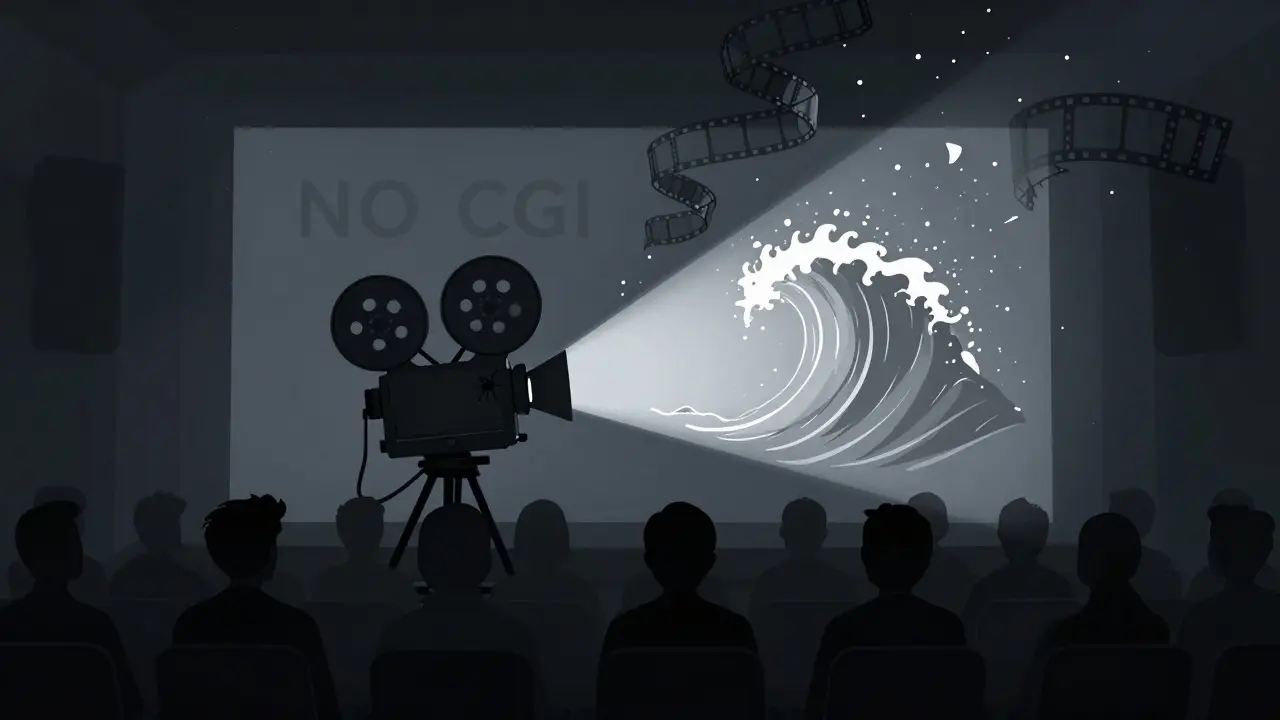
In 2020, when studios were pushing streaming, Nolan refused to let Tenet go digital. He demanded theaters stay open. He argued that film isn’t a product-it’s an experience. He didn’t just want people to watch his movies. He wanted them to sit in a theater, feel the bass, smell the popcorn, and be surrounded by strangers who all gasped at the same moment.
He insisted on shooting on 70mm film. He still uses physical film reels. He doesn’t use digital intermediates. He believes that film captures light differently-more depth, more texture, more soul. In 2024, Warner Bros. still ships Oppenheimer prints to theaters in 35mm and 70mm formats because he demanded it.
That’s not nostalgia. That’s rebellion. He proved that audiences will pay to see a movie the way it was meant to be seen-even in a world of TikTok and autoplay.
His Legacy Isn’t Just Movies-It’s a New Standard
Today, every action director who wants to be taken seriously has to answer one question: ‘Is this Nolan-level real?’
When Mission: Impossible - Dead Reckoning Part One had Tom Cruise hang off a plane, everyone compared it to Nolan’s practical stunts. When The Marvels used a rotating set for a fight scene, critics noted it was ‘Nolan-inspired.’ Even video game developers cite his work when designing realistic physics engines.
He didn’t just make great action films. He made it impossible to make bad ones anymore. If your explosion looks fake, people will notice. If your hero flies without physics, they’ll laugh. If your story doesn’t hold up under scrutiny, they’ll walk out.
Christopher Nolan didn’t change action cinema. He raised the bar so high, the whole industry had to climb-or get left behind.
Why is Christopher Nolan considered a pioneer in practical effects?
Nolan insists on using real stunts, physical sets, and in-camera effects instead of relying on CGI. For example, he flipped a real 18-wheeler in The Dark Knight, built a rotating hallway for Inception, and used actual IMAX film cameras to shoot large-scale sequences. His commitment to realism forced studios and other directors to rethink how action scenes are constructed, making practical effects a benchmark for credibility.
How did Nolan change the way time is used in action films?
Before Nolan, time in action movies was linear and simple. He introduced layered, non-linear, and relative time structures-like in Inception, where time slows down in dreams, or Dunkirk, where three timelines (land, sea, air) unfold at different speeds. This forced audiences to engage actively, turning time into a narrative tool rather than just a backdrop.
Why does Christopher Nolan still use film instead of digital?
Nolan believes film captures more detail, dynamic range, and texture than digital formats. He uses 70mm and 35mm film for its archival quality and visual richness. He also argues that film forces discipline-there’s no endless take, no digital cleanup. Every shot must be perfect. His insistence helped keep film projection alive in theaters during the digital transition.
What makes Nolan’s sound design different from other directors?
Nolan uses silence strategically and often removes music during key moments to heighten realism. In Dunkirk, Hans Zimmer’s score is built around a ticking clock, creating psychological tension. Dialogue is never drowned out by explosions, and sound is mixed to feel physical-like the rumble of a jet engine vibrating in your chest. It’s not background noise; it’s part of the story.
Did Christopher Nolan influence other directors?
Yes. Directors like George Miller (Mad Max: Fury Road), Christopher McQuarrie (Mission: Impossible), and even video game designers now prioritize practical effects and physics-based action because of Nolan’s success. His films set a new standard: if it looks fake, it’s not acceptable. Studios now pitch action scenes with the question, ‘Can we do this for real?’-a direct result of Nolan’s influence.
Christopher Nolan didn’t just make movies. He made people believe action could be more than spectacle. He proved that intelligence, physics, and real risk could be just as thrilling as any digital explosion. And in a world full of shortcuts, he chose the harder path-and changed cinema because of it.