26
Dragons on Film: From Reign of Fire to House of the Dragon Crossovers
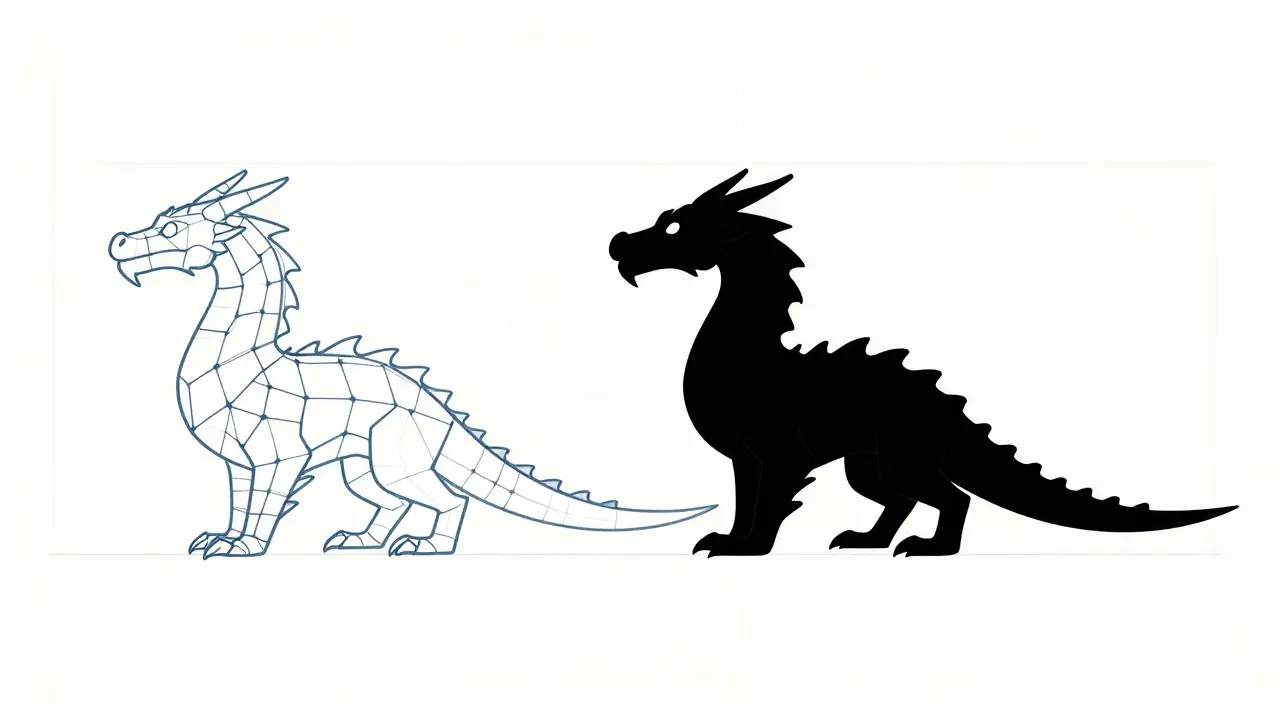
Remember when seeing a dragon on screen meant watching puppeteers pull strings behind a cardboard cutout? Those days are long gone. Today, we have creatures that breathe fire so realistically you can almost feel the heat radiating from your TV. The journey from practical effects to photorealistic computer-generated imagery (CGI) is not just a technical upgrade; it is a complete shift in how we tell stories about these mythical beasts. We are moving from monsters to be slain to complex characters with their own agency.
The evolution of dragons on film mirrors the broader history of special effects in Hollywood. It starts with the tangible, physical presence of early suits and puppets, moves through the groundbreaking but limited capabilities of early CGI in the late 90s, and explodes into the seamless digital artistry of the 2020s. This progression has changed the role of the dragon from a mere obstacle for the hero to a central narrative force. Whether it is the terrifying realism of Reign of Fire a 2002 post-apocalyptic fantasy film featuring realistic CGI dragons or the political intrigue surrounding the beasts in House of the Dragon a 2022 HBO prequel series to Game of Thrones focusing on Targaryen civil war, the way we view these creatures has fundamentally shifted.
The Era of Practical Effects and Early Animatronics
Before computers could render scales and smoke, filmmakers had to build dragons out of latex, foam, and steel armatures. This era defined the tactile nature of fantasy cinema. When you watched a dragon in the 1970s or 80s, you were often looking at a suit actor or a mechanical puppet. The limitations were obvious-the movements were stiff, and the size was restricted by what a human could wear or what a crane could lift-but there was an undeniable physicality to them. The audience knew they were looking at something real, even if it wasn't a living animal.
Peter Jackson's The Lord of the Rings film trilogy released between 2001 and 2003 marked the bridge between these two worlds. While Smaug in the later Hobbit films was fully digital, earlier concepts and other creatures in Middle-earth relied heavily on hybrid techniques. Filmmakers used forced perspective and miniatures alongside early motion capture. This period taught audiences to accept digital entities as part of the physical world. The key takeaway here is trust. If the lighting matches the environment and the weight feels right, the brain accepts the illusion. Early CGI struggled with this weight, often making dragons look like they were floating rather than flying.
Reign of Fire and the Birth of Realistic CGI Dragons
If there is one film that stands as a turning point for modern dragon depiction, it is Reign of Fire 2002 sci-fi fantasy film directed by Rob Cohen. Released in 2002, this movie did not try to make dragons look like magical, wise companions. Instead, it treated them as apex predators. The visual effects team, led by Rhythm & Hues, focused on biological accuracy. They studied birds of prey, lizards, and big cats to create movement patterns that felt dangerous and instinctual.
The dragons in Reign of Fire were not just assets placed into a scene; they interacted with the environment in ways that previous films rarely achieved. They kicked up dust, their wings created wind pressure, and their fire burned with fluid dynamics that simulated actual combustion. This approach set a new standard. It proved that CGI could convey threat and weight without relying on dialogue or musical cues. The "crossover" here is not just between genres-blending post-apocalyptic survival with high fantasy-but between technology and storytelling. The VFX became the story. Without convincing visuals, the premise of humans hiding in underground bunkers from aerial predators would have fallen flat.
| Film/Series | Year | Primary Technique | Narrative Role |
|---|---|---|---|
| Dragonheart | 1996 | Early CGI / Hybrid | Companion / Mentor |
| Reign of Fire | 2002 | Biological CGI | Apex Predator |
| The Hobbit Trilogy | 2012-2014 | Motion Capture / High-Fidelity CGI | Antagonist / Character |
| House of the Dragon | 2022-Present | Photorealistic Digital Assets | Political Symbol / Weapon |
The Motion Capture Revolution and Smaug
After Reign of Fire established biological realism, the next leap came with performance. Benedict Cumberbatch's Smaug the main antagonist in The Hobbit film trilogy demonstrated that a dragon could carry emotional nuance. Using motion capture technology, actors could perform inside the creature, allowing for subtle facial expressions and vocal inflections that pure animation struggled to replicate. Smaug was not just roaring; he was mocking, bargaining, and threatening with intelligence.
This shift moved dragons away from being mindless beasts toward being intelligent adversaries. The technology allowed for close-ups that revealed personality. The scales shimmered with individual detail, and the eyes held a malevolent consciousness. This era solidified the idea that a dragon is a character first and a special effect second. The crossover here is between acting and animation. The line blurred significantly, requiring directors to treat digital actors with the same respect as live-action performers.
House of the Dragon and the Modern Spectacle
Fast forward to House of the Dragon, and we see the culmination of decades of VFX development. In this series, dragons are not just occasional threats; they are integral to the plot, politics, and warfare. The showrunners faced a unique challenge: depicting dozens of distinct dragons, each with unique sizes, colors, and temperaments, while maintaining continuity and realism. Unlike Reign of Fire, where the horror came from the unknown, House of the Dragon relies on familiarity. The audience knows these creatures, so the spectacle comes from scale and interaction.
The visual effects teams behind House of the Dragon utilize advanced simulation software to handle fur, scales, and fire simultaneously. A single shot might involve rendering thousands of individual scales reacting to wind, while simulating the heat distortion of breath weapons. The "crossover" mentioned in our title also refers to the blending of cinematic quality into television. The budget and technical ambition rival blockbuster movies, raising the bar for streaming content. Dragons here serve as symbols of power. Who controls the dragon controls the realm. This thematic depth requires visuals that support the gravity of the narrative. A poorly rendered dragon would break the immersion and undermine the political stakes.
Technical Challenges: Rendering Fire and Flight
Creating a believable dragon is not just about modeling its body; it is about simulating the physics of flight and fire. Wings must generate enough lift to carry hundreds of tons of mass. This requires understanding aerodynamics. VFX artists study eagle wing beats and bat membrane flexibility to animate flapping motions that look efficient rather than cartoonish. If the wings flap too slowly, the dragon looks heavy and sluggish. Too fast, and it looks like an insect. Finding the middle ground is crucial for suspension of disbelief.
Fire is equally complex. In Reign of Fire, the fire was depicted as a stream of superheated gas, similar to a blowtorch. In House of the Dragon, the fire varies by dragon, some producing more flame, others more heat. Rendering this involves particle systems that calculate turbulence, temperature, and light emission. The fire must illuminate the surrounding environment realistically. If a dragon breathes fire into a dark cave, the rocks should glow red, and the shadows should dance. These small details accumulate to create a sense of reality. Audiences may not consciously notice every pixel, but they will feel if something is "off."
The Future of Dragon Cinema
As we move further into the 2020s, the future of dragon depiction lies in virtual production and AI-assisted rendering. Techniques pioneered in shows like The Mandalorian Star Wars series using LED volume stages allow actors to interact with digital dragons in real-time on LED screens. This eliminates the need for green screens and provides accurate lighting reflections on the dragon's scales during filming. Imagine an actor looking directly at a massive, breathing dragon while performing, rather than staring at a tennis ball on a stick. This enhances the emotional connection between the performer and the creature.
Additionally, machine learning algorithms are beginning to assist in generating textures and animations. Artists can define broad parameters, and AI fills in the micro-details, such as individual scale imperfections or feather-like structures on wings. This speeds up production without sacrificing quality. The next generation of dragon films will likely feature even greater biodiversity among the creatures, with species adapted to different environments-ice dragons with frost-resistant scales, desert dragons with heat-dissipating fins. The possibilities are limited only by imagination and processing power.
Why Realism Matters in Fantasy
One might ask why we push for such hyper-realism in fantasy. Why not keep dragons stylized or abstract? The answer lies in emotional investment. When a creature looks real, we fear it, admire it, or empathize with it on a primal level. Stylized dragons can be charming, but realistic ones are impactful. The journey from Reign of Fire to House of the Dragon shows that audiences crave authenticity. Even in a world of magic, the laws of physics and biology provide a grounding framework that makes the extraordinary believable. This realism allows filmmakers to explore deeper themes-power, destruction, symbiosis-without the distraction of poor visuals.
The crossover of technologies, from practical effects to CGI to motion capture, has enriched the genre. Each step forward has added layers of complexity and emotion. As we look ahead, the integration of virtual production and AI promises to make these mythical beings even more present and interactive. For fans of fantasy cinema, the age of the digital dragon is far from over; it is just getting started.
What made the dragons in Reign of Fire different from earlier films?
Reign of Fire focused on biological accuracy and predatory behavior. Instead of magical beings, the dragons were depicted as apex predators with realistic anatomy, movement patterns inspired by birds and reptiles, and environmental interactions like kicking up dust and creating wind pressure. This shifted the tone from whimsical fantasy to grounded survival horror.
How does House of the Dragon use dragons differently than The Lord of the Rings?
In The Lord of the Rings, dragons like Smaug are singular antagonists or rare events. In House of the Dragon, dragons are numerous, varied, and central to the political and military structure of the society. They act as weapons of war and symbols of noble lineage, requiring consistent characterization across many episodes and distinct visual identities for each beast.
What role did motion capture play in modern dragon films?
Motion capture allowed actors to perform within the digital dragon, providing nuanced facial expressions and vocal performances. This was pivotal in films like The Hobbit, where Smaug needed to convey intelligence, arrogance, and menace through subtle gestures and dialogue, bridging the gap between animation and live-action acting.
Why is aerodynamics important in CGI dragon design?
Aerodynamics determines how convincingly a dragon flies. If the wing beats do not match the weight and speed of the creature, the audience perceives the movement as unnatural. Accurate simulation of lift, drag, and muscle movement ensures the dragon feels physically possible within the story's context, enhancing immersion.
What is virtual production and how does it help dragon scenes?
Virtual production uses large LED screens to display real-time CGI backgrounds and characters during filming. For dragon scenes, this allows actors to react to the actual lighting and movement of the digital creature, resulting in more authentic performances and accurate reflections on the dragon's scales, reducing post-production compositing work.