25
The Holdovers Review: Why Alexander Payne’s Christmas Comedy Is a Bittersweet Masterpiece
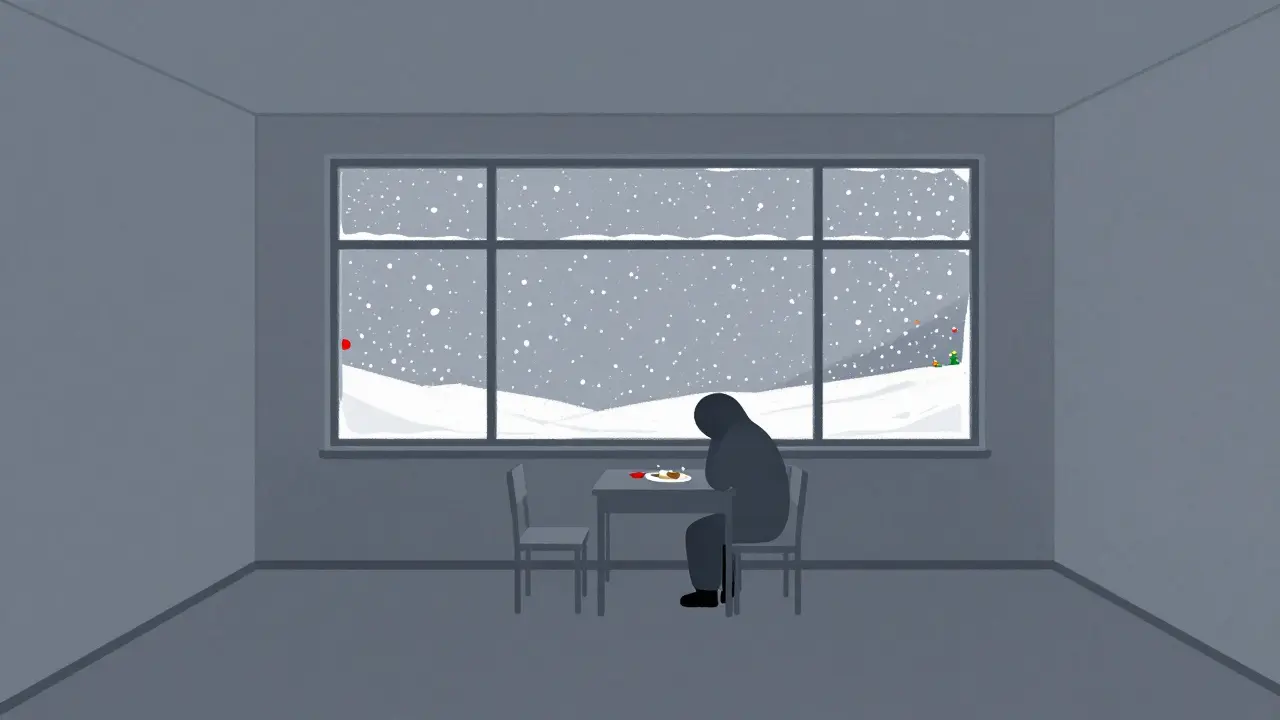
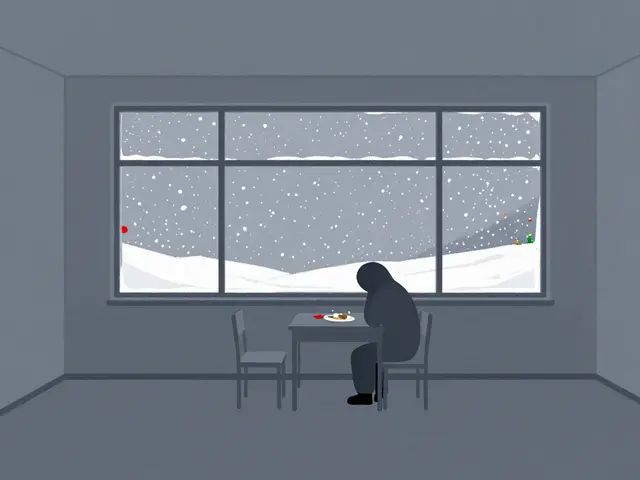
There is a specific kind of loneliness that only hits during the holidays. You know the one. The world is decked out in red and green, everyone is posting pictures of perfect family dinners, and you are sitting alone in a drafty room eating cold leftovers. The Holdovers is a 2023 American comedy-drama film written and directed by Alexander Payne that explores this exact feeling with rare honesty and warmth. It doesn’t try to fix that loneliness with a cheesy plot twist or a magical encounter. Instead, it sits with it. It lets three broken people sit together in an empty boarding school for two weeks, and somehow, that shared misery becomes something beautiful.
If you are looking for a typical feel-good Christmas flick where everything works out by the final scene, this might not be your pick. But if you want a movie that feels like a warm hug from an old friend who knows exactly how hard life can be, The Holdovers is essential viewing. It is a character study disguised as a period piece, anchored by performances so grounded they make you forget you are watching actors.
A Setting That Feels Like a CharacterThe story takes place in 1970 at St. Benedict’s Prep, a fictional New England boys' boarding school. Most of the students have gone home for Christmas, leaving behind a skeleton crew. This setting is crucial. It isn’t just a backdrop; it is a pressure cooker. The school is old, rigid, and steeped in tradition, but it is also decaying. You can see the peeling paint and feel the institutional stiffness in every hallway.
Payne uses the winter landscape brilliantly. The snow isn’t pretty here; it is isolating. It traps the characters inside, forcing them to interact when they would rather avoid each other. The cinematography by Eigil Bryld, the Danish director of photography known for his work on Dogme 95 films captures this perfectly. He shoots in 35mm film, giving the image a grainy, textured look that feels authentic to the era without being overly nostalgic. There is no glossy filter making the past look better than it was. It looks cold, gray, and real.
Paul Giamatti’s Career-Defining PerformanceAt the center of the storm is Paul Hunham, played by Paul Giamatti, an American actor renowned for his portrayals of awkward, often underappreciated characters. Hunham is a curmudgeonly history teacher who has been at St. Benedict’s for thirty years. He is bitter, cynical, and deeply unhappy. He hates the new progressive administration taking over the school, he hates the changes in society, and mostly, he hates himself.
Giamatti plays Hunham with a physicality that is both comedic and heartbreaking. He hunches his shoulders, he mutters under his breath, and he carries the weight of his failures visibly. But beneath the gruff exterior, there is a profound sadness. We learn that Hunham stayed at the school because he lost his wife and child in a car accident years ago. He hasn’t left because he loves the job; he stays because leaving means facing a world without them. Giamatti never explains this backstory in a monologue. He shows it through small gestures-a glance at an old photograph, a hesitation before answering a question about family. It is masterful acting.
Da’Vine Joy Randolph Brings Fire and FuryOpposite Giamatti is Mary Lamb, the school cook, played by Da’Vine Joy Randolph, an American actress who won critical acclaim for her role in this film. Mary is tough, loud, and unapologetic. She runs the kitchen with military precision and has zero patience for nonsense. Initially, she and Hunham clash constantly. He criticizes her food (which is actually quite good), and she calls him out on his hypocrisy.
But Mary has her own demons. She is grieving the recent death of her son, who died in the Vietnam War. Her anger is a shield against her grief. Randolph brings a volcanic energy to the role. When she yells, you believe it. When she cries, it catches you off guard. The chemistry between Giamatti and Randolph is electric. They are two people who refuse to be pitied, yet they slowly begin to care for each other. Their relationship is the emotional core of the film.
The Boy Who Bridges the GapRounding out the trio is Angus Tully, played by Dominic Sessa, a young actor who makes his feature debut in this film. Angus is a student who failed his exams and is forced to stay at school for Christmas detention. He is spoiled, entitled, and clearly troubled. His father is absent, and his mother is distant. Angus represents the next generation of pain-different from Hunham’s quiet despair and Mary’s explosive grief, but just as deep.
Sessa is charmingly annoying at first, which makes his development all the more rewarding. As the days pass, we see the vulnerability beneath his brattiness. He bonds with Hunham over history lessons and with Mary over late-night snacks. The three of them form an unlikely family. They go to a Chinese restaurant, watch a bad movie, and share stories. These moments are funny, awkward, and tender. They show how human connection can happen in the most unexpected places.
Why This Isn’t Just a Holiday MovieThe Holdovers is marketed as a holiday film, but it transcends that label. It is a meditation on loss, resilience, and the small mercies of life. The film does not offer easy answers. Characters do not magically heal. The ending is ambiguous, leaving you to ponder what happens next. This restraint is refreshing. Most movies wrap things up neatly, but life rarely does.
Payne’s direction is subtle and patient. He allows scenes to breathe, letting silence do the heavy lifting. The script, co-written with Jonathan Drye, an American screenwriter and playwright, is sharp and witty, filled with period-appropriate references without feeling like a museum exhibit. The dialogue snaps, and the humor arises naturally from the characters’ interactions.
| Element | Details |
|---|---|
| Director | Alexander Payne |
| Lead Actors | Paul Giamatti, Da’Vine Joy Randolph, Dominic Sessa |
| Setting | 1970, New England Boarding School |
| Themes | Grief, Loneliness, Found Family, Social Change |
| Tone | Bittersweet, Humorous, Melancholic |
Visuals and Sound DesignThe technical aspects of the film support its emotional narrative. The costume design by Trish Summerville, a costume designer known for her work on independent films is impeccable. Every outfit reflects the character’s personality and status. Hunham’s tweed jackets are worn and frayed, while the students’ uniforms are crisp but ill-fitting. Mary’s aprons are practical and stained with the evidence of her hard work.
The score by Mark Mothersbaugh, an American musician and composer best known as the lead singer of Devo is understated and poignant. It uses simple piano melodies that evoke a sense of nostalgia without being sentimental. The sound design also plays a key role. The creaking floors, the wind howling outside, and the clatter of dishes in the kitchen create an immersive atmosphere that keeps you engaged.
Is It Worth Your Time?Absolutely. The Holdovers is a triumph of storytelling and performance. It reminds us that even in our darkest moments, we are not truly alone. The connections we make, however fleeting, can change our lives. If you enjoy films like Sideways or About Schmidt, you will appreciate Payne’s latest work. But even if you are not a fan of his previous films, this one stands on its own as a powerful and moving experience.
It is not a movie that will leave you cheering. It will leave you thinking. It will make you call someone you haven’t spoken to in a while. And that, perhaps, is the greatest gift a film can give.
Is The Holdovers based on a true story?
No, The Holdovers is a work of fiction. However, director Alexander Payne drew inspiration from his own experiences growing up in the 1960s and 1970s, particularly the changing social landscape of America during that time. The characters and events are invented, but their emotions are very real.
Where was The Holdovers filmed?
The film was shot primarily in New Hampshire, USA. Many of the school scenes were filmed at the former St. Michael's School in North Conway, which provided the perfect historic architecture for St. Benedict's Prep. Some interior scenes were done on sets built in Los Angeles.
What awards did The Holdovers win?
The Holdovers received numerous accolades, including Academy Award nominations for Best Picture, Best Actor (Paul Giamatti), and Best Supporting Actress (Da’Vine Joy Randolph). Da’Vine Joy Randolph won the Oscar for Best Supporting Actress. The film also won Golden Globes and Screen Actors Guild Awards.
Is The Holdovers appropriate for children?
The film is rated R for language and some sexual material. While there is no graphic violence, the themes of grief, suicide, and alcoholism may be too heavy for younger viewers. It is best suited for mature teenagers and adults who can handle complex emotional narratives.
How does The Holdovers compare to Alexander Payne's other films?
Like Sideways and Nebraska, The Holdovers features flawed protagonists navigating personal crises with dark humor. However, it is arguably his most intimate and emotionally resonant film. It focuses less on satire and more on genuine human connection, marking a slight shift in tone from his earlier works.