18
Film School Lessons Guide: What Filmmakers Learn in Academia

You’ve probably heard the debate. Some say you can learn everything from YouTube tutorials and a cheap camera. Others swear that three years of tuition are the only way to break into the industry. The truth is somewhere in the messy middle. Film school isn’t just about learning how to press record. It’s a structured environment where you make mistakes before they cost you real money.
When you step onto a campus like NYU Tisch, USC, or AFI, you aren't just signing up for classes. You’re entering a pipeline. But what exactly happens inside those lecture halls? Is it theory-heavy philosophy, or hands-on grunt work? Let’s pull back the curtain on the actual curriculum that shapes modern filmmakers.
The Core Pillars of Filmmaking Education
Most accredited film programs revolve around three main disciplines: writing, directing, and producing. While technical skills like lighting and sound are crucial, academia treats them as tools to serve the story. If you walk into a typical introductory course, you’ll quickly realize that the camera is secondary to the concept.
Screenwriting is the foundational discipline of filmmaking, focusing on narrative structure, character development, and dialogue. In academia, this doesn’t mean sitting alone with a notebook. It means dissecting scripts line by line. You learn why a scene works or fails not because of the acting, but because of the subtext. Professors often use the "Save the Cat" beat sheet or the Hero’s Journey model to teach pacing. You rewrite scenes until your fingers bleed, learning that the first draft is always garbage.
Then there is Cinematography, which encompasses the art of visual storytelling through lighting, composition, and camera movement. Unlike online tutorials that focus on gear specs, film school teaches you light physics. You learn how a 5600K daylight bulb differs from a 3200K tungsten source. You understand depth of field not just as a setting, but as a narrative choice. Do you want the audience to see the threat in the background, or should they be blind to it?
| Aspect | Self-Taught / Online | Film School Curriculum |
|---|---|---|
| Pacing & Structure | Learned through trial and error | Structured feedback loops with peers |
| Equipment Access | Limited to personal budget | Access to cinema-grade cameras (ARRI, RED) |
| Networking | Requires proactive outreach | Built-in cohort of future collaborators |
| Feedback Quality | Variable, often superficial | Critical analysis from industry veterans |
The Hidden Curriculum: Collaboration and Conflict
If there is one thing film school teaches that no book can, it’s how to deal with difficult people under pressure. On set, egos clash. Time runs out. The sun sets early. In academia, these scenarios are simulated repeatedly.
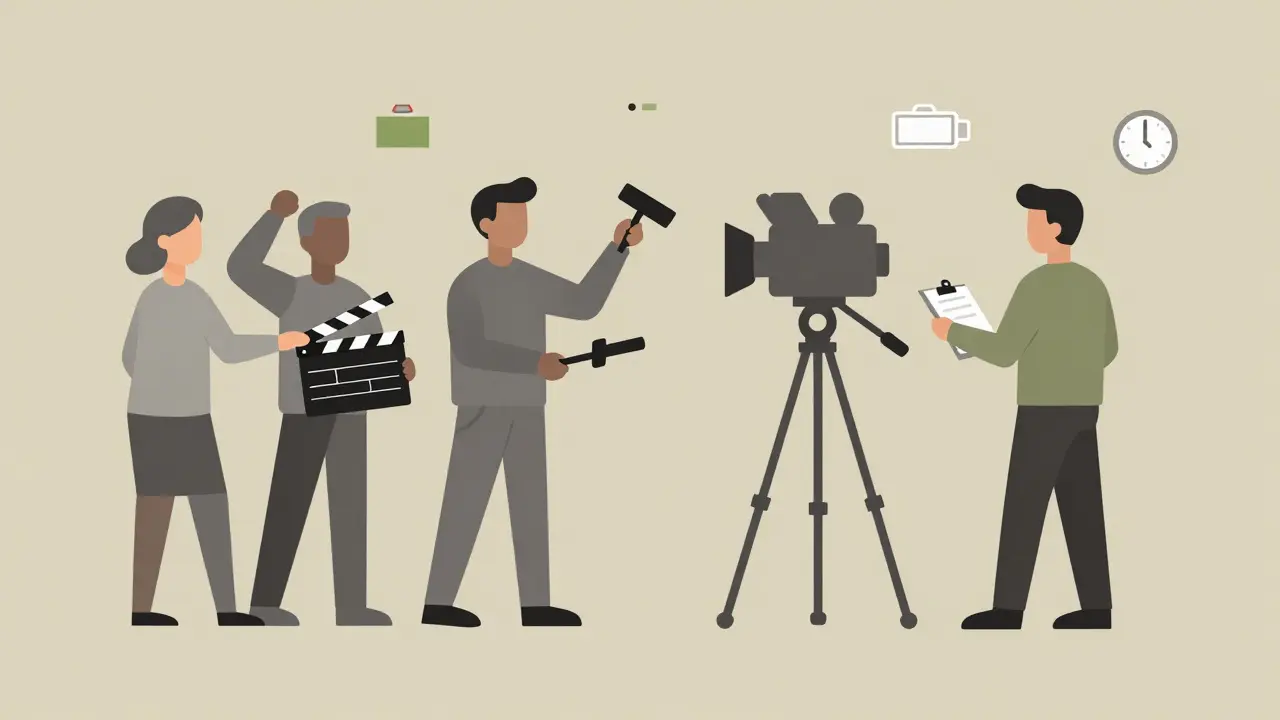
You will direct a friend who thinks they know better. You will produce a project where the director goes over budget. You will edit a film where the footage is unusable because the DP forgot to charge the batteries. These failures are intentional. They force you to develop thick skin. You learn that Production Management is the logistical backbone of filmmaking, involving scheduling, budgeting, and resource allocation. You aren't just making art; you're managing a small business entity for every short film you shoot.
This collaborative friction is valuable. When you graduate, you already have a team. You know who communicates well and who flakes when things get tough. This network is often more valuable than the diploma itself. Many indie films are made by groups of classmates who met in a cramped editing suite at 2 AM, surviving on cold pizza and caffeine.
Technical Mastery: Beyond the Button Press
Let’s talk gear. One of the biggest misconceptions is that film school is obsolete because technology is cheap. Yes, you can shoot 4K on a phone. But can you match the color temperature across five different shots? Can you rig a camera to move smoothly on a dolly track while maintaining focus?
In a Sound Design class, you learn that audio is 50% of the experience. You spend hours recording Foley effects-footsteps on gravel, rustling fabric-in a dedicated booth. You learn to mix dialogue, music, and effects so they don't muddy each other. Most self-taught filmmakers ignore this until post-production, resulting in videos that feel amateurish despite looking good.
Similarly, Post-Production Workflow is the process of assembling raw footage, adding visual effects, and finalizing audio for distribution. You learn the difference between ProRes and H.264 codecs. You understand why color grading matters for emotional tone. You might use DaVinci Resolve or Adobe Premiere Pro, but the lesson isn't just clicking buttons. It’s understanding the pipeline. How does metadata travel from the camera to the editor? What happens if you lose your backup drive? These are practical survival skills.
Film History and Theory: Why Context Matters
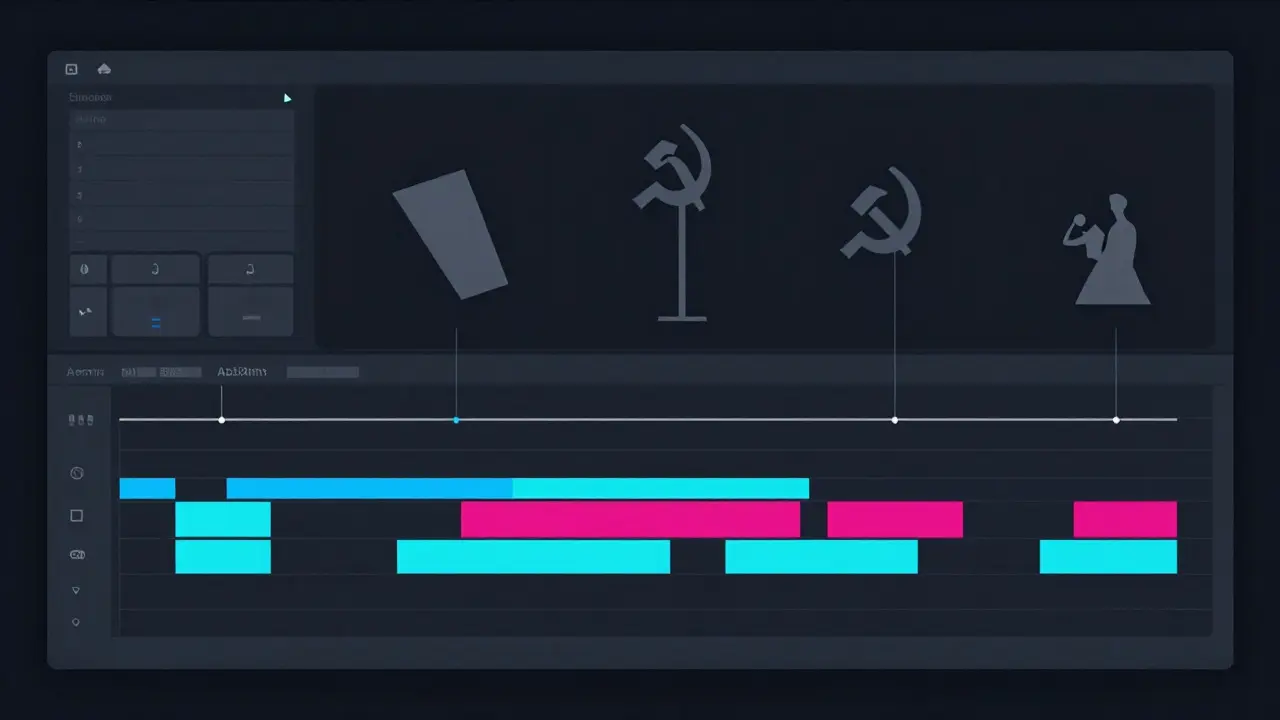
Why do you need to watch black-and-white movies from the 1920s to make a TikTok video? Because language evolves. Visual grammar has rules. When you study Film History, you gain insight into the evolution of cinematic techniques, movements, and cultural impacts. You see how German Expressionism influenced horror movies today. You understand how Soviet Montage theory changed the way we cut action scenes.
Without this context, you’re reinventing the wheel. You might think your idea for a jump scare is original, only to realize Alfred Hitchcock did it better fifty years ago. Theory gives you a vocabulary. Instead of saying "this feels off," you can say "the axis violation breaks spatial continuity." This precision helps you communicate with your crew and fix problems faster.
The Business of Cinema: Grants, Festivals, and Distribution
Art doesn't pay the bills unless you know how to sell it. Modern film schools include courses on Film Financing, which covers strategies for securing funding through grants, investors, and crowdfunding. You learn how to write a pitch deck. You practice pitching your film to a room full of skeptical producers. You learn that "no" is the most common answer, and resilience is key.
Distribution is another critical piece. It’s not enough to finish the film. You need to submit to festivals like Sundance, Cannes, or SXSW. You need to understand rights management. Who owns the music? Did you get location releases? These legalities are often overlooked by beginners but can sink a career before it starts. Film school forces you to confront these realities early.
Is Film School Worth It in 2026?
The value proposition depends on your goals. If you want to be a viral content creator, you probably don’t need a degree. You need consistency and an understanding of algorithms. But if you want to work in narrative feature films, television, or high-end commercials, the academic route offers structure and access.
The debt is real. Tuition can exceed $100,000. But consider the opportunity cost of spending ten years figuring out basics on your own. Film school compresses that timeline. You fail fast, you learn quickly, and you build a professional identity before you graduate.
Ultimately, film school is an accelerator. It won’t guarantee fame. It won’t give you talent. But it will give you the tools, the network, and the confidence to pursue your vision professionally. It turns hobbyists into craftsmen.
What specific software do film schools teach?
Most top-tier programs focus on industry-standard tools. For editing, you’ll likely use Adobe Premiere Pro, Avid Media Composer, or Final Cut Pro. For color grading and visual effects, DaVinci Resolve is ubiquitous. For scriptwriting, Final Draft remains the standard format. However, the specific software matters less than understanding non-linear editing principles, which apply to any platform.
Do I need to know how to code for film school?
Generally, no. Traditional film schools focus on creative and technical aspects of production. However, if you’re interested in Virtual Production (like LED volume stages used in The Mandalorian), basic knowledge of Unreal Engine or Python scripting can be a huge advantage. This is a growing niche within the industry.
How important is networking in film school?
Extremely important. The film industry is relationship-driven. Your classmates today are the directors, producers, and studio heads of tomorrow. Building strong relationships during school leads to collaborations on low-budget projects, which build your reel and reputation. Many jobs are filled through referrals rather than public postings.
Can I succeed as a filmmaker without attending film school?
Yes, absolutely. Many successful filmmakers are self-taught. However, you must be disciplined in seeking mentorship, studying films critically, and gaining hands-on experience. Without school, you need to proactively create opportunities, such as joining local film collectives or interning on sets, to replicate the networking and feedback benefits of academia.
What is the typical duration of a film school program?
Undergraduate degrees typically take four years, including general education requirements. Graduate programs (MFA) usually last two to three years and are more intensive, focusing solely on filmmaking. Certificate programs can be completed in six months to a year, offering a condensed version of the core skills.