30
Hayao Miyazaki Retrospective: From Nausicaä to The Boy and the Heron
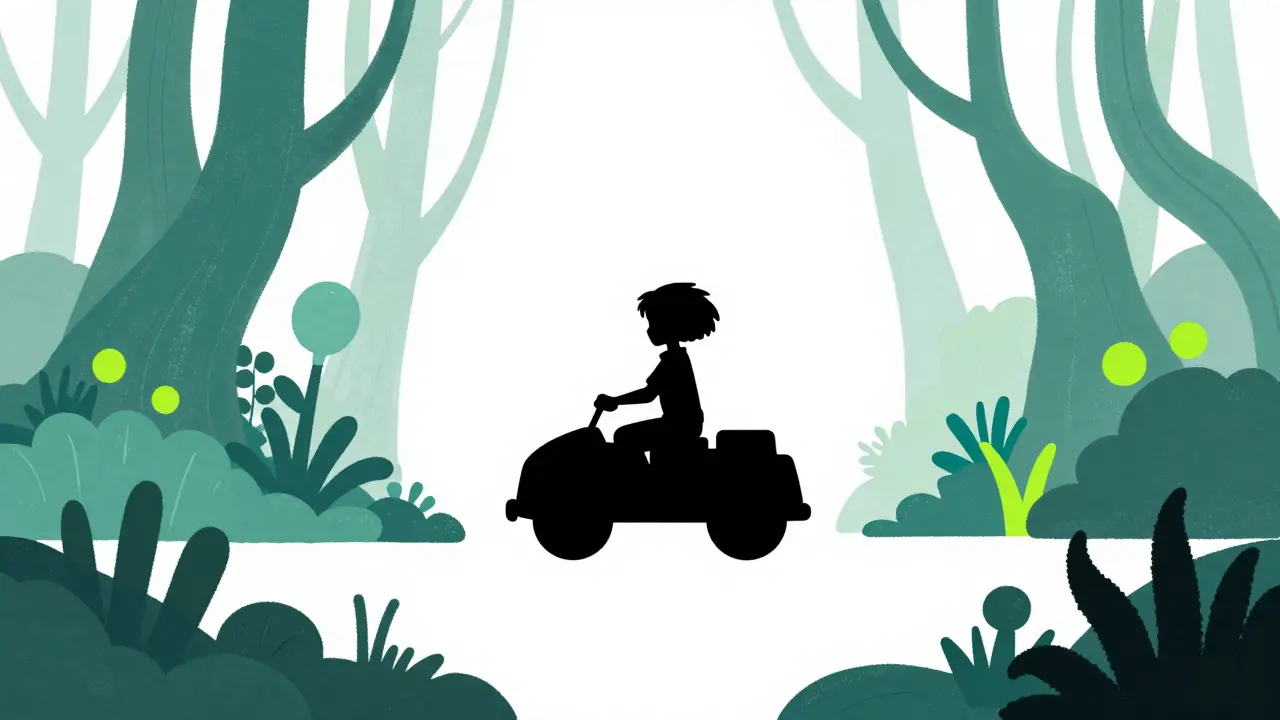
More Than Just Retirements
If you have followed the news over the last two decades, you've heard the story before. The announcement comes with great fanfare: Hayao Miyazaki is retiring. The legendary Japanese animator and director who created some of the most beloved films in cinema history decided to step away from feature filmmaking. The world mourns a loss, even though the movies play on. Then, two years later, maybe four, suddenly he announces he isn't done yet. It happened after The Wind Rises, and it happened again with The Boy and the Heron. By March 2026, looking back at his entire catalog feels different than it did in 2010. We aren't just asking about his future; we are asking how he managed to change animation itself without ever following a formula.
This isn't a standard biography. You can find dates of birth on any search engine. Instead, let's look at the artistic evolution. From the dark, war-torn landscapes of his earliest successes to the deeply personal, semi-autobiographical nature of his final announced features, there is a thread connecting every frame. Understanding that thread changes how you watch these films. Whether you are a casual viewer or a filmmaker, the journey reveals why hand-drawn animation remains vital in the digital age.
The Foundation: Before Ghibli
To understand the weight of The Boy and the Heron, you have to go back to the beginning of his narrative voice. While he worked on earlier projects like Lupin III, his true authorial debut is often traced to Nausicaä of the Valley of the Wind. Released in 1984, this film was technically made before the founding of his studio, yet it carries the DNA of everything that followed.
At the time, anime was largely dismissed as children's fare or sci-fi fodder. Nausicaä of the Valley of the Wind is An animated science fantasy film set in a post-apocalyptic world where humanity struggles to survive amidst toxic jungles and giant insects. Kaze no Tani no Nausicaā broke that ceiling immediately. It tackled environmental decay, pacifism, and the burden of leadership. The protagonist, Nausicaä, wasn't a typical hero seeking glory; she sought understanding of the enemy. That character archetype became a hallmark for Miyazaki.
During this period, he collaborated closely with Isao Takahata and Toshio Suzuki. These three became the 'Iron Triangle' of what would become the powerhouse studio. Even before the official launch, their commitment to quality was evident. They refused to compromise on frame rates or budget constraints that other studios accepted to churn out episodes quickly. This obsession with detail became a brand identity in itself.
Studio Ghibli Takes Shape
By 1985, the formal establishment of Studio Ghibli changed the industry. A Japanese animation film studio headquartered in Koganei, Tokyo, founded by producers Toru Hara, Hayao Miyazaki, Isao Takahata and Toshio Suzuki. The name comes from the Messerschmitt Me 262 fighter plane codename "Ghibli," reflecting Miyazaki's lifelong fascination with aviation. It wasn't just about airplanes, however. It was about control, freedom, and the mechanics of flight.
| Year | Film | Key Theme | Cultural Impact |
|---|---|---|---|
| 1984 | Nausicaä | Environmentalism/Pacifism | Pioneered mature anime themes |
| 1986 | Castle in the Sky | Technology vs Nature | Introduced Laputa iconography |
| 1988 | My Neighbor Totoro | Childhood Imagination | Created a global mascot icon |
| 1997 | Princess Mononoke | Ecological Conflict | Became highest-grossing film in Japan |
| 2001 | Spirited Away | Rites of Passage | Won Academy Award for Best Animated Feature |
| 2023 | The Boy and the Heron | Mortality/Legacy | Autobiographical reflection |
A critical moment in the studio's growth was Princess Mononoke (1997). While Totoro had established them commercially, Mononoke cemented them as artists of gravity. It depicted a conflict where neither the gods of the forest nor the humans were purely evil or good. This moral ambiguity was rare in mainstream cinema. It required audiences to grapple with gray areas, refusing to offer easy resolutions. In terms of box office, it broke records domestically, proving that Japanese animation could compete with Hollywood blockbusters on scale and intensity.
The Global Breakthrough
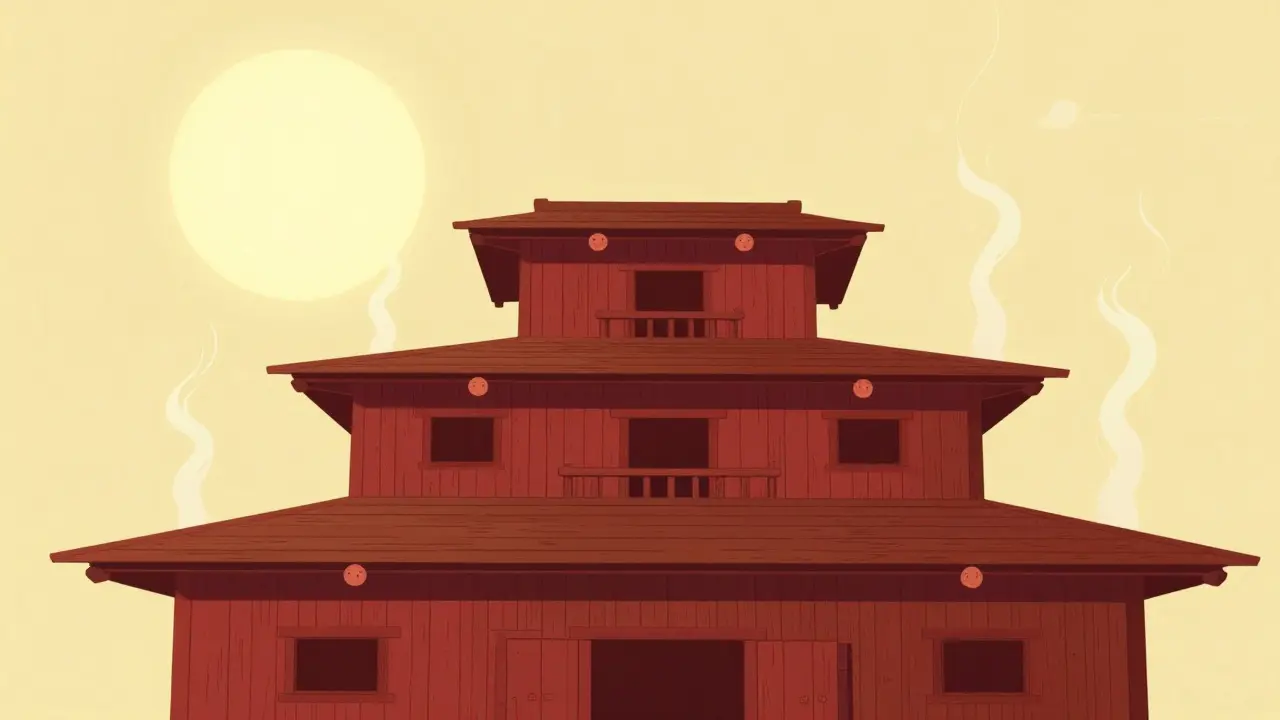
Spirited Away is A 2001 Japanese animated fantasy film written and directed by Miyazaki. This film marked a turning point not just for him personally, but for the recognition of anime in Western markets. When Disney acquired distribution rights, it opened doors that had been locked for decades. The film won the Academy Award for Best Animated Feature in 2003, a historic moment for non-English language films.
What made Spirited Away resonate globally? On the surface, it follows Chihiro, a sullen young girl lost in a bathhouse for spirits. Underneath, it deals with labor, greed, and family dynamics. Miyazaki rarely spells out his messages. He lets the visuals do the heavy lifting. The design of the bathhouse, the character designs (often credited to Kazuo Oga or Yoshiyuki Momose depending on the film), and the atmosphere create an emotional texture that transcends language barriers.
It is important to note the role of composer Joe Hisaishi served as The long-time musical collaborator and composer who defined the soundscapes of the Miyazaki universe. His melodies are inseparable from the emotional memory of these films. When you hear the piano theme from Spirited Away, you instantly feel the sense of wonder and unease. That sonic signature is as recognizable as the visual of Totoro sleeping on a bus stop.
The Cycle of Retirement
There is a pattern here that defines Miyazaki more than the plots of his films. He has announced his retirement multiple times. The most famous instance occurred in 2013 after the completion of The Wind Rises. He cited physical exhaustion and the difficulty of leading large productions. Yet, in 2023, audiences saw The Boy and the Heron (titled Kimitachi wa Dou Ikiru ka?). Why does he keep returning?
It stems from creative dissatisfaction. In interviews and documentary appearances (such as Documentary of Ghibli: Hill of Cohousing), Miyazaki expresses an inability to simply "stop" while he has ideas swirling in his head. He described having a dream or a vision that demands to be realized. This is not ego; it is a craftsman's drive. He views storytelling as a medium of survival, something he feels compelled to pass on.
This brings us to the thematic shift in his later works. As he aged, his stories became more introspective. Howl's Moving Castle dealt with aging and vanity through Sophie's curse. Ponyo returned to simpler, mythic roots, almost regressing to a fairy tale style. But The Boy and the Heron stands apart. It is widely considered his most autobiographical project to date.
The Boy and the Heron: A Personal Farewell?
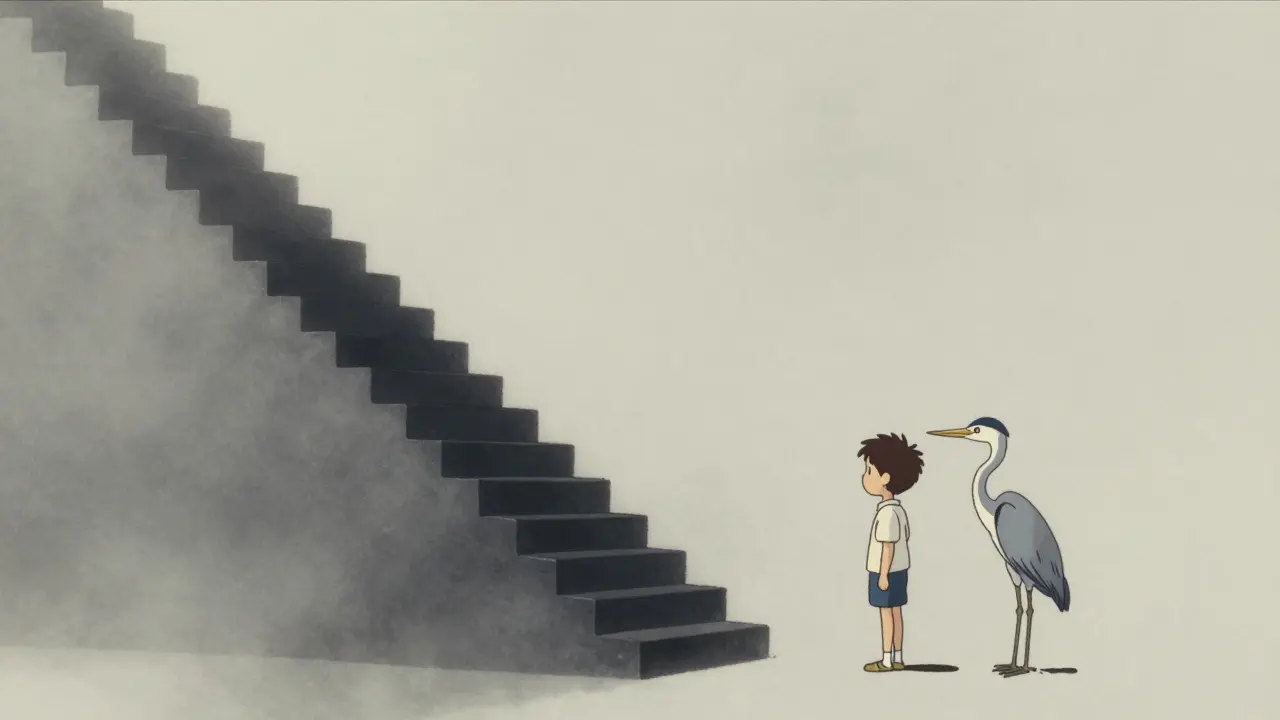
Released in theaters globally by early 2024, this film was finally settled in its position as a potential capstone. Unlike previous films with high-concept action, this movie is grounded in quiet grief and existential confusion. The protagonist, Mahito, mirrors Miyazaki himself-a survivor of tragedy who grew up in the shadow of destruction. Mahito's father died in the war, similar to Miyazaki's own father, who ran an armaments factory during WWII.
In this film, Miyazaki strips away much of the fantastical gloss of earlier Ghibli movies. There is less focus on flying machines or magical creatures taking up screen space and more on silence, staircases, and towers. It explores how we handle death and how we continue living when our foundations are gone. Critics noted the ambiguous ending-it doesn't tie up with a bow, which felt very honest. Real life doesn't end with a perfect resolution; it just continues. This maturity suggests that if he truly stops now, he has done so on his own terms.
Legacy and Influence
Looking toward the future from March 2026, the influence of Miyazaki extends far beyond his immediate studio. Modern animators cite his attention to motion. While computer-generated imagery (CGI) dominates Hollywood, Ghibli maintained traditional hand-drawn techniques for decades. This choice forced a discipline that many digital studios abandoned. Frame-by-frame drawing teaches respect for weight, timing, and physics.
Furthermore, his approach to production management influenced Ito Junji A manga artist whose darker works contrast sharply with Ghibli, highlighting the spectrum of Japanese animation.
(Note: Let's correct that entity usage, focusing instead on direct peers).
Actually, it is better to reference his legacy in terms of the people he mentored. Directors like
Mamoru Hosoda often reflect
Contemporary Japanese directors who carry the torch for high-quality family-oriented animation.
However, none perfectly replicate the specific alchemy Miyazaki brought to the table.
The preservation of the art form is another major part of his legacy. He pushed for the protection of natural environments through his films, influencing real-world conservation efforts. The message that nature is not a resource to be exploited, but a system to coexist with, is embedded deep in the cultural consciousness because of these films.
Frequently Asked Questions
Is The Boy and the Heron Hayao Miyazaki's final film?
While Miyazaki has stated on multiple occasions that this would be his last theatrical project, history shows that these announcements are sometimes reversed. However, given his age and the explicit autobiographical nature of the film's conclusion, many believe this marks a genuine closing chapter in his career.
Which Studio Ghibli film is best for beginners?
My Neighbor Totoro is the gentlest entry point due to its lack of complex plot and warm tone. If you want deeper emotional stakes, Spirited Away offers a perfect balance of fantasy and storytelling suitable for both adults and children.
Did Miyazaki ever work in American studios?
No, Miyazaki has spent his entire professional career working within Japan, primarily within Studio Ghibli. However, Walt Disney Pictures distributed many of his films internationally in the West, which helped popularize his work globally.
Who composed the music for Miyazaki's films?
Joe Hisaishi (Mamoru Satō) composed the scores for nearly all of Miyazaki's significant works, starting from Nausicaä until recent releases. Their collaboration spans over forty years and is considered one of the most successful partnerships in cinema history.
What makes Studio Ghibli animations unique?
They are renowned for meticulous hand-drawn techniques, distinct attention to background art, and complex characters that avoid binary good-versus-evil tropes. Their pacing often allows for contemplative moments of silence, prioritizing atmosphere over constant action.