27
Genre Analysis: How Film Conventions Create Meaning and Shape Audience Expectations

Have you ever noticed how you know exactly what to expect the moment a cowboy tips his hat or a neon sign flickers in the rain? You don’t need a script to tell you that the former signals a Western showdown and the latter hints at a Noir mystery. This isn’t magic; it’s genre analysis, a method of decoding how the systematic use of recurring elements in cinema creates meaning. Films are not just random collections of scenes. They are built on a foundation of shared codes and conventions that directors, writers, and editors use to communicate with audiences instantly.
When we talk about genre, we aren’t just slapping labels like "Horror" or "Rom-Com" onto movies for marketing purposes. We are looking at a complex language of visuals, sounds, and narratives. Understanding this language allows us to see how filmmakers manipulate our emotions, challenge our expectations, and construct deeper social commentaries. It transforms watching a movie from a passive activity into an active engagement with cultural history and artistic intent.
The Building Blocks: What Are Film Conventions?
To understand how meaning is created, we first need to identify the tools used to build it. In film studies, these tools are called conventions. Think of them as the grammar of cinema. Just as English has nouns, verbs, and punctuation, every film genre has specific ingredients that signal its identity to the viewer.
These conventions generally fall into three categories:
- Narrative Conventions: These are the plot structures and character archetypes. For example, the "Hero’s Journey" is a staple of adventure films, while the "Meet Cute" is essential to romantic comedies. If a detective film lacks a crime to solve and a culprit to catch, it breaks its own narrative contract with the audience.
- Visual Conventions: This includes lighting, color palettes, camera angles, and set design. Horror films often use low-key lighting (chiaroscuro) to hide threats in shadows. Sci-fi movies rely on sleek, metallic textures and cool blue tones to suggest advanced technology and cold logic.
- Auditory Conventions: Sound design and musical scores play a huge role. The screeching violins of a horror stinger or the swelling orchestral theme of a superhero landing are auditory cues that trigger immediate emotional responses.
When a filmmaker uses these conventions correctly, the audience feels comfortable because they recognize the pattern. When a filmmaker subverts them-like having the hero die in the second act-the audience feels shock or confusion. Both reactions are forms of meaning creation.
Decoding Visual Language: Lighting and Color as Storytellers
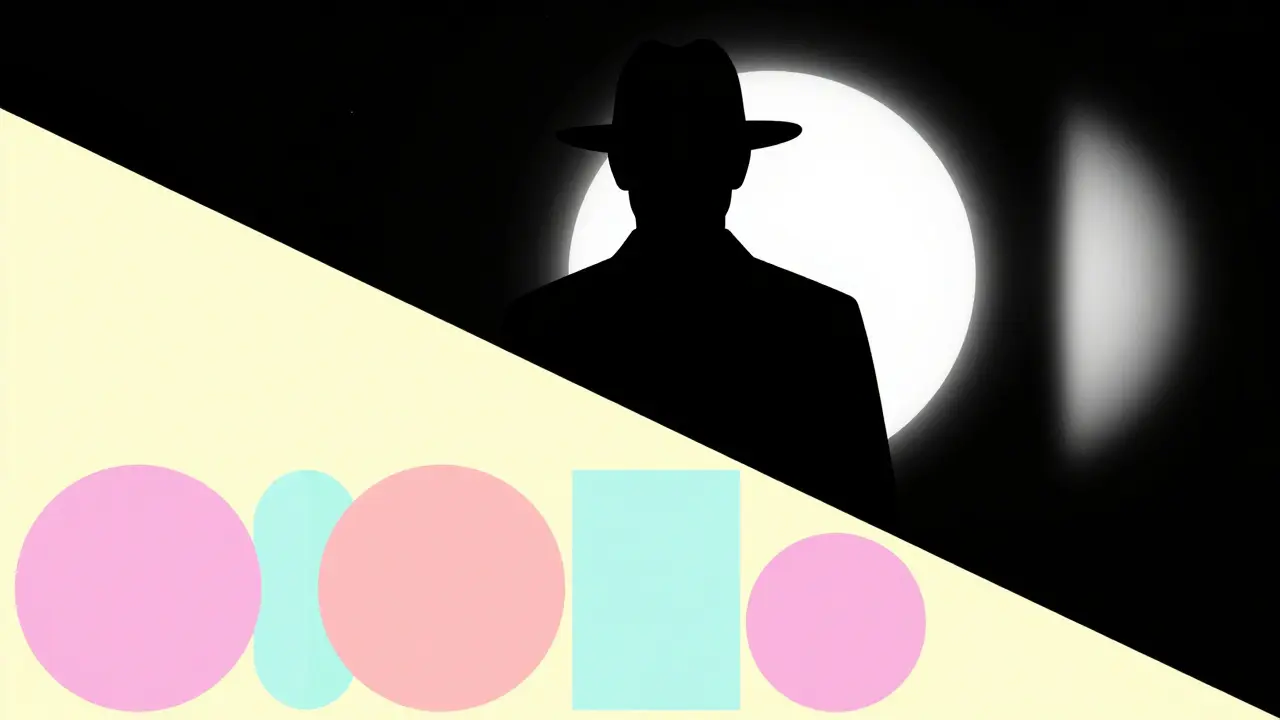
One of the most powerful ways genres create meaning is through visual style. Let’s look at two distinct genres: Film Noir and the Musical. Their visual languages could not be more different, yet both use their conventions to reinforce their thematic cores.
Film Noir, popular in the 1940s and 50s, uses high-contrast black-and-white cinematography. This isn’t just an aesthetic choice due to budget constraints; it reflects the moral ambiguity of the stories. Characters are rarely purely good or evil; they exist in the gray areas between light and shadow. The deep shadows literally obscure the truth, mirroring the protagonist’s struggle to uncover corruption in a cynical world.
In contrast, Musicals use bright, saturated colors and symmetrical framing. The world in a Musical is often idealized. When characters burst into song, the lighting becomes softer and warmer, signaling a shift from reality to emotional expression. The convention here tells the audience: "What you are seeing is the internal truth of the character, not just external action." By analyzing these visual choices, we understand that the genre isn’t just about singing; it’s about the validation of emotion over logic.
| Genre | Lighting Style | Color Palette | Camera Movement | Meaning Created |
|---|---|---|---|---|
| Film Noir | Low-key, high contrast | Black and White, Sepia | Dutch angles, static shots | Moral ambiguity, paranoia, entrapment |
| Musical | High-key, even lighting | Vibrant, saturated pastels | Sweeping pans, tracking shots | Idealism, emotional release, harmony |
| Horror | Low-key, harsh shadows | Desaturated, green/red tints | Shaky cam, sudden zooms | Uncertainty, visceral fear, loss of control |
| Western | Natural sunlight, harsh noon | Earthy browns, blues | Wide landscape shots | Isolation, vastness, individual vs. nature |
Narrative Archetypes and Character Functions
Beyond visuals, genres rely heavily on character types. These aren’t just stereotypes; they are functional roles that drive the plot forward. In genre analysis, we look at how these characters interact to create tension and resolution.
Consider the Detective in a Crime Thriller. This character usually possesses a specific trait: obsession. They are often socially isolated, driven by a need for order in a chaotic world. Their counterpart is the Criminal, who represents chaos and entropy. The meaning of the film emerges from the clash between these two forces. If the detective solves the case but loses their sanity, the genre commentary suggests that justice comes at a terrible personal cost.
In Science Fiction, the "Alien" or "AI" often serves as a mirror for human anxieties. Is the alien a monster to be destroyed, or a misunderstood refugee? The way the human characters treat the other defines the film’s message about xenophobia, war, or empathy. For instance, in *Arrival*, the convention of the alien invasion is subverted. Instead of war, the aliens offer communication. The genre shifts from action to philosophical drama, using the sci-fi framework to explore time and language.
Subversion: Breaking Rules to Make New Points
The most interesting films often break the very conventions they belong to. This is where genre analysis becomes particularly insightful. When a filmmaker knows the rules, they can break them intentionally to surprise the audience or critique societal norms.
Take the Rom-Com genre. The standard convention is that the couple gets together by the end. But in films like *500 Days of Summer* or *Eternal Sunshine of the Spotless Mind*, the conventions are twisted. The timeline is non-linear, and the ending is ambiguous or tragic. By breaking the "happy ending" rule, these films create a more realistic and poignant commentary on love and memory. They use the audience’s expectation of romance to deliver a punch of heartbreak, making the emotional impact stronger.
Similarly, *Get Out* uses the conventions of the psychological thriller and the horror genre to address racial tension. The "creepy suburban family" trope is recontextualized to expose liberal racism. The horror elements aren’t just for scares; they are metaphors for the feeling of being trapped and objectified. Analyzing this subversion reveals how genre can be a vehicle for political and social criticism.

The Role of Sound and Music in Genre Definition
We often overlook sound, but it is half the experience of cinema. Genres have distinct sonic signatures. A Western doesn’t feel complete without the whistling wind and sparse acoustic guitar. A Cyberpunk film needs synthesizers and industrial noise.
Music guides the audience’s emotional response. In a comedy, upbeat tempos and pizzicato strings signal humor. If a scene is visually funny but scored with ominous, slow strings, the tone shifts immediately to unease. This dissonance is a tool for directors to confuse or deepen the narrative.
Sound effects also carry genre weight. The roar of a T-Rex in *Jurassic Park* is iconic, but so is the silence before it strikes. Horror relies on silence to build tension, forcing the audience to lean in and anticipate the jump scare. The convention here is manipulation of attention. By controlling what we hear, the director controls what we fear.
Why Genre Analysis Matters Today
In an era of streaming algorithms and binge-watching, understanding genre helps us become more critical consumers of media. We stop seeing movies as mere entertainment and start recognizing them as cultural artifacts. We can ask: Why does this horror film reflect current fears about pandemics or AI? Why do modern Superhero films increasingly resemble war dramas?
Genre analysis also helps creators. Writers and directors who understand conventions can innovate within them. They know which buttons to push to elicit laughter, tears, or fear. It’s the difference between accidental storytelling and intentional artistry.
Ultimately, films are conversations between the creator and the viewer, mediated by a shared language of conventions. By learning this language, we unlock the deeper meanings hidden in the shadows, the songs, and the scripts. We move from asking "What happened?" to asking "Why did it happen this way, and what does it say about us?" That is the power of genre analysis.
What is the primary purpose of genre analysis in film studies?
The primary purpose is to understand how filmmakers use recurring patterns, symbols, and structures to convey meaning, evoke emotions, and communicate with audiences. It moves beyond plot summary to examine the underlying mechanics of storytelling and cultural context.
How do visual conventions differ between Horror and Comedy?
Horror typically uses low-key lighting, shaky camera work, and dissonant sound to create unease and fear. Comedy uses high-key lighting, stable framing, and rhythmic editing to create clarity and timing for jokes. The visual language directly supports the intended emotional response.
Can a film belong to multiple genres?
Yes, many films are hybrids, such as Romantic Comedies or Sci-Fi Horrors. In genre analysis, we look at how these genres interact. Do they complement each other, or do they create tension? For example, a Romantic Horror might use fear to bring characters closer together.
What is meant by 'subverting' genre conventions?
Subverting means deliberately breaking the expected rules of a genre to surprise the audience or make a new point. For example, a Western where the sheriff is corrupt and the outlaw is heroic subverts traditional moral alignments to critique authority.
How does sound design contribute to genre identification?
Sound design provides immediate cues about genre. Specific instruments, tempo, and sound effects (like gunshots in Westerns or synth drones in Sci-Fi) trigger associative memories in the audience, helping them categorize the film’s tone and expectations instantly.