8
How Roommates Can Fairly Share Wi-Fi and Streaming Costs
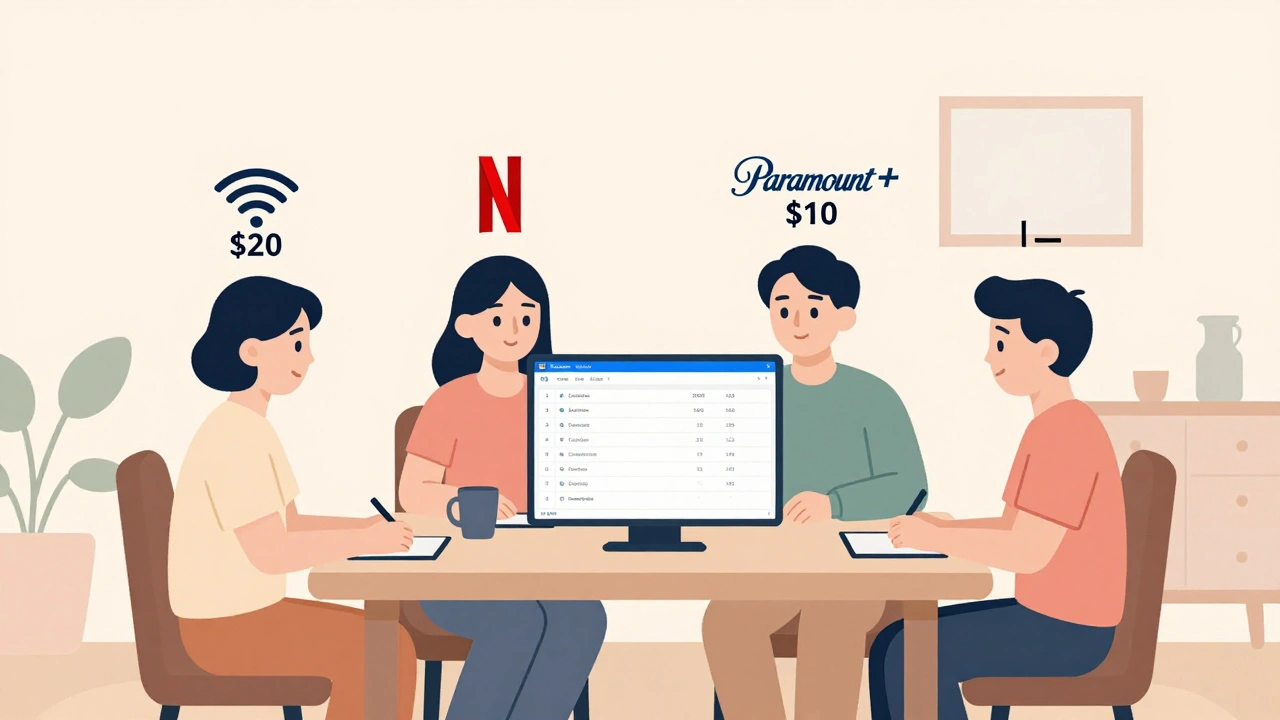
Living with roommates makes sense financially-until you realize your flatmate is binge-watching five shows at once while you’re stuck buffering during your evening workout stream. It’s not just about who uses the internet more. It’s about fairness. And in 2025, with streaming subscriptions rising and internet plans getting pricier, splitting costs fairly isn’t optional anymore-it’s necessary.
Why Shared Wi-Fi Costs Go Wrong
Most roommates start with a simple plan: ‘We’ll just split the bill.’ Sounds fair. But here’s what usually happens: Sarah signs up for Netflix, Disney+, and Apple TV+ because she watches a lot of documentaries. Mark uses the Wi-Fi mostly for gaming and downloads 50GB of patches every week. Alex barely uses the internet beyond checking emails and scrolling TikTok for 15 minutes a day. Yet they all pay the same $35 a month.
This isn’t just annoying-it’s unsustainable. A 2024 survey by the Australian Communications and Media Authority found that 62% of shared households had at least one argument about internet use in the past year. And 41% of those arguments were about streaming services, not bandwidth.
Here’s the truth: internet and streaming aren’t the same thing. One is infrastructure. The other is content. Treating them as one big lump leads to resentment, hidden fees, and people quietly unsubscribing and then pretending they never had an account.
Separate the Bills: Wi-Fi vs. Streaming
The first fix? Split them apart.
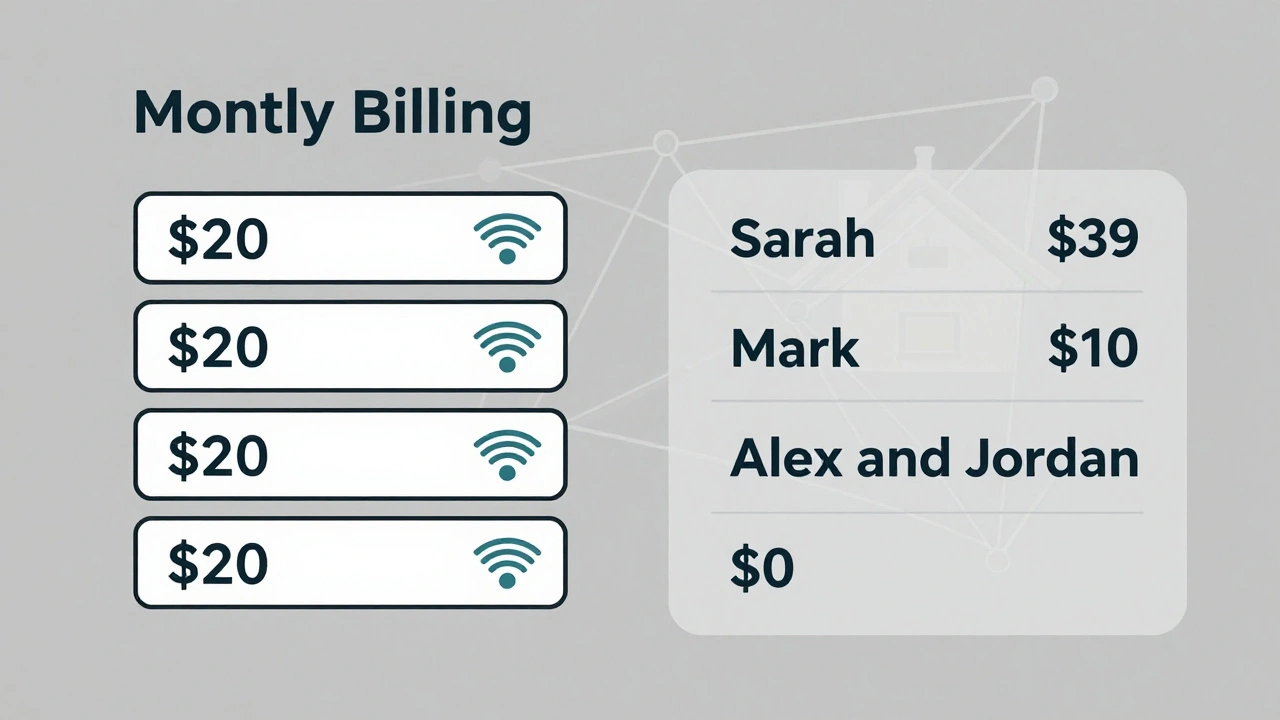
Wi-Fi cost is your monthly bill from your provider-Telstra, TPG, or Aussie Broadband. This covers the physical connection to your home. It’s the same for everyone, no matter how much you stream. So splitting this evenly makes sense. If your plan is $80/month and there are four people, each pays $20.
Streaming costs are subscriptions: Netflix, Stan, Binge, Paramount+, YouTube Premium. These are personal choices. You shouldn’t pay for someone else’s Marvel obsession.
Here’s how to do it:
- Make a list of every active streaming service in the house.
- Write down who signed up for each one.
- Calculate the monthly cost of each service.
- Only the people using a service pay for it.
Example: Sarah has Netflix ($16), Stan ($12), and Apple TV+ ($11). Mark has Paramount+ ($10). Alex and Jordan don’t have any. Sarah pays $39. Mark pays $10. Alex and Jordan pay $0 for streaming. Everyone still pays $20 for Wi-Fi. Total for Sarah: $59. Total for Mark: $30. Total for Alex and Jordan: $20. Fair? Yes.
And if someone wants to join a subscription? They pay their share. No one gets locked in.
What About Bandwidth? Heavy Users Should Pay More
But what if Mark’s gaming rig eats 300GB a week while Jordan only uses 10GB? Shouldn’t Mark pay more for the internet too?
Maybe. But here’s the catch: most home internet plans in Australia are unlimited. Telstra’s $80 plan gives you 1000GB a month. You’d need to stream 4K video nonstop for 100 hours to hit that. Most people don’t.
Still, if someone is consistently using over 80% of your plan’s capacity, it’s worth talking about. Here’s a simple rule:
- If your plan has a cap (like some NBN plans), and someone regularly hits 70%+ of it, they pay 1.5x their share.
- If your plan is truly unlimited, stick to even splits for Wi-Fi. The extra cost is on the provider, not you.
Most people don’t even come close to hitting limits. So unless you’re running a home server or downloading 4K movies daily, don’t overcomplicate it.
How to Track Usage Without Being Creepy
You don’t need spyware. You don’t need to install apps on everyone’s phone. You just need honesty and a simple system.
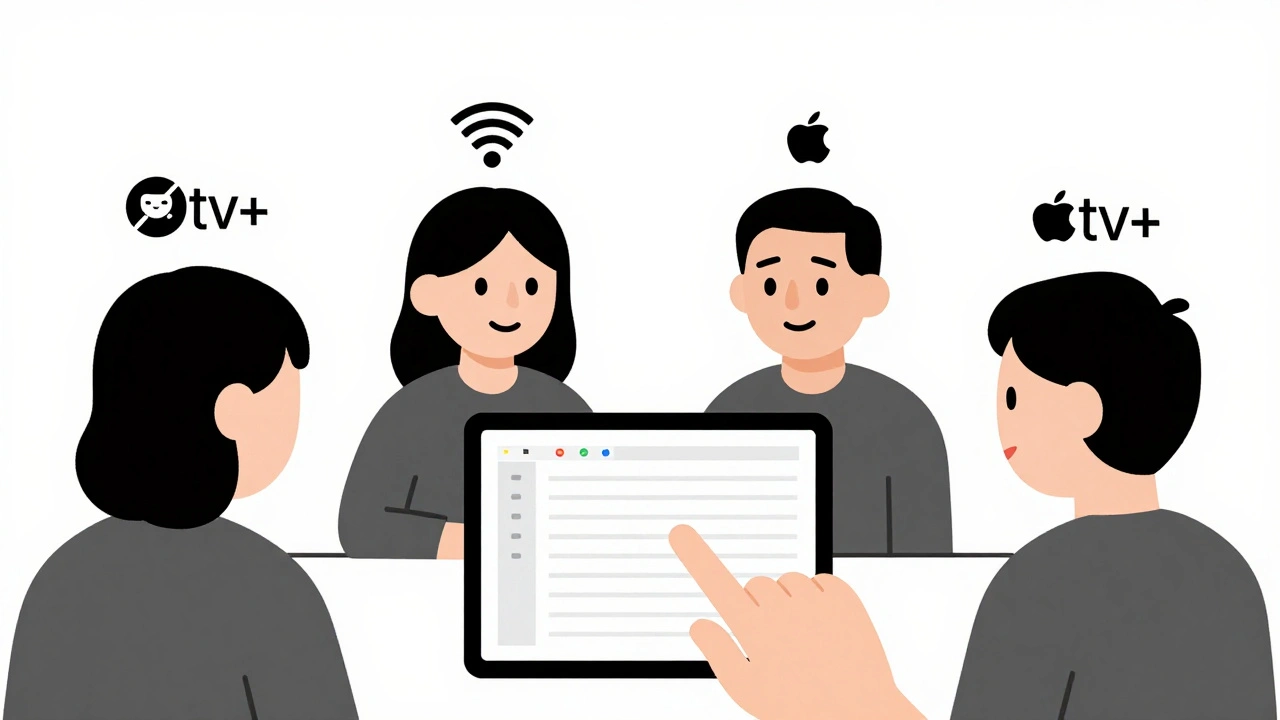
Use Google Sheets. Make a shared table with:
- Service name
- Monthly cost
- Who pays
- When it renews
Update it every month. Share it with everyone. If someone adds a new service, they add it to the sheet. No surprises.
Some people use apps like Splitwise or PaySplit to track shared bills. They work fine. But a simple spreadsheet is free, doesn’t need login details, and doesn’t feel invasive.
And if someone forgets to pay? Send a polite reminder. No drama. Use the sheet as proof. “Hey, you’re listed as paying for Paramount+ this month. Let me know if you’ve canceled-I’ll update the sheet.”
What About Family Plans and Discounts?
Some services offer family plans. Netflix Premium lets you have up to four screens. Disney+ lets you have seven profiles. Should you share those?
Yes-but only if everyone agrees. And only if you’re okay with sharing profiles.
Here’s the smart way:
- One person signs up for the family plan. They pay the full cost.
- Everyone else pays them back their share.
- Assign each person their own profile. No mixing watchlists.
- Set ground rules: no watching during work hours if someone’s on a Zoom call.
Example: Netflix Premium is $26/month. Four people. Each pays $6.50. One person pays the $26, gets reimbursed. Everyone has their own profile. Clean. Simple. No one’s accidentally watching their roommate’s true crime binge.
Never let someone else control your account. That’s how you end up with your recommendations filled with their ex’s favorite rom-coms.
What If Someone Moves Out?
Life changes. Someone gets a new job. Moves in with a partner. Leaves for university.
Here’s how to handle it:
- Update the streaming sheet the day they move out.
- They cancel their subscriptions immediately. Don’t wait for the next billing cycle.
- If they were paying for a family plan, they stop paying their share. The remaining people adjust.
- For Wi-Fi, if the plan stays the same, the others split their share evenly.
Example: Four people, $80 Wi-Fi. One leaves. Now three people. Each pays $26.67 instead of $20. Simple math. No guilt. No arguments.
And if someone moves in? Add them to the Wi-Fi split. Ask if they want to join any streaming services. Don’t assume. Ask.
How to Talk About It Without Starting a Fight
Money talks. But it shouldn’t cause drama.
Start with facts, not feelings. Say: “I’ve been noticing our bills keep going up. I think we should split Wi-Fi and streaming separately so everyone pays for what they use. Here’s how it could work.” Then show the spreadsheet.
Don’t say: “You’re wasting money on that show.” Say: “I noticed you’re paying for Apple TV+. I’m not using it-so I’m not paying for it. Want to add me to the plan?”
Be open to compromise. Maybe someone wants to share a subscription because they’re on a tight budget. That’s fine. Just make it official. Put it in the sheet.
And if someone refuses to play fair? Let them pay more. They’ll learn fast when their phone gets cut off because they didn’t pay their share.
Real Savings You’ll See
Let’s say you’re in a four-person house. Before: everyone paid $35 a month for “internet and streaming.” That’s $140 a month. After: Wi-Fi split evenly at $20 each. Streaming paid by user. Sarah pays $39, Mark pays $10, Alex and Jordan pay $0. Total: $20×4 + $39 + $10 = $129.
You just saved $11 a month. That’s $132 a year. One extra Netflix movie. A weekend trip to the Gold Coast. Or just more cash in your pocket.
And the real win? No more silent resentment. No more “Why am I paying for your shows?” texts. No more awkward silences during dinner.
When costs are clear, relationships stay healthy.
Final Checklist: Fair Sharing Made Easy
- Split Wi-Fi evenly-everyone pays the same for the connection.
- Streaming subscriptions? Only the user pays.
- Use a shared Google Sheet to track everything.
- Use individual profiles on shared family plans.
- Update the sheet when someone moves in or out.
- Never let someone else control your account.
- Don’t assume-ask.
It’s not about being cheap. It’s about being fair. And in a shared home, fairness isn’t optional. It’s the foundation.