28
Melodrama Theory: How Excess and Emotion Drive Social Critique
The Power of Over-the-Top Emotion
Most people use the word 'melodrama' as a put-down. If someone is "being melodramatic," we usually mean they're overreacting or making a mountain out of a molehill. But in the world of academic critique, Melodrama Theory is a lens used to analyze how stories use extreme emotion to expose deep-seated social conflicts. It's not about bad acting or cheap plot twists; it's about the tension between private feelings and public laws.
Think about a classic soap opera or a sweeping historical epic. The crying, the screaming, and the dramatic reveals aren't just there for shock value. They represent a struggle where a character's personal morality clashes with a rigid social system. When a character weeps openly because they can't marry someone from a different social class, that's not just 'excess'-it's a critique of the class system itself. The emotion becomes the only way to signal that the system is broken.
| Feature | Traditional Drama | Melodramatic Mode |
|---|---|---|
| Conflict Source | Internal psychological struggle | External social/moral pressure |
| Emotional Tone | Restrained or nuanced | Excessive, heightened, vivid |
| Resolution | Character growth or tragedy | Moral victory or social exposure |
| Goal | Exploration of human nature | Critique of systemic injustice |
The Struggle Between Private and Public
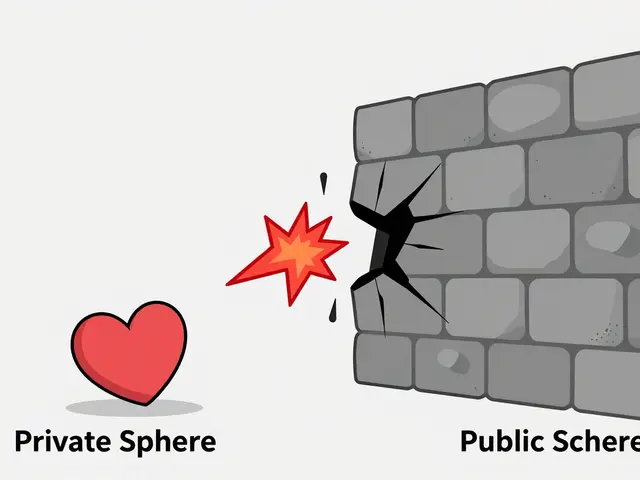
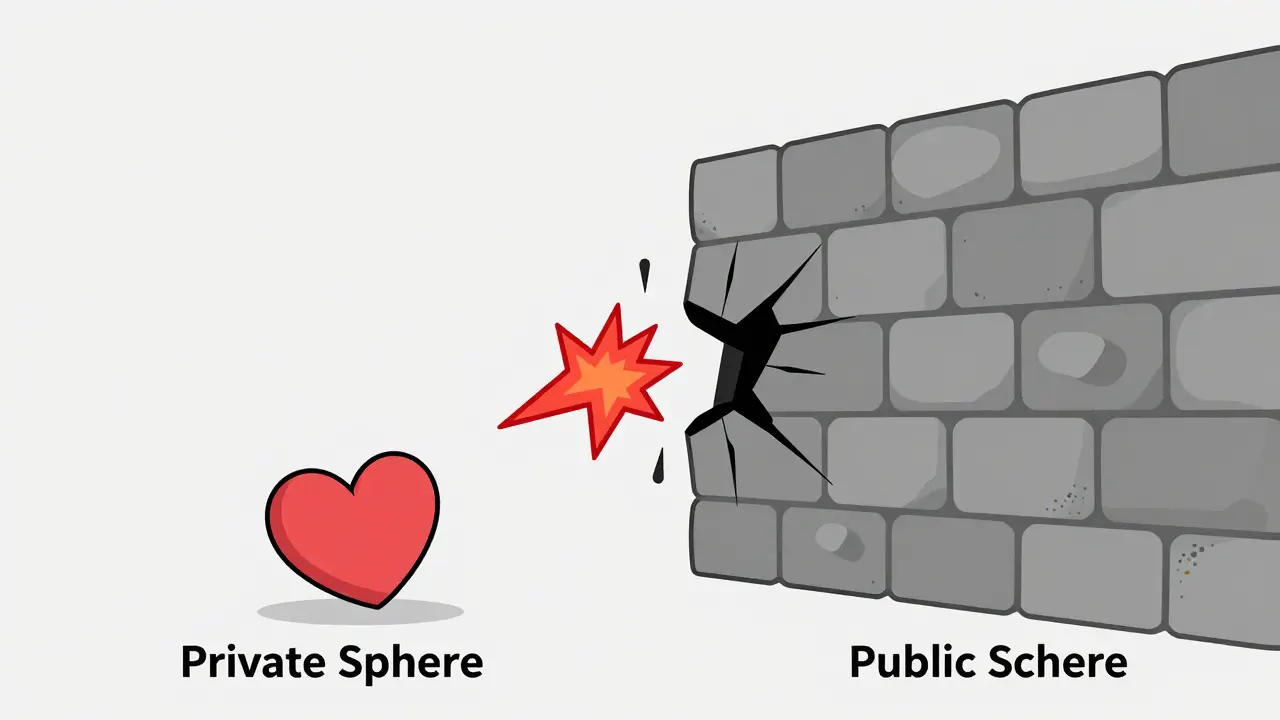
To really get Melodrama Theory, you have to look at the work of theorists like Peter Brooks. He argues that melodrama isn't just a genre of play, but a "mode" of expression. This means it can show up in a high-brow novel, a gritty crime movie, or even a political speech. The core of this mode is the friction between the Private Sphere (the home, the heart, the individual) and the Public Sphere (the law, the state, the economy).
Imagine a scenario where a mother is forced to give up her child because of a cruel law. In a standard drama, the story might focus on her internal grief. In melodrama, the focus shifts to the injustice of the law. The "excessive" sobbing isn't just for show; it's a protest. It tells the audience: "Look at what this law is doing to a human being!" The emotion serves as a bridge, turning a private pain into a public argument about right and wrong.
This creates a specific kind of moral clarity. In melodrama, the "good guys" are usually pure and the "bad guys" are irredeemable. While that might seem simplistic, it's actually a strategic move. By stripping away the grey areas, the story forces us to confront the absurdity or cruelty of the social structures that create these villains in the first place.
Why Excess Matters
We often mistake 'excess' for 'meaninglessness.' In reality, the heightened style of melodrama-the sweeping music, the extreme close-ups, the gasps-acts as a magnifying glass. When a narrative uses Emotional Excess, it's attempting to make the invisible visible. Social norms are often silent; we follow them without thinking. Melodrama makes those norms scream.
Take a movie like *Brokeback Mountain*. While it's not a traditional "soap," it uses melodramatic elements to critique the stifling expectations of masculinity in the American West. The silence between the characters is heavy, and when the emotion finally breaks through, it feels like a flood. That excess is necessary because the social pressure to be "manly" is so crushing that only a massive emotional eruption can break it. The tears aren't just about heartbreak; they are a critique of a culture that forbids love.
This is why melodrama is so often linked to marginalized groups. When you don't have political power, you can't change the law with a vote or a lobbyist. Instead, you use the only tool you have: the expression of suffering. By making the audience feel the weight of an injustice through extreme emotion, the story creates a moral imperative for change.
The Evolution of the Melodramatic Mode
Melodrama started in the 18th and 19th centuries, often combining dialogue with music (hence "melo-drama"). Early audiences in Victorian Era theaters loved these plays because they provided a clear moral compass in a rapidly changing industrial world. As the Industrial Revolution ripped families apart and pushed people into crowded cities, the domestic dramas of the stage reflected the anxiety of losing one's home and identity.
Over time, this moved from the stage to the silver screen. Early cinema, which lacked sound for years, relied heavily on the melodramatic mode. Actors had to use their bodies and faces to convey huge emotions because they couldn't rely on words. This created a visual language of excess-the clutching of the chest, the wide-eyed stare-that still influences how we film emotional scenes today.
Modern storytelling has integrated these elements into Cultural Studies. We now see melodrama not as a failure of art, but as a specific way of talking about power. Whether it's a K-drama focusing on familial obligation or a political thriller highlighting the corruption of the state, the engine is the same: a character's internal world is being crushed by an external force, and the resulting emotional explosion is a form of social commentary.
Common Pitfalls in Analyzing Melodrama
One big mistake people make is thinking that if a story is "emotional," it's automatically a melodrama. That's not true. A story about a man mourning his dog is sad, but it's not necessarily melodramatic. To be melodrama, there has to be a conflict between the individual and a social or moral system. If the sadness is just a personal tragedy without a broader social critique, it's just a tragedy.
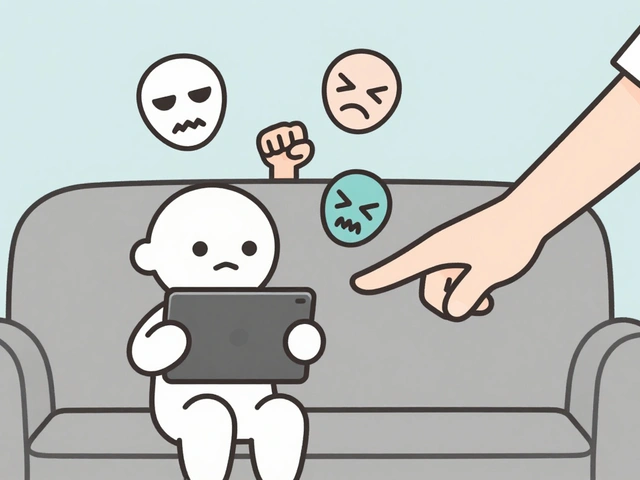
Another trap is dismissing the "sentimental" as "manipulative." Critics often say that melodrama "manipulates" the audience into feeling something. But why is that a bad thing? All art tries to evoke emotion. In the case of melodrama, the manipulation is a tool used to create empathy for someone who is being oppressed. If a movie makes you cry over a character's unfair treatment, it has successfully moved you from a position of passive observer to a position of moral witness.
Finally, avoid the idea that melodrama is only for "women's stories." While the genre has been unfairly gendered, some of the most powerful melodramatic critiques are found in stories about war, masculinity, and the state. The struggle against an uncaring system is a universal human experience, regardless of gender.
Applying the Theory to Modern Media
If you want to use Melodrama Theory to analyze a show or movie, ask yourself these three questions:
- Where is the excess? Look for moments where the emotion feels "too much." Does the music swell at the exact moment a secret is revealed? Do characters express their pain in an exaggerated way?
- What is the social barrier? Identify the rule, law, or social expectation that is causing the pain. Is it a class divide? A religious restriction? A corporate policy?
- Who is the "moral witness"? Melodrama requires an audience to see the injustice. How does the story position you to feel that the situation is unfair?
For example, look at a modern corporate satire. When a character has a complete mental breakdown in a cubicle because of a minor clerical error, that's a melodramatic moment. The breakdown is an excess of emotion, but the critique is aimed at the dehumanizing nature of modern office work. The "too much" emotion is the only logical response to a system that treats people like numbers.
Is melodrama the same as a soap opera?
Not exactly. A soap opera is a specific genre of television that often uses melodramatic techniques (like cliffhangers and extreme plot twists). Melodrama Theory, however, describes a "mode" of storytelling. This means that a serious award-winning film or a classic novel can be "melodramatic" in its approach to emotion and social critique, even if it isn't a soap opera.
Does melodrama always have a happy ending?
No. While many traditional melodramas end with the villain being punished and the innocent being rewarded, many modern versions end in tragedy. The point isn't necessarily the ending, but the process of exposing the conflict between personal desire and social restriction. A tragic ending can often make the social critique even more powerful by showing that the system is too strong to be overcome.
Why is the music so important in melodrama?
Music acts as an emotional amplifier. It tells the audience exactly how to feel and signals that the current moment is of high moral importance. In early theater, the music filled the gaps where dialogue couldn't express the depth of a character's suffering, effectively "voicing" the internal pain that the social world tried to suppress.
Can a story be both a tragedy and a melodrama?
Yes. The difference lies in the focus. A tragedy often focuses on the "fatal flaw" of a hero and their inevitable downfall. A melodrama focuses on the external forces and social injustices that trap the character. A story can do both: use the structure of a tragedy while employing the emotional excess and social critique of the melodramatic mode.
Who are the main theorists associated with this?
Peter Brooks is one of the most influential, particularly in how he distinguishes the "melodramatic mode" from the genre. Other scholars in the fields of Cultural Studies and Film Theory often apply these ideas to analyze how gender, race, and class are represented in popular media.
Next Steps for Analysis
If you're a student of film or literature, start by picking a movie you've always called "too dramatic" and try to find the social critique. Look past the tears and ask: "What is the world in this story trying to force the character to be, and why is the character resisting it?" Once you see the conflict between the private heart and the public law, the "excess" stops being annoying and starts being an essential tool for understanding the story's real meaning.