17
Science Advisors in Cinema: How Sci-Fi Grounds Its Theories
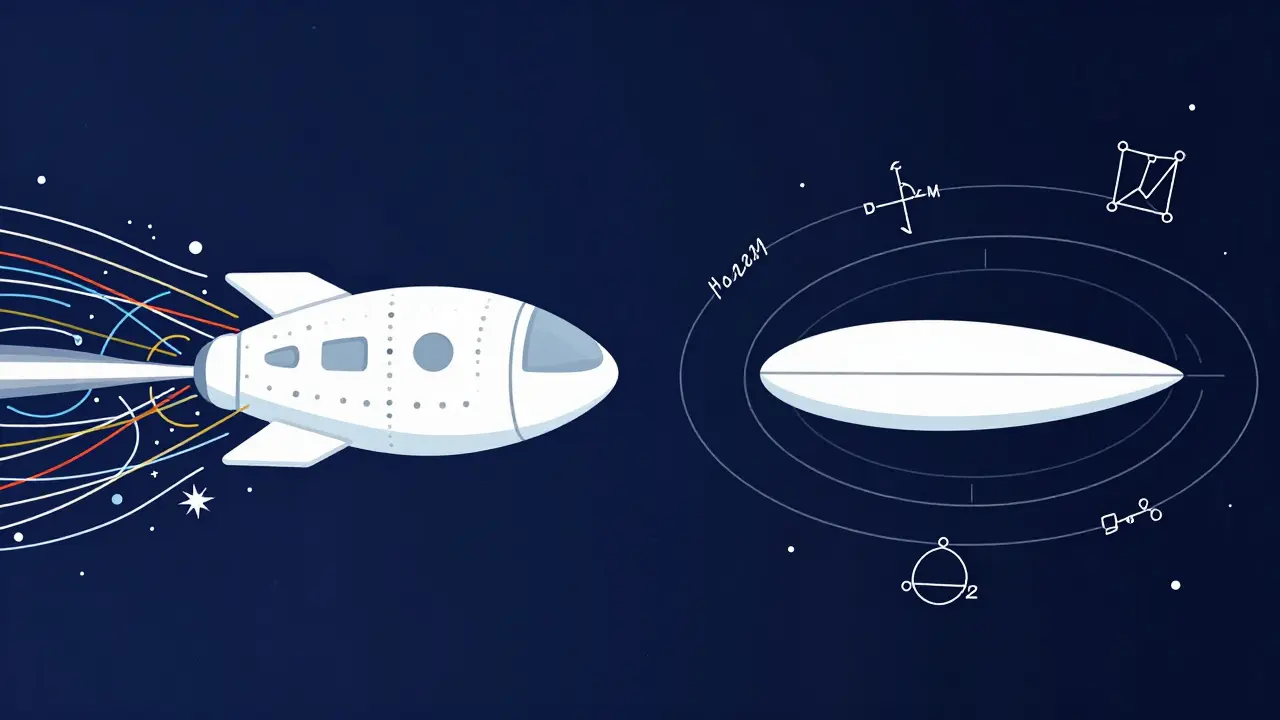
Have you ever watched a space movie and cringed because the spaceship made a loud roaring noise in the vacuum of space? Or maybe you nodded along when a character explained time travel using a diagram that looked like it was drawn by someone who just read the Wikipedia page five minutes ago? There is a thin line between science fiction that feels plausible and science fiction that feels like nonsense. That line is usually drawn by an unsung hero in the production process: the science advisor.
We often think of Hollywood as a place where facts go to die. But behind the scenes of some of the most visually stunning and intellectually stimulating films of the last decade, real scientists have been working tirelessly to ensure that the impossible looks just possible enough to sell the audience on the dream. They don't just fix equations; they shape narratives, design visuals, and sometimes even rewrite scripts to keep the story grounded in reality.
The Role of the Science Advisor
A science advisor is a professional consultant hired by film or television productions to provide technical expertise. Unlike a script doctor who fixes dialogue or a stunt coordinator who manages physical risk, a science advisor manages intellectual credibility. Their job is to bridge the gap between hard data and dramatic storytelling.
Consider the difference between a fantasy movie and a hard sci-fi movie. In a fantasy film, magic exists, so the rules are whatever the writer decides them to be. In hard sci-fi, the premise relies on technology or physics that *could* exist, even if it doesn't yet. If the physics are wrong, the suspension of disbelief breaks. The advisor’s role is to prevent that break. They answer questions like, "If this black hole were real, what would it look like?" or "How long would it actually take to travel to Mars with current propulsion technology?"
This role has evolved significantly. In the mid-20th century, advisors might have just checked props for anachronisms. Today, they are involved from pre-production through post-production. They help design CGI assets, advise actors on how to speak like researchers, and review final cuts for glaring errors. Kip Thorne, the Nobel Prize-winning physicist who advised on Interstellar, didn't just give notes; he provided the mathematical equations that rendered the black hole Gargantua, leading to actual published scientific papers based on the visual effects work.
Why Accuracy Matters in Storytelling
You might wonder why filmmakers bother. Why not just make the laser swords glow blue and call it a day? The answer lies in emotional resonance. When the underlying mechanics of a world feel real, the stakes feel higher. If we believe the characters are operating within a consistent set of rules, their struggles against those rules become more compelling.
Scientific accuracy also protects the film from ridicule. In the age of social media, audiences are more knowledgeable than ever. A single obvious error can derail a film's reputation, turning a blockbuster into a meme. By grounding theories in real science, filmmakers create a layer of authenticity that rewards repeat viewings. Fans love to dissect details. If the details hold up, the community engagement grows. If they fall apart, the backlash can be swift.
Furthermore, accurate science can inspire. Many people cite specific films as the reason they pursued careers in STEM (Science, Technology, Engineering, and Mathematics). Seeing complex concepts handled with respect and clarity shows young viewers that science is not just dry formulas, but a tool for exploration and problem-solving. It democratizes high-level concepts, making them accessible to millions without dumbing them down.
Case Study: Interstellar and the Physics of Black Holes
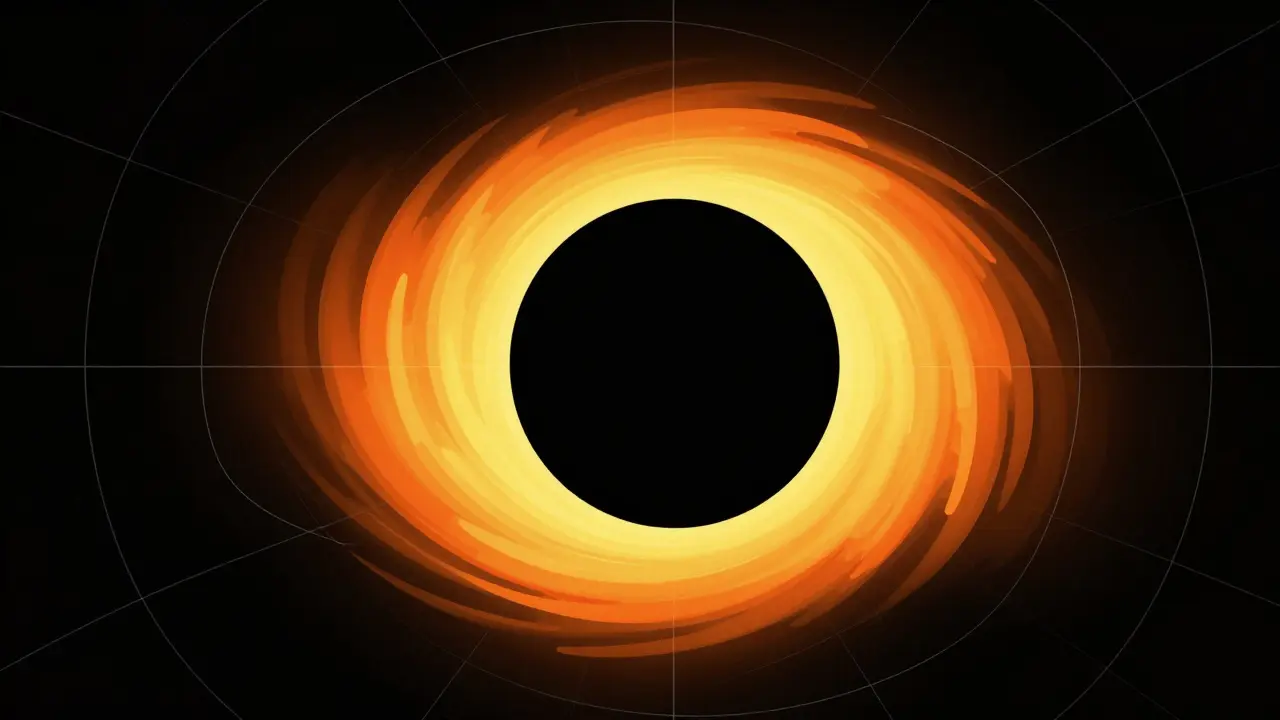
Few examples illustrate the power of a science advisor better than Christopher Nolan’s Interstellar. Before this film, depictions of black holes were largely artistic interpretations-swirling vortexes of purple and green. Nolan brought in Kip Thorne to ensure the depiction was physically accurate according to general relativity.
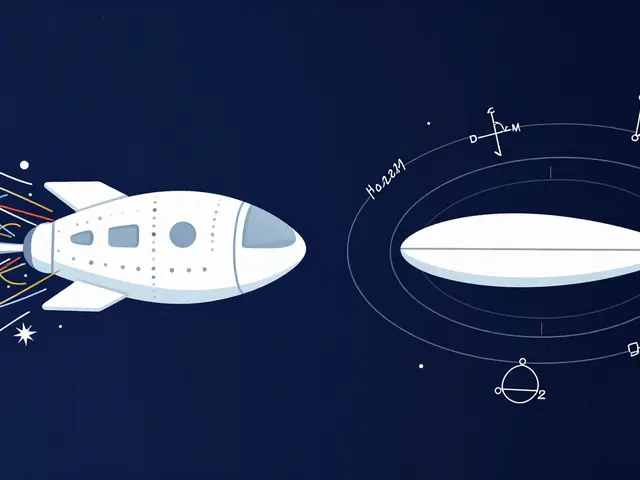
Thorne provided the team at Double Negative VFX with the equations governing light bending around a massive object. The resulting image of Gargantua was not just cool; it was scientifically novel. The rendering revealed that a black hole should have a bright ring of light above and below it, caused by light from the accretion disk bending over the top and under the bottom of the shadow. This wasn't just movie magic; it was a visualization of Einstein’s field equations. The collaboration resulted in two peer-reviewed papers published in The Astrophysical Journal, proving that cinema and academia can feed each other.
However, there was a trade-off. To keep the story moving, the film took liberties with the interior of the black hole, introducing a tesseract structure that allowed communication across dimensions. Thorne argued that while the exterior was accurate, the interior remained speculative. This highlights the core tension of the advisor’s job: balancing truth with narrative necessity.
The Tension Between Drama and Data
No matter how much an advisor wants to stick to the facts, they serve the story. Directors and writers ultimately decide what stays in the cut. This creates inevitable friction. A scientist might say, "That maneuver would kill the crew instantly due to G-force." The director might reply, "But if they die, the movie ends here, and we lose the third act."
In these moments, the advisor shifts from enforcer to creative partner. They might suggest a workaround. Instead of killing the crew, maybe the ship has experimental inertial dampeners? Or perhaps the maneuver happens in a low-gravity environment where the forces are less lethal? The goal is to find the path of least resistance to plausibility.
Take The Martian as an example. Director Ridley Scott hired Michael Wilson, a former NASA engineer, to consult. The film is famous for its "hard sci-fi" approach, solving problems with botany, chemistry, and orbital mechanics. However, even here, compromises were made. The storm that strands Mark Watney is depicted as a massive, planet-engulfing event. In reality, Mars storms are weak due to the thin atmosphere. The filmmakers exaggerated the storm to provide a dramatic inciting incident. The advisor’s job was to ensure that once Watney was stranded, his survival methods were rigorously correct. The balance was struck: dramatic entry, realistic survival.
Beyond Physics: Biology and Sociology
Science advising isn't limited to astrophysics. Biologists, geneticists, sociologists, and medical experts play crucial roles too. In Jurassic Park, the concept of extracting DNA from amber-preserved mosquitoes was scientifically dubious even then, but the film consulted with paleontologists to get the skeletal structures and behaviors right. The chaos theory lectures delivered by Jeff Goldblum’s character were grounded in real mathematical principles, adding thematic depth to the plot.
In dystopian futures, sociological accuracy matters. Films like Children of Men relied on consultants to depict a world dealing with global infertility realistically. The political unrest, the refugee crises, and the societal collapse needed to feel like logical extensions of current trends, not random chaos. Advisors help build the backstory of the world, ensuring that the social fabric tears in believable ways.
| Film | Primary Discipline | Advisor Role | Level of Accuracy |
|---|---|---|---|
| Interstellar | Theoretical Physics | Mathematical modeling for CGI | High (Exterior), Speculative (Interior) |
| The Martian | Engineering/Botany | Script review and prop verification | Very High |
| Gravity | Orbital Mechanics | Visual simulation oversight | Medium (Dramatic license taken) |
| Arrival | Linguistics | Language system creation | High (Conceptual) |
How Filmmakers Find and Work with Advisors
Finding the right expert is half the battle. Studios often tap into academic networks, reaching out to professors at universities known for strong STEM programs. Sometimes, the connection comes through previous collaborations. Once hired, the integration process varies. Some advisors are embedded in the writers' room, attending daily meetings. Others are consulted ad-hoc via email or phone calls.
Effective communication is key. Scientists tend to speak in jargon; filmmakers speak in emotion and imagery. A good advisor translates complex concepts into simple metaphors. Instead of explaining quantum entanglement with wave functions, they might compare it to a pair of dice that always land on matching numbers, no matter how far apart they are. This translation allows the writer to weave the concept into dialogue naturally.
Compensation for these roles ranges widely. Independent films might offer credit and a small fee, while blockbusters pay significant consulting fees. Regardless of pay, many scientists accept these roles for the exposure and the chance to communicate science to a broad audience. It’s a form of public outreach that few academic channels can match.
The Future of Scientific Consulting in Film
As visual effects become more sophisticated, the demand for precise scientific input will only grow. With the rise of virtual production and real-time rendering, advisors may need to interact directly with digital environments, tweaking parameters live on set. We are also seeing more diversity in advisory fields. Climate change experts, AI ethicists, and neuroscientists are increasingly sought after as stories tackle contemporary issues.
Moreover, the line between documentary and fiction is blurring. Projects that blend factual reporting with narrative drama require advisors who can navigate both worlds. The future of sci-fi isn't just about looking cool; it's about feeling true. And that truth is curated by the minds working quietly behind the camera.
Who was the science advisor for Interstellar?
The primary science advisor for Interstellar was Kip Thorne, a Nobel Prize-winning theoretical physicist from Caltech. He played a pivotal role in developing the visual representation of the black hole Gargantua and ensured the gravitational physics were mathematically sound.
Do science advisors get credited in movies?
Yes, typically. Science advisors are usually listed in the end credits under categories like "Technical Consultant," "Scientific Advisor," or "Special Thanks." In major productions where their contribution is substantial, such as Interstellar or The Martian, they may receive prominent billing or executive producer credits.
Can a science advisor stop a scene from being filmed?
Generally, no. The final decision always rests with the director and producers. An advisor can strongly recommend against a scene if it violates basic scientific principles, but if the creative team believes the dramatic impact outweighs the accuracy, the scene will likely proceed. The advisor’s power is persuasive, not authoritative.
What is the difference between a hard sci-fi and soft sci-fi movie?
Hard sci-fi prioritizes scientific accuracy and plausibility, often requiring rigorous consultation with experts (e.g., The Martian). Soft sci-fi focuses more on character development, social issues, or philosophical themes, using science as a backdrop rather than a central constraint (e.g., Star Wars).
How do filmmakers choose which scientific inaccuracies to ignore?
Filmmakers prioritize narrative flow and visual spectacle. If a scientific detail slows down the pacing or makes a scene boring, it is often sacrificed. For example, sound in space is frequently added for dramatic effect, even though sound cannot travel in a vacuum. The choice is usually based on whether the error distracts the average viewer or enhances the emotional experience.