23
African Cinema Evolution: From Sembène to Mati Diop
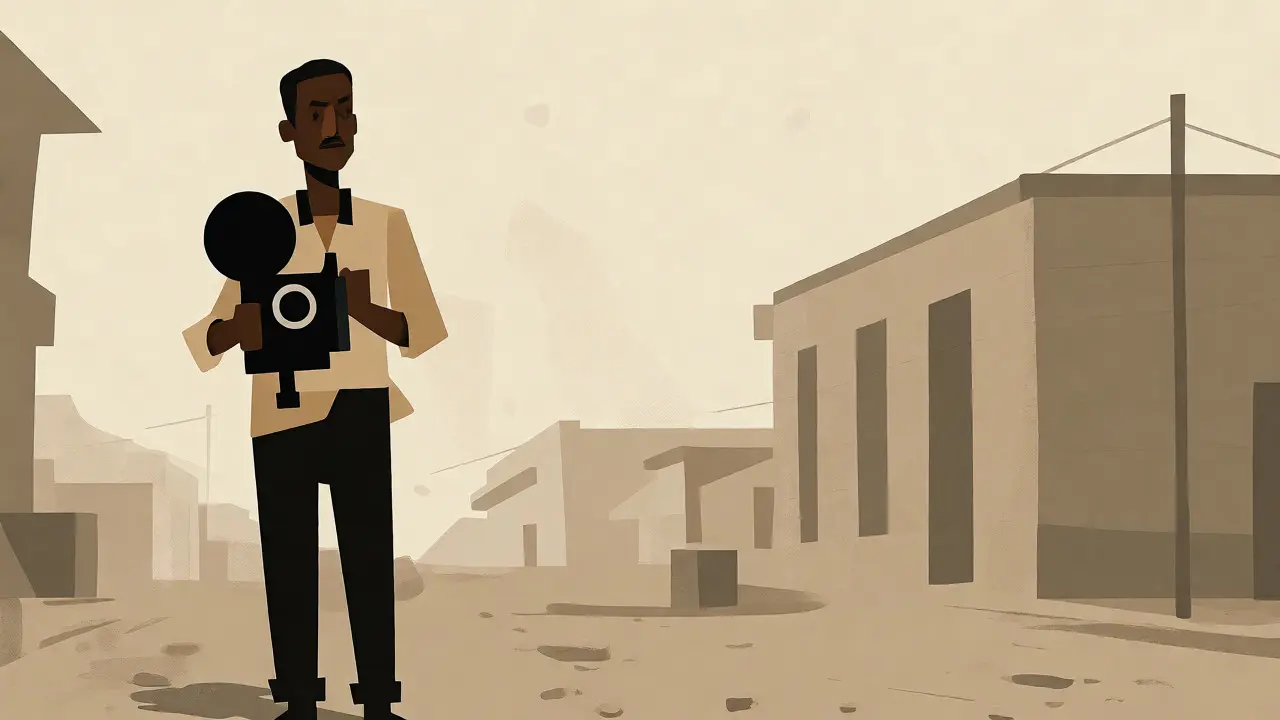
You might think of African cinema as a single, monolithic block of art. It isn't. It's a sprawling, messy, brilliant conversation that started in the post-colonial dust of Dakar and now echoes through the neon-lit streets of modern global festivals. If you've only seen the Hollywood version of Africa-safari documentaries or war dramas-you're missing half the story. The real magic happens when local voices take the camera. We're talking about films that don't just depict culture but interrogate it, challenge it, and reinvent it.
This journey isn't just about old black-and-white reels gathering dust. It’s about understanding how a handful of pioneers laid the groundwork for today’s most celebrated auteurs like Mati Diop. Why does this matter? Because cinema is memory. And for decades, Africa’s memories were edited by others. Now, they’re being reclaimed. Let’s look at how we got here, who built the foundation, and where the new generation is taking us next.
The Father of African Cinema
You can’t talk about this topic without starting with Ousmane Sembène. He wasn’t just a filmmaker; he was a political activist who realized early on that literature had limits. Books reach the literate elite, but movies reach everyone-even those who can’t read. Born in Senegal, Sembène made his first short film, Borom Sarret (The Wagoner), in 1963. This 20-minute piece is widely considered the first true African film. Why? Because it centered an African protagonist struggling against systemic poverty, not as a backdrop for white explorers, but as the main event.
Sembène’s approach was radical for its time. He insisted on using local languages like Wolof instead of French. He wanted authenticity over accessibility for Western audiences. His feature debut, La Noire de... (Black Girl) in 1966, shattered expectations. It told the story of a young Senegalese woman working as a maid for a French couple, highlighting the lingering psychological scars of colonialism. The film won awards in Europe, but more importantly, it sparked a movement. It proved that African stories could hold their own on the world stage without pandering to exotic stereotypes.
His legacy isn’t just artistic; it’s structural. Sembène helped found production companies and training institutes across West Africa. He understood that one director doesn’t make a cinema industry. You need infrastructure. You need writers, technicians, and distributors who understand the local context. Without him, the pipeline for future talent would have remained broken.
The Post-Colonial Wave and Pan-African Identity
Following Sembène’s lead, a wave of filmmakers emerged across the continent in the 1970s and 80s. This era, often called the "Post-Colonial Wave," focused heavily on national identity and social critique. In Ghana, Kwaw Ansah directed Heritage Africa, a visually stunning epic that critiqued the loss of cultural roots. In Ethiopia, Haile Gerima crafted Sankofa, a magical realism masterpiece that transported a modern African-American model back to slavery times to confront her ancestors.
These films shared a common DNA: they were didactic. They wanted to teach. They wanted to correct the historical record. While some critics later argued these films felt heavy-handed or overly political, they served a crucial purpose. They established a visual language that was distinctly African. They rejected the smooth, glossy aesthetics of Hollywood in favor of raw, textured storytelling that mirrored the realities of daily life.
Consider the funding models of this era. Many of these films relied on state support or international aid from France and the Soviet Union. This created a dependency that would eventually cause problems when budgets dried up in the 1990s. But for two decades, this period allowed African cinema to mature, experiment, and find its voice. It wasn’t perfect, but it was necessary. It built the audience base that today’s directors rely on.
Nollywood: The Industrial Disruptor
If Sembène represents the art-house soul of African cinema, then Nollywood represents its industrial muscle. Emerging from Nigeria in the early 1990s, Nollywood didn’t start in fancy studios. It started in video shops. Directors like Kenneth Nnebue began shooting low-budget films directly onto VHS tapes because traditional film stock was too expensive. The result? A massive output of melodramas, comedies, and horror flicks that resonated deeply with Nigerian audiences.
Critics initially dismissed Nollywood as "junk food" cinema. Poor lighting, shaky cameras, repetitive plots. But they missed the point. Nollywood democratized filmmaking. It showed that you didn’t need millions of dollars to tell a compelling story. You needed relatable characters and sharp dialogue. By the mid-2000s, Nollywood had become the second-largest film industry in the world by volume, surpassing Hollywood in number of titles produced annually.
This shift changed the economic landscape of African cinema. Suddenly, there was money flowing into local production. It also influenced neighboring countries. Ghana developed "Ghallywood." Kenya saw a rise in local productions. The success of Nollywood proved that African audiences preferred watching stories about themselves, made by people who looked like them. It forced international distributors to pay attention, not just to festival darlings, but to commercial hits.

Mati Diop and the New Avant-Garde
Fast forward to the 2010s and 2020s. The landscape has shifted again. Enter Mati Diop, a French-Senegalese director whose work bridges the gap between the documentary tradition of Sembène and the poetic sensibility of European art-house cinema. Her debut feature, Atlantics (2019), won the Grand Prix at Cannes. This was a historic moment-the first time a Black female director competed for the Palme d'Or.
Atlantics isn’t a straightforward drama. It’s a ghost story set in Dakar, focusing on young workers building a futuristic tower who fall into a coma after receiving unpaid wages. Their spirits return to haunt their lovers. It’s surreal, atmospheric, and deeply political. Unlike the direct social realism of earlier eras, Diop uses genre elements-horror, mystery-to explore themes of migration, labor exploitation, and gender dynamics.
Diop represents a new generation that is globally connected but locally rooted. She grew up between Paris and Dakar, absorbing both cultures. Her work reflects this hybridity. She doesn’t feel the need to explain Africa to Western viewers. She assumes intelligence. This confidence marks a significant departure from the defensive posture of earlier post-colonial films. Today’s directors aren’t trying to prove they belong in cinema. They know they do. They’re interested in pushing the medium itself.
| Era | Key Figures | Dominant Style | Funding Source | Primary Audience |
|---|---|---|---|---|
| Post-Colonial (1960s-80s) | Ousmane Sembène, Haile Gerima | Social Realism, Didactic | State Aid, International Grants | Intellectual Elite, Festival Circuit |
| Nollywood Boom (1990s-2010s) | Kenneth Nnebue, Kunle Afolayan | Melodrama, Comedy, Low-Budget | Private Investment, Video Sales | Mass Domestic Market |
| New Wave (2010s-Present) | Mati Diop, Wanuri Kahiu, Rungano Nyoni | Genre Hybrid, Poetic, Global Appeal | Co-productions, Streaming Platforms | Global Cinephiles, Diaspora |
Streaming Wars and Digital Distribution
The biggest change in recent years hasn’t been artistic-it’s technological. Platforms like Netflix, Amazon Prime, and Showmax have poured money into African content. Why? Because the diaspora wants to watch homegrown stories, and local populations are hungry for entertainment that reflects their reality. Shows like Jenifa’s Diary or films like Rafiki by Wanuri Kahiu have found massive online audiences.
This digital shift solves the distribution problem that plagued Sembène’s era. In the past, getting a film from Lagos to London required physical prints and complex logistics. Now, a file upload reaches millions instantly. However, this comes with risks. Algorithms favor binge-worthy content, which can push creators toward formulaic storytelling. There’s also the danger of "Netflixification," where local nuances are smoothed out to appeal to a global median viewer.
Yet, the opportunities are undeniable. Young filmmakers no longer need to wait five years for grant approval. They can shoot on smartphones, edit on laptops, and distribute worldwide. This accessibility has led to an explosion of diverse voices. We’re seeing more women directors, more LGBTQ+ narratives, and more experimental formats than ever before. The gatekeepers are losing power.

Challenges Facing Contemporary Filmmakers
Despite the boom, challenges remain. Funding is still inconsistent. While streaming giants provide capital, they often demand ownership rights, leaving little profit for local producers. Piracy continues to eat into revenue streams, especially in markets where legal access is limited by cost or infrastructure.
Then there’s the issue of representation within representation. Who gets to tell the story? Often, the "African film" label lumps together vastly different cultures. A Nigerian comedy is very different from a South African thriller. Generalizing these works can flatten their unique contexts. Critics argue that we need to move beyond the continental label and recognize specific national cinemas while acknowledging shared struggles.
Education is another hurdle. Film schools exist, but many lack resources. Mentorship programs are growing, but they’re not yet widespread enough to support the sheer volume of aspiring talent. Without proper training, technical quality suffers, which can reinforce stereotypes about African production values.
What’s Next for African Cinema?
So, where do we go from here? The trend points toward greater collaboration. Co-productions between African nations and Europe, Asia, and Latin America are becoming standard. This brings in cash and expertise but requires careful negotiation to maintain creative control.
We’re also seeing a rise in animation. Studios in Kenya and Nigeria are producing high-quality animated features that compete internationally. This expands the definition of African cinema beyond live-action drama. Additionally, virtual reality projects are emerging, offering immersive experiences that could redefine how stories are told.
For viewers, the takeaway is simple: broaden your horizon. Don’t stick to the same three famous names. Explore the catalogues of platforms dedicated to African content. Watch older films to understand the context of new ones. Support independent theaters and film festivals. Your engagement drives the industry forward.
African cinema isn’t a trend. It’s a permanent fixture of global culture. From Sembène’s gritty realism to Diop’s spectral poetry, it offers a mirror to our shared humanity. The cameras are rolling. Are you watching?
Why is Ousmane Sembène considered the father of African cinema?
Sembène is credited with creating the first sub-Saharan African feature films and establishing a distinct cinematic language that prioritized local languages, authentic narratives, and social realism over Western conventions.
How did Nollywood impact the African film industry?
Nollywood revolutionized production by proving that low-budget, direct-to-video films could achieve massive commercial success, thereby democratizing filmmaking and inspiring similar industries across the continent.
What makes Mati Diop's work significant?
Mati Diop is significant for blending genres like horror and romance with socio-political commentary, and for being the first Black female director to compete for the Palme d'Or at Cannes, marking a milestone for diversity in global cinema.
Are African films mostly social realism?
While social realism dominated the post-colonial era, contemporary African cinema includes a wide variety of genres such as sci-fi, horror, comedy, and animation, reflecting a more diverse and experimental creative landscape.
How has streaming affected African cinema?
Streaming platforms have improved global visibility and provided new funding sources, but they also raise concerns about data ownership, algorithmic bias, and the potential homogenization of local storytelling styles.