9
Best French New Wave Films: Essential Masterpieces by Truffaut, Godard, and More
The Spark of Rebellion: How it Started
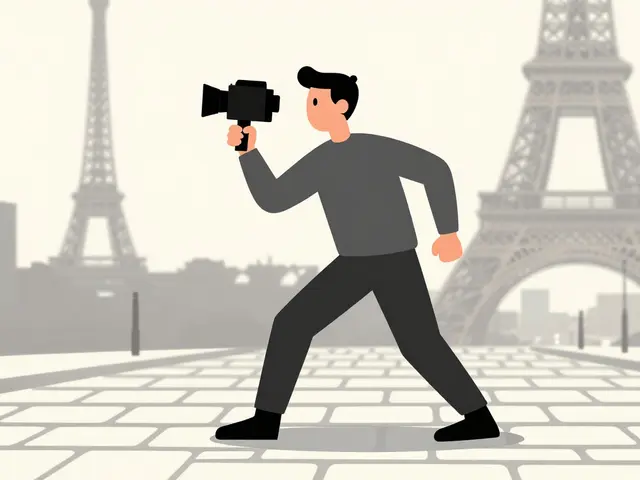
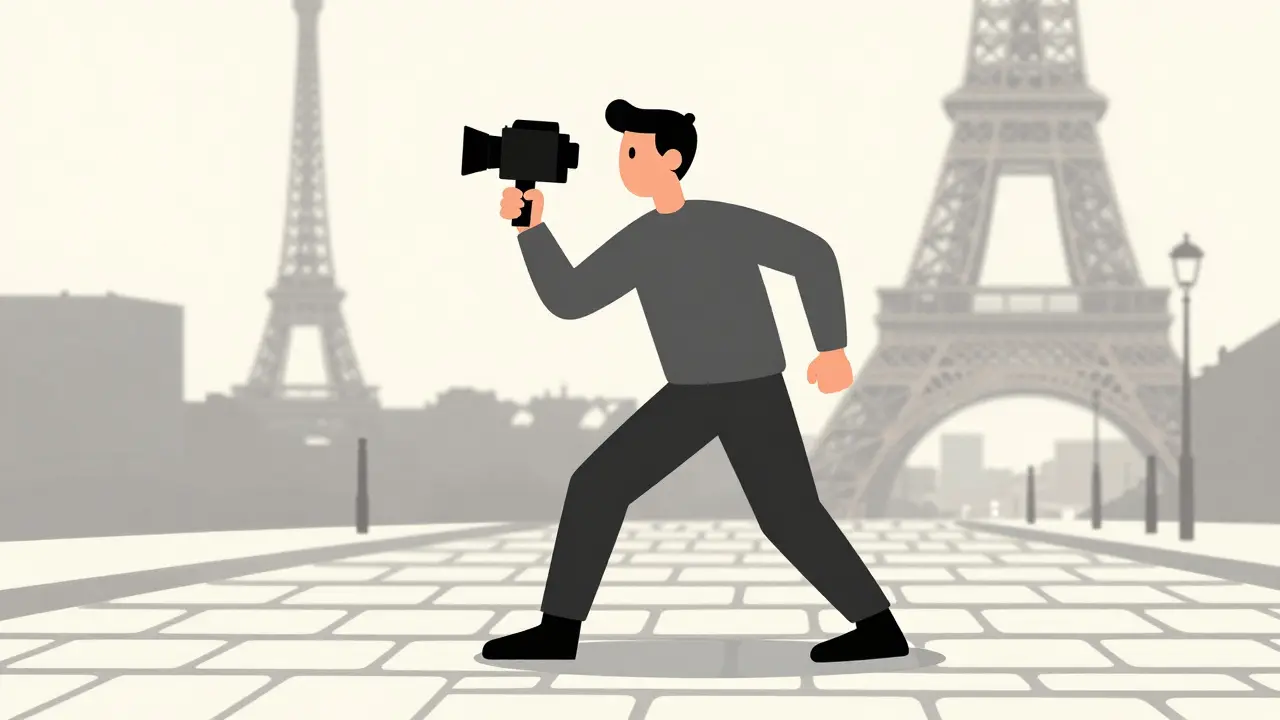
Before we look at the films, you need to understand where this madness came from. Most of these directors started as writers for Cahiers du Cinéma, a highly influential film magazine. They spent their days obsessing over American directors like Alfred Hitchcock and Howard Hawks, arguing that the director should be the 'author' of the film. This is where the Auteur Theory comes in. It suggests that a movie should reflect the personal creative vision of the director, not the requirements of a producer or a scriptwriter. They traded heavy studio cranes for lightweight cameras and switched from soundstages to the actual streets of Paris. This gave their films a raw, documentary-like feel that felt honest and urgent. They weren't interested in polished perfection; they wanted life in all its messy, spontaneous glory. This shift allowed them to experiment with things that would have been fired from a Hollywood set in 1960, like the jump cut-where a scene abruptly snaps forward in time, skipping the boring bits.The Breathless Revolution of Jean-Luc Godard
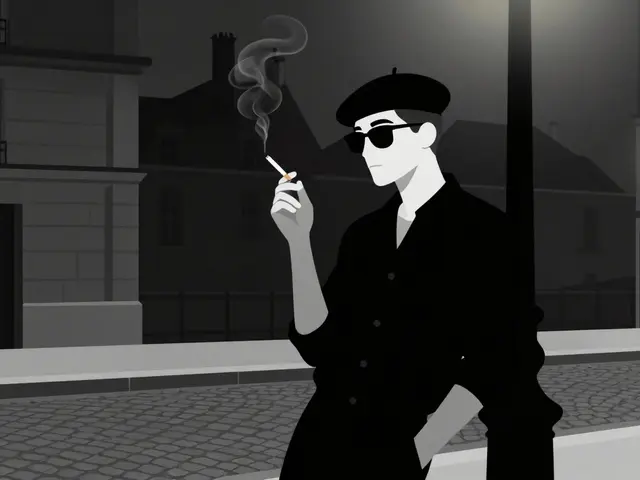
You can't talk about this era without starting with Jean-Luc Godard. He was the enfant terrible of the group. In 1960, he released Breathless (À bout de souffle), and cinema was never the same. The movie follows a small-time crook and an American student in Paris, but the plot is almost secondary to the style. Godard used jump cuts to create a jagged, nervous energy that mirrored the restlessness of the characters. He ignored the rule that scenes should flow smoothly. Instead, he made the audience aware they were watching a movie. Why? Because he wanted to challenge the passive consumption of cinema. In Breathless, the camera moves with a frantic curiosity, capturing the smoke of cigarettes and the noise of the city. It felt like a jazz record in movie form-improvisational, bold, and completely unpredictable.The Emotional Heart of François Truffaut
While Godard was busy breaking the machine, François Truffaut was exploring the human soul. His debut, The 400 Blows (Les Quatre Cents Coups), is perhaps the most touching film of the movement. It's a semi-autobiographical story about a misunderstood boy named Antoine Doinel who struggles with a cold school system and an indifferent home life. Unlike the intellectual fireworks of Godard, Truffaut focused on empathy. The famous final shot of the film-a freeze-frame of Antoine's face-became an iconic symbol of cinematic youth and entrapment. Truffaut proved that the New Wave wasn't just about technical tricks; it was about using those tools to tell deeper, more personal stories. He brought a lyrical sensibility to the screen, blending a love for old Hollywood with a modern, European sensibility. If Godard was the brain of the movement, Truffaut was undoubtedly its heart.Beyond the Big Two: The Hidden Gems
It's a common mistake to think the movement was just a two-man show. There were other visionaries pushing boundaries. Take Agnès Varda, often called the grandmother of the French New Wave. Her film Cléo from 5 to 7 is a masterclass in real-time storytelling. The movie follows a singer as she wanders Paris for two hours while waiting for medical results. Varda blended documentary realism with a poetic, feminist lens, focusing on how the world looks at a woman versus how she sees herself. Then there was Alain Resnais, who took the movement into the realm of memory and time. His film Hiroshima mon amour used a non-linear structure to explore the trauma of war and the fragility of memory. While Godard and Truffaut were filming on the streets, Resnais was experimenting with how the human mind actually processes experience, breaking the chronological flow of storytelling entirely.| Director | Core Philosophy | Signature Technique | Essential Film |
|---|---|---|---|
| Jean-Luc Godard | Deconstruction of Cinema | Jump Cuts / Fourth Wall Breaks | Breathless |
| François Truffaut | Personal Narrative / Humanism | Freeze Frames / Lyricism | The 400 Blows |
| Agnès Varda | Social Realism / Feminism | Real-time pacing / Subjectivity | Cléo from 5 to 7 |
| Alain Resnais | Intellectualism / Memory | Non-linear timelines | Hiroshima mon amour |
Practical Tips for Watching These Films Today
If you're diving into these for the first time, don't expect the pacing of a modern blockbuster. There are no three-act structures here. The characters might wander for ten minutes just talking about philosophy, or the camera might suddenly cut to something completely unrelated. To actually enjoy these, you have to stop looking for a "point" and start feeling the mood. Try watching them in their original French with subtitles. The rhythm of the language is a huge part of the experience. Also, look for restored versions. Because these were shot on 35mm film often in natural light, the grain and contrast are essential to the vibe. If you watch a heavily filtered, modernized version, you lose that gritty, street-level energy that made the movement revolutionary in the first place.The Lasting Legacy: Why it Still Matters
You might wonder why we're still talking about movies from the 60s. It's because the New Wave gave filmmakers permission to be messy. Before the Nouvelle Vague, movies were meant to be invisible-the camera shouldn't be noticed, and the acting should be seamless. The New Wave told us that the camera is a pen, and the director is the writer. This philosophy leaked into the 'New Hollywood' era of the 70s. Directors like Martin Scorsese and Quentin Tarantino owe a massive debt to Godard's editing and Truffaut's character studies. When you see a modern director use a handheld camera to create tension or an unconventional edit to show a character's mental state, that's the French New Wave in action. They proved that you don't need a million-dollar budget to make a masterpiece; you just need a camera, a bit of courage, and a total disregard for the rules.What exactly is a 'jump cut' and why was it a big deal?
A jump cut happens when two sequential shots of the same subject are taken from camera positions that vary only slightly, making the subject appear to 'jump' in time. Before Godard, this was considered a mistake. He used it intentionally to speed up the pace and break the illusion of reality, forcing the viewer to realize they were watching a constructed piece of art.
Is the French New Wave a specific genre of movie?
Not exactly. It's more of a style or a movement. While many of the films are dramas or romances, the 'genre' is really the approach to filmmaking-emphasizing improvisation, location shooting, and the director's personal vision over a traditional script.
Where should a beginner start?
If you want something emotional and accessible, start with Truffaut's 'The 400 Blows'. If you're in the mood for something edgy, experimental, and fast-paced, go for Godard's 'Breathless'. For a more poetic and visual experience, 'Cléo from 5 to 7' is the perfect entry point.
How did the movement affect modern cinema?
It broke the monopoly of the big studios by proving that low-budget, independent films could be critical and commercial successes. It popularized the Auteur Theory, leading to the rise of the 'star director' and influencing everything from indie cinema to the stylized works of Wes Anderson and Quentin Tarantino.
What is the 'Tradition of Quality' they were fighting?
The 'Tradition of Quality' referred to the polished, studio-bound French films of the 1940s and 50s. These movies relied heavily on literary adaptations, expensive sets, and professional scripts that felt artificial and stale to the young critics at Cahiers du Cinéma.