30
Content Licensing and International Availability Explained: Why Your Shows Are Missing
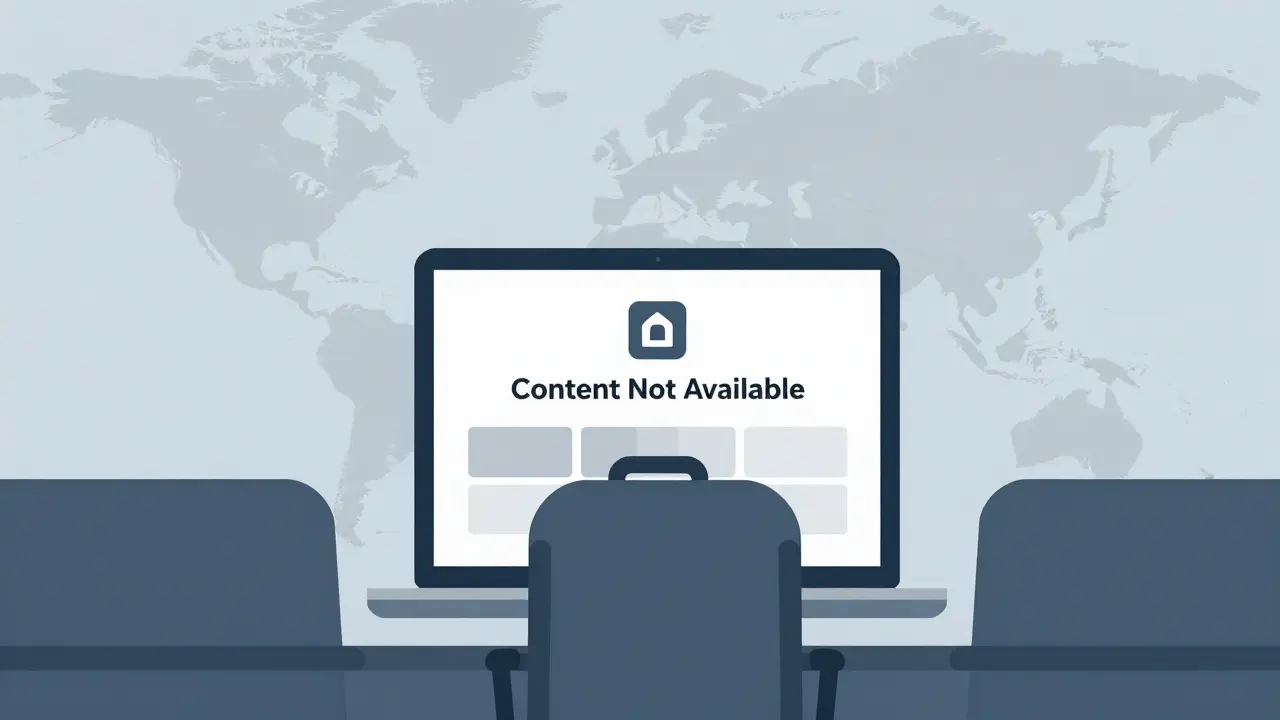
Have you ever traveled abroad, opened your favorite streaming app, and found yourself staring at a blank screen where your favorite show used to be? You’re not alone. This frustration is the direct result of content licensing, a complex web of legal agreements that dictates what you can watch, where you can watch it, and when it disappears.
In 2026, while we have more screens than ever, access to content remains stubbornly fragmented by borders. Understanding why this happens isn’t just about satisfying curiosity; it’s about knowing how to navigate the digital media landscape effectively. Whether you are a casual viewer trying to catch up on a series or a creator looking to distribute work globally, grasping these mechanics is essential.
The Anatomy of a Streaming License
To understand why a show is available in Brisbane but blocked in Berlin, we first need to look at how rights are sold. Content doesn’t belong to the streaming platform you’re watching it on. Netflix, Disney+, Amazon Prime Video, and others are essentially renters, not owners (with some exceptions for original productions).
When a production company creates a film or TV series, they hold the intellectual property rights. They then sell the distribution rights to various platforms. These sales are rarely global blanket deals anymore. Instead, they are broken down into specific territories. A studio might sell the exclusive streaming rights for North America to one service and the rights for Europe to another. This territorial fragmentation is the root cause of most availability issues.
These licenses come with strict conditions:
- Territorial Limits: The right to stream only within defined geographic boundaries.
- Time Windows: The duration for which the content can be streamed (e.g., two years).
- Exclusivity: Whether other platforms can also stream the title during the same period.
If you try to access a title outside its licensed territory, the platform’s system detects your location and blocks the request. This is known as geo-blocking.
Why Studios Insist on Regional Restrictions
You might wonder why studios don’t just sell global rights to one giant platform like Netflix and simplify everything. The answer lies in revenue maximization and legacy business models. Traditional television networks and local broadcasters still hold significant power in many markets. In countries like Japan, France, and Australia, local regulations often require that certain content be shown on domestic free-to-air channels before it hits a global streamer.
Studios use a strategy called "windowing." A movie might premiere in theaters for three months, then go to premium video-on-demand (PVOD) for a month, followed by a six-month exclusive deal with a local cable network, and finally land on a global streaming service. By selling rights piecemeal to different players in different regions, studios extract maximum value from every piece of content. If they gave away global streaming rights cheaply, they would undercut their own deals with traditional TV partners in those regions.
| Model Type | Description | Impact on Viewer |
|---|---|---|
| Global Licensing | One platform buys rights for the entire world. | Seamless access everywhere; rare for major blockbusters. |
| Territorial Licensing | Rights sold per country or region (e.g., EU, APAC). | Content varies significantly by location; causes geo-blocking. |
| Windowed Licensing | Content moves through stages (theater → TV → streaming). | Delays availability on streaming platforms by months or years. |
How Geo-Blocking Works Technically
Geo-blocking is enforced through IP address detection. Every device connected to the internet has an IP address, which acts like a digital home address. When you log into a streaming service, the server checks your IP against a database of known locations. If your IP says you are in Canada, but the license for a specific show is only valid in the UK, the server denies the stream.
This technology is imperfect. Mobile data networks sometimes route traffic through distant servers, causing false positives. Additionally, VPNs (Virtual Private Networks) and Smart DNS services attempt to mask your true location by routing your traffic through servers in other countries. While these tools technically allow users to bypass geo-restrictions, using them violates the Terms of Service of almost all major streaming platforms. Platforms actively fight back by blocking known VPN IP ranges, leading to a constant cat-and-mouse game.
It’s important to note that copyright laws vary by jurisdiction. In some countries, circumventing geo-blocks is considered a violation of digital rights management (DRM) laws, while in others, it exists in a legal gray area. However, from a contractual standpoint, your subscription agreement explicitly forbids accessing content outside your licensed region.

The Role of Local Regulations and Quotas
International availability isn’t just about corporate greed; it’s also heavily influenced by government policy. Many nations view culture as a strategic asset and implement quotas to protect local industries. For example, the European Union has strict rules requiring streaming platforms to invest in European content and ensure a certain percentage of their catalog consists of EU works. Similarly, South Korea mandates that foreign content must be subtitled or dubbed to comply with broadcasting standards.
In Australia, the Classification Board plays a crucial role. Content must be classified according to Australian standards before it can be legally distributed. If a show contains material deemed unsuitable under local laws, it cannot be listed on any Australian streaming service, regardless of whether the platform holds the global rights. This adds another layer of complexity to international availability. A show might be widely available in the US but completely absent in Australia due to classification delays or refusals.
Changes in the Industry: Are Things Getting Better?
By 2026, there is a noticeable shift toward fewer, larger licensing deals. As traditional cable subscriptions decline, studios are increasingly launching their own direct-to-consumer streaming services (like Paramount+ or Peacock). To compete with giants like Netflix, these new entrants are sometimes willing to offer broader territorial rights to attract subscribers. We are seeing more "global exclusives" where a single platform holds rights worldwide, particularly for mid-tier content rather than blockbuster franchises.
However, for high-value intellectual property (IP), territorial fragmentation persists. Major sports leagues, such as the NFL or Premier League, continue to sell broadcast rights separately to dozens of local providers. This ensures that fans in different countries support their local sports networks, which in turn fund the league. Complete globalization of sports broadcasting is unlikely in the near future due to these entrenched financial structures.
Another emerging trend is the rise of ad-supported tiers. Some platforms are finding that offering lower-cost, ad-supported plans allows them to negotiate cheaper licensing fees, which can sometimes include broader regional availability. This model helps democratize access slightly, though core library differences remain.

Practical Tips for Navigating Regional Restrictions
If you frequently travel or live in a region with limited content libraries, here are some legitimate strategies to manage your viewing experience:
- Check Multiple Platforms: Don’t assume Netflix has everything. Use aggregator sites like JustWatch to see which platform holds the rights to a specific title in your current location.
- Utilize Travel Features: Some services, like Spotify for music, allow you to switch your account’s region temporarily when traveling. Video platforms generally do not offer this, but checking if your provider has a "travel mode" is worth a quick search.
- Download Before You Go: If you know you’ll be offline or facing restrictive networks, download your favorite episodes while you’re still in your home region. Most apps allow offline viewing for a limited time.
- Support Local Subtitles: Engage with local fan communities that create subtitles for content unavailable in your language. While this doesn’t solve the licensing issue, it improves accessibility for content that does become available later.
Remember, patience is key. Licensing deals expire and rotate. A show missing today might appear on a different platform next year. The ecosystem is dynamic, and availability is always in flux.
The Future of Global Access
As artificial intelligence improves dubbing and subtitling, the barrier of language is disappearing faster than the barrier of law. Real-time AI translation could eventually make it trivial for platforms to localize content instantly. However, until copyright treaties are harmonized globally, or until a single dominant platform emerges with universal purchasing power, international availability will remain a patchwork.
For now, viewers must accept that their digital entertainment library is tied to their physical location. Understanding the economics behind this restriction helps reduce frustration. It’s not arbitrary; it’s a calculated business decision driven by decades-old media structures adapting slowly to the digital age.
Why is my favorite show not available in my country?
Streaming rights are typically sold on a territorial basis. The platform you are using may not have purchased the license to stream that specific show in your region. Another platform might hold the exclusive rights, or the content may be restricted due to local classification laws.
Is it legal to use a VPN to bypass geo-blocking?
Using a VPN itself is legal in most countries, including Australia and the US. However, using it to bypass geo-restrictions on streaming services violates the Terms of Service of those platforms. Additionally, some jurisdictions consider circumventing digital rights management (DRM) technologies illegal under copyright law.
Will global licensing become the standard?
It is unlikely to become the universal standard soon. High-value content like sports and major films generates more revenue through fragmented territorial sales. However, mid-tier content and original productions from streaming giants are increasingly adopting global licensing models to maximize subscriber growth.
How do local laws affect content availability?
Local laws can mandate content quotas (requiring a certain amount of local programming), enforce censorship standards, or require specific classification ratings. If content fails to meet these legal requirements, it cannot be legally distributed in that region, regardless of licensing agreements.
What is the difference between exclusive and non-exclusive licensing?
Exclusive licensing means only one platform can stream the content in a given territory for a set period. Non-exclusive licensing allows multiple platforms to stream the same content simultaneously. Exclusive deals are common for new releases, while non-exclusive deals often apply to older library content.