27
High-Speed Photography: Slow Motion for Story and Spectacle

Most people think slow motion is just a fancy effect you apply in editing software. But the real magic happens before the clip even hits your timeline. High-speed photography isn’t about slowing things down after the fact-it’s about capturing what your eyes can’t see in real time. Think of a water balloon bursting, a drop of milk hitting a surface, or a hummingbird’s wings mid-flap. These moments last less than a second. Without high-speed photography, they’re invisible. And that’s where storytelling gets powerful.
What High-Speed Photography Actually Means
High-speed photography isn’t just shooting fast. It’s about shooting at frame rates far beyond what normal video uses. Standard video runs at 24, 30, or 60 frames per second (fps). That’s fine for talking heads or action scenes. But when you want to see the exact moment a glass shatters or a bullet pierces an apple, you need hundreds-or even tens of thousands-of frames per second.
Modern high-speed cameras can shoot up to 1 million fps. That’s not marketing hype. Companies like Phantom and Vision Research build cameras used in labs and film studios that capture motion at those speeds. At 100,000 fps, each frame lasts just 10 microseconds. That’s one-hundredth of a millisecond. Your brain can’t process that. But the camera can.
The key difference between regular slow motion and true high-speed photography? High-speed photography captures real data. You’re not interpolating frames. You’re not stretching pixels. You’re recording actual light hitting the sensor at insane speeds. That’s why the results look so natural, so detailed, so real.
Why It Matters for Storytelling
Slow motion isn’t just for spectacle. It’s for emotion. Look at the opening of Gladiator-the slow-motion shot of the spear hitting the sand, dust rising, the soldier’s breath. That moment isn’t there because it looks cool. It’s there because it tells you everything about the character’s mindset: isolation, tension, inevitability.
High-speed photography does the same thing, but deeper. It reveals hidden narratives. A scientist studying how a flower opens at dawn might use 1,000 fps to show the delicate unfurling of petals. A filmmaker might use 5,000 fps to capture the exact instant a kiss turns into a tear. That’s not decoration. That’s narrative architecture.
Think about commercials. A car company doesn’t just show a vehicle speeding down a road. They show the suspension compressing as it hits a bump, the tire gripping the asphalt, the brake fluid pulsing through the lines. Those details aren’t just technical-they’re emotional. They say, "This car doesn’t just move. It understands motion."
The Gear You Actually Need
You don’t need a $50,000 Phantom camera to get started. While Hollywood uses those, indie filmmakers and even hobbyists can do incredible work with modern mirrorless cameras. The Canon EOS R5 C, Sony FX3, and Panasonic S-series all shoot 120 fps in 4K. That’s enough for most cinematic slow motion.
But if you want to go deeper, you need three things:
- Lighting. High frame rates mean each frame gets less light. You need powerful LEDs or strobes. A 1,000-watt softbox isn’t optional-it’s essential.
- Storage. A 10-second clip at 1,000 fps in 4K can eat 500 GB. You need fast, reliable SSDs. SanDisk Extreme Pro or Sony TOUGH cards are common choices.
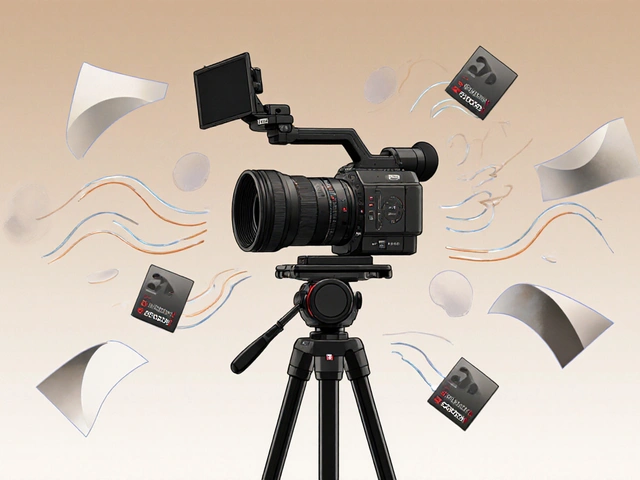
- Stability. Even the tiniest shake becomes a blur at high speeds. A heavy tripod with a fluid head, or a gimbal rated for high-speed loads, makes all the difference.
Some shooters use smartphones now. The iPhone 15 Pro can shoot 240 fps in 4K. That’s not enough for scientific use, but for a splash of water, a falling apple, or a child’s laughter turning into a sneeze? Perfect.

How to Shoot It Right
Shooting high-speed footage isn’t like regular video. You can’t just point and shoot. Here’s what actually works:
- Plan the moment. What are you trying to capture? A balloon popping? A spoon hitting honey? Test it. Film it at 60 fps first. See where the action happens. Then adjust your timing.
- Use manual focus. Autofocus will hunt and miss. Set focus manually and lock it. Use focus peaking if your camera has it.
- Shoot in log or RAW. You’ll need room to grade later. High-speed footage often looks flat. Log profiles preserve detail in shadows and highlights.
- Control the environment. Wind, reflections, ambient noise-all get exaggerated. Shoot indoors. Use black velvet backgrounds. Isolate your subject.
- Record longer than you think. At 5,000 fps, a 10-second clip is only 2 seconds of real time. You need buffer. Shoot 30 seconds. You’ll thank yourself later.
Editing Slow Motion Without Breaking It
Once you’ve got your footage, editing is where most people mess up. You can’t just speed it up or slow it down and call it done.
First, don’t overuse it. One powerful slow-motion moment in a 5-minute film is better than five cheap ones. Let the silence breathe. Let the viewer feel the weight of the moment.
Second, sync your sound. High-speed footage is silent. The real sound happens in real time. Record ambient audio separately. Layer it under the slow motion. A drop hitting water should sound like a thunderclap, not a squeak.
Third, color grade for emotion. A splash of milk might look dull in log. Add a cool blue tint to make it feel icy. A burst of paint? Warm it up. Make it feel alive. Slow motion amplifies everything-including color.

Real Examples That Changed the Game
Take the 2018 documentary The Nature of Things: Slow Motion. It showed a mantis shrimp striking its prey at 10,000 fps. The strike lasted 3 milliseconds. The camera revealed a shockwave forming in the water-a phenomenon no one had ever filmed before. That wasn’t just science. It was poetry.
Or look at the 2023 Apple ad for the iPhone 15 Pro. They filmed a glass shattering in slow motion. The cracks spread like lightning. The fragments hovered mid-air. It wasn’t CGI. It was real footage shot at 2,000 fps. The ad didn’t sell a phone. It sold wonder.
Even sports have changed. Tennis pros now use high-speed footage to analyze their serves. A single frame shows the exact angle of the racquet at impact. That’s not just coaching-it’s rewriting how the game is played.
What You Can Do Today
You don’t need a big budget. Start small. Set up a water droplet experiment. Use a flashlight and a black cloth. Shoot at 120 fps. Watch how the drop deforms as it falls. Then, when it hits the surface-what happens next? Does it splash upward? Does it form a crown? That’s your story.
Try filming a candle flame. At 240 fps, you’ll see the flicker in ways you never noticed. The heat rises. The smoke curls. The light pulses. That’s not just light. That’s movement with rhythm.
High-speed photography isn’t about gear. It’s about attention. It’s about looking closer than anyone else. And when you do, you don’t just capture motion. You capture meaning.
What frame rate do I need for cinematic slow motion?
For cinematic slow motion that looks smooth and natural, aim for at least 120 fps. That lets you slow down to 5x in post without looking choppy. If you want more dramatic effects-like a bullet hitting glass or a dancer mid-leap-go for 240 fps or higher. Most professional films use 240-1,000 fps for key moments.
Can I shoot high-speed footage with my smartphone?
Yes, but with limits. The iPhone 15 Pro and Samsung Galaxy S24 Ultra can shoot up to 240 fps in 4K. That’s enough for water splashes, falling objects, or quick human movements. But for true high-speed photography-like capturing a spark or a breaking egg-you’ll need a dedicated camera. Smartphones struggle with lighting and storage at higher frame rates.
Why does my slow-motion footage look grainy?
High frame rates mean each frame gets less light. If your lighting is weak, the camera boosts ISO to compensate, which adds noise. Fix it by using bright, continuous lighting-LED panels, studio strobes, or even natural sunlight through a large window. Also, shoot in log mode if available. It preserves more detail for grading later.
Do I need to buy a special camera for high-speed photography?
Not necessarily. Cameras like the Canon EOS R5 C, Sony FX3, or Blackmagic Pocket Cinema 6K can shoot up to 120-240 fps. Those are enough for most filmmakers. You only need a Phantom or similar high-end camera if you’re doing scientific work, bullet impacts, or industrial testing. For storytelling, your current gear might already be enough.
How do I edit high-speed footage without making it look artificial?
Start by matching the pacing to the emotion. Don’t slow everything down. Pick one or two key moments to stretch. Add real ambient sound-don’t rely on artificial effects. Color grade to enhance mood, not just clarity. And always test your edit on a big screen. What looks smooth on a phone might feel sluggish on a theater monitor.