25
Mise-en-Scène Analysis: Understanding What’s in the Frame
When you watch a movie and something feels off-like the mood is heavy, the tension is quiet, or the characters seem trapped-you’re not just reacting to the story. You’re responding to what’s inside the frame. That’s mise-en-scène. It’s not just what’s in the shot. It’s how everything in that shot works together to tell you something you might not even realize you’re learning.
What Exactly Is Mise-en-Scène?
Mise-en-scène (pronounced "meez-ahn-sen") is a French term that literally means "putting on stage." In film, it refers to everything visible within a single shot: actors, lighting, sets, costumes, props, color, camera placement, and even how space is used. It’s the director’s visual language. Think of it as the silent narrator of a film. While dialogue tells you what’s happening, mise-en-scène tells you what it feels like.
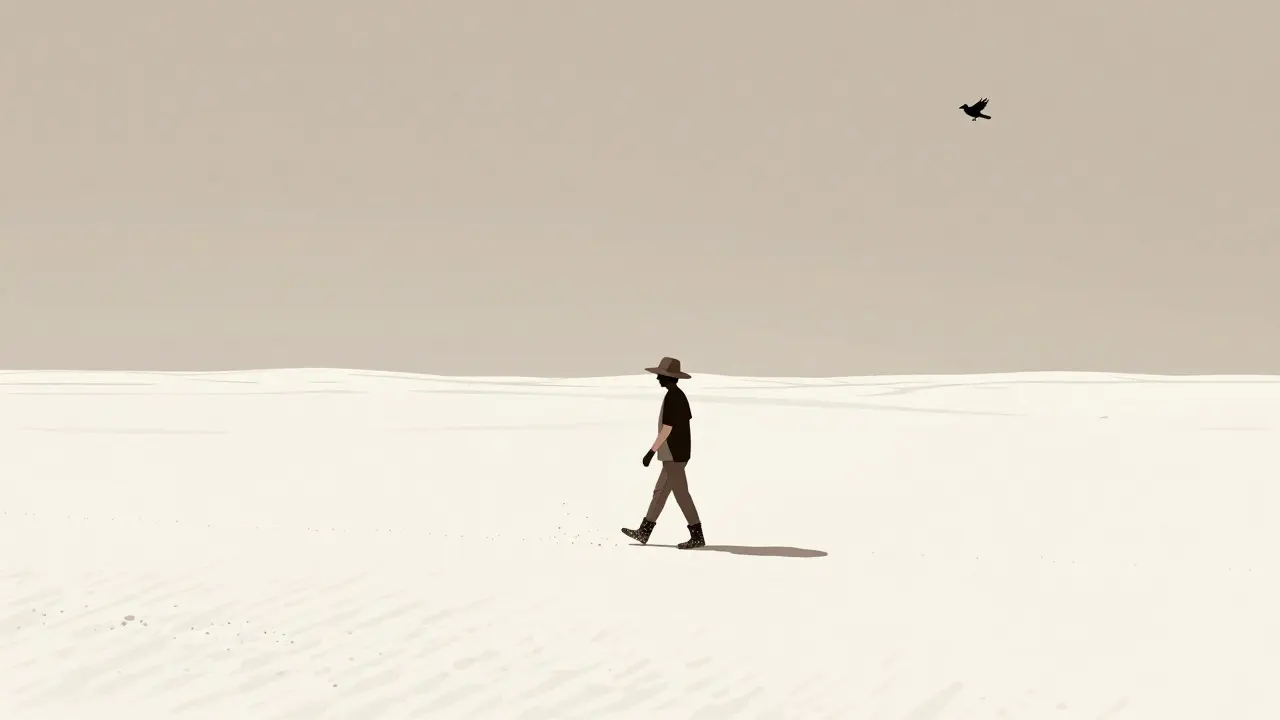
Take the opening of There Will Be Blood. Daniel Plainview walks across a dusty landscape, his body small against the vast horizon. The sky is bleached white. His hat is low. His boots are cracked. There’s no music. No voiceover. Just the crunch of gravel underfoot. You don’t need to hear him say, "I’m lonely and ruthless." You already know. That’s mise-en-scène doing the work.
The Five Key Elements
Breaking down mise-en-scène helps you see films differently. Here are the five core components you should always look for:
- Setting and Props - Where is this happening? Is the room cluttered or empty? Is that broken clock on the wall there by accident, or is it a clue? In Blade Runner 2049, the giant holographic advertisement for a synthetic woman isn’t just futuristic-it’s a commentary on loneliness in a world where human connection is manufactured.
- Costume and Makeup - What are people wearing, and why? A wrinkled suit says something different than a perfectly pressed one. In The Godfather, Michael Corleone slowly shifts from military uniform to dark suits. His transformation isn’t shown through monologues-it’s stitched into his clothes.
- Lighting - Is it harsh? Soft? Backlit? Chiaroscuro? In Citizen Kane, the deep shadows and sharp contrasts don’t just look dramatic-they show moral ambiguity. When Kane is young and idealistic, light floods his face. Later, when he’s isolated in Xanadu, he’s half-hidden in darkness.
- Color Palette - Colors aren’t random. They carry emotion. In The Sixth Sense, red appears every time the supernatural is near. It’s not a coincidence. It’s a visual cue drilled into your subconscious. In Mad Max: Fury Road, the orange-and-brown desert screams heat and desperation. The blue of the water at the end? That’s hope.
- Actor Movement and Positioning - Where are people standing? Are they close? Far apart? Facing each other or turned away? In Parasite, the Kim family is often framed below the camera, looking up at the Park family. The physical space tells you who has power-and who doesn’t.
Why This Matters Beyond Film Class
You don’t need to be a film student to use this. Mise-en-scène is everywhere. TV commercials. Music videos. Even social media clips. When a brand shows a single person sitting alone in a bright kitchen holding a cereal box, they’re not selling oats-they’re selling peace. That’s mise-en-scène at work.
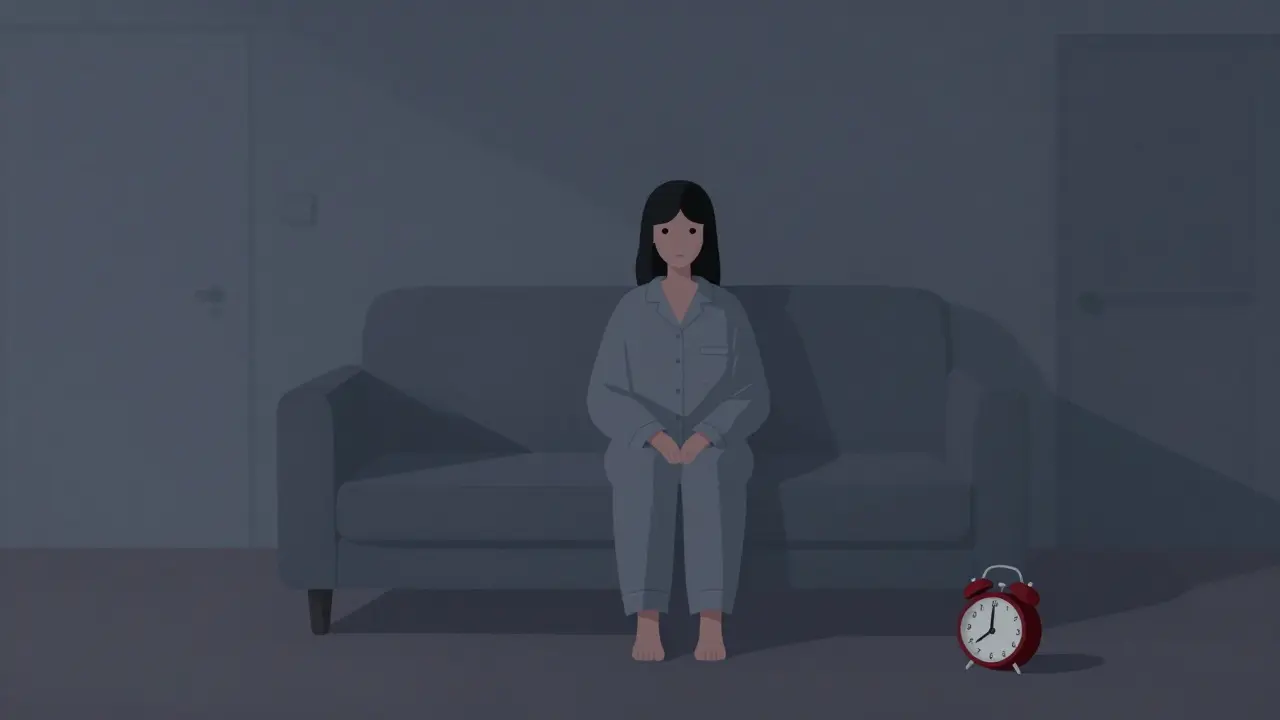
Think about TikTok trends. A person in a dim room, wearing oversized pajamas, staring into the camera with a blank expression-that’s a mood. It doesn’t need words. The lighting, the clothing, the empty background-they all combine to say, "I’m tired. I’m real. I’m not performing."
Understanding this gives you power. You start seeing how stories are built visually. You stop just watching. You start decoding.
How to Watch Like a Critic
Here’s how to train your eye:
- Pause the film. Freeze the frame. Look at every corner. What’s in the background? Is there something out of place? A poster? A shadow? A toy?
- Ask: "What would happen if I changed one thing?" Swap the lighting. Change the color of the walls. Move the actor two feet left. How does it alter the feeling?
- Watch without sound. Just watch. What does the image tell you that the dialogue doesn’t?
- Compare two shots from the same scene. How does the composition shift as tension builds? In Get Out, the camera slowly pulls back as Chris realizes he’s trapped. The space around him grows. The fear grows with it.
- Keep a journal. Note one film per week. Write down: Setting, Color, Lighting, Costume, Blocking. After ten films, you’ll start seeing patterns.
Real Examples That Stick
Let’s break down two iconic scenes.
In The Shining, the long tracking shot of Danny riding his tricycle through the hotel halls isn’t just creepy because of the music. It’s creepy because of the symmetry. The hallways are perfectly straight. The wallpaper is identical on both sides. The carpet is worn in the middle-like a path worn by ghosts. The tricycle is small. The space is enormous. You feel trapped even though there’s no one chasing him.
In 1917, the single-take illusion makes you feel like you’re running with the soldiers. But look closer. The mud isn’t just mud-it’s thick, wet, and clinging. The soldiers’ uniforms are soaked, torn, and caked in dirt. The lighting is flat and gray, like a world without sun. The only color? A single red flare. That’s not just realism. That’s visual despair.

What Mise-en-Scène Can’t Do
It’s powerful, but it’s not magic. Mise-en-scène won’t fix a weak script. A beautifully lit scene with terrible acting will still fall flat. It works best when paired with strong storytelling. A great director uses mise-en-scène to deepen meaning-not to distract from it.
Also, context matters. What feels symbolic in one culture might be mundane in another. In Western films, a closed door often means secrets. In some Asian cinema, it’s just a door. You can’t analyze mise-en-scène without understanding the cultural lens.
Where to Start
Don’t try to analyze 2001: A Space Odyssey on day one. Start with something simple. Amélie is perfect. Every frame is a painting. The colors are bright, the sets are cluttered with tiny objects, and the characters move like they’re in a dream. You can see how every choice adds to the feeling of whimsy.
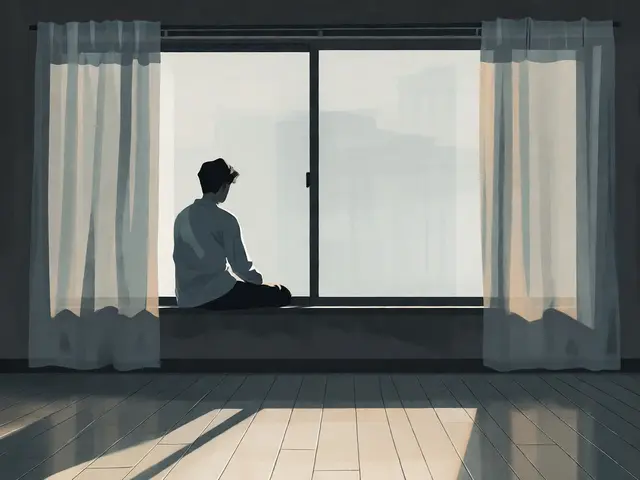
Or try Manchester by the Sea. The lighting is dull. The rooms are small. The characters rarely look at each other. The silence isn’t empty-it’s full of grief. You don’t need a PhD to feel that. You just need to look.
Final Thought
Mise-en-scène isn’t about knowing every term. It’s about learning to see. The next time you watch something-a film, a commercial, even a YouTube video-ask yourself: What is this showing me without saying it? The answer is always in the frame.
Is mise-en-scène only for movies?
No. Mise-en-scène applies to any visual storytelling medium: television, theater, music videos, commercials, and even photography. It’s about how visual elements create meaning, regardless of the format. A staged photo on Instagram uses mise-en-scène just as much as a Hollywood film.
Can mise-en-scène be analyzed in documentaries?
Absolutely. Even in documentaries, choices like lighting, set design, interview framing, and color grading are intentional. For example, in Man on Wire, the use of soft lighting and tight close-ups during reenactments creates emotional intimacy, even though the footage isn’t real. That’s mise-en-scène shaping perception.
Do I need to know film history to understand mise-en-scène?
Not at all. You can start analyzing it right now with any film you’ve seen. The key is observation, not background knowledge. You don’t need to know who shot the first close-up-you just need to notice how a character’s face fills the screen and how that makes you feel.
How is mise-en-scène different from cinematography?
Cinematography focuses on how the camera moves-lens choice, framing, motion, exposure. Mise-en-scène is everything that exists in front of the camera: sets, costumes, lighting, actors. Cinematography captures the scene; mise-en-scène builds it. They work together, but they’re not the same.
Can I use mise-en-scène analysis for my own videos?
Yes. Whether you’re making a short film, a TikTok, or a corporate video, every visual choice you make affects how your audience feels. Planning your lighting, props, and actor placement isn’t just about looking good-it’s about controlling the message. Use mise-en-scène to make your visuals speak louder than your script.