8
National Cinema Theory: Identity, Policy, and Aesthetics Explained
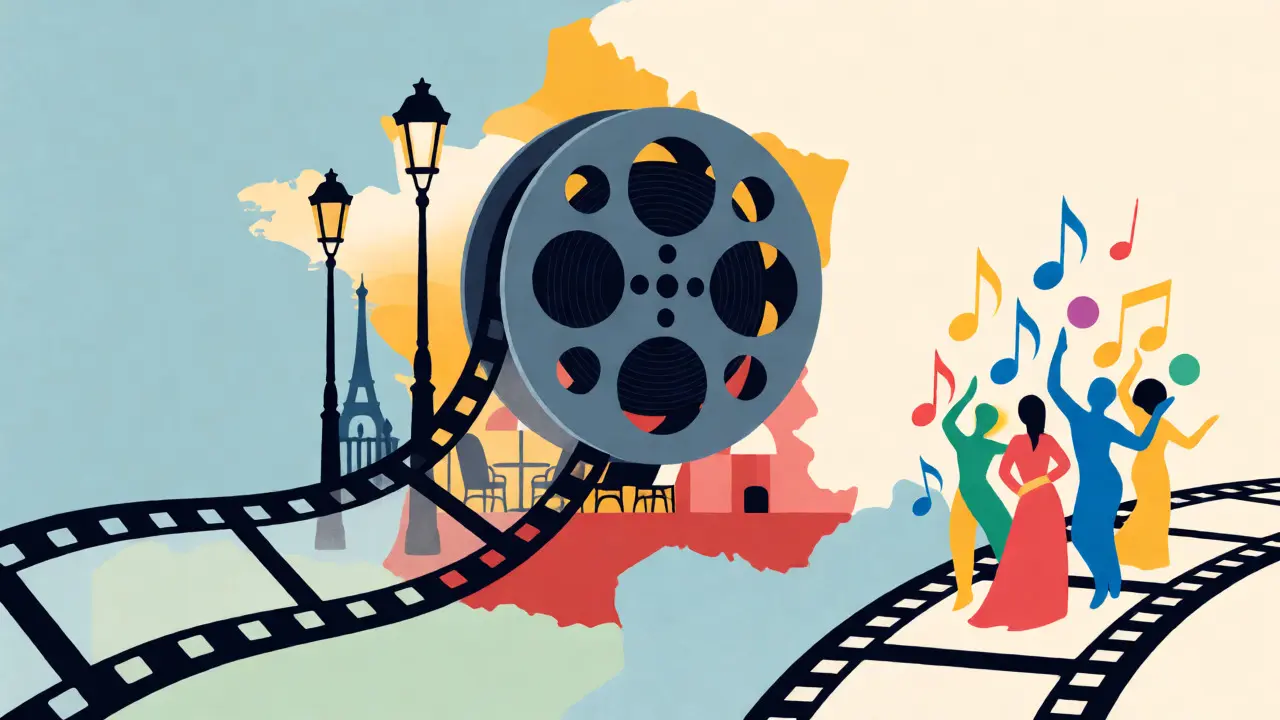
Have you ever watched a French New Wave film and immediately felt the distinct rhythm of Parisian streets, or seen a Bollywood musical and recognized the specific blend of melodrama and song that defines Indian popular culture? That instant recognition isn't magic. It’s the result of National Cinema Theory, which examines how films reflect, construct, and negotiate national identities through aesthetic choices and state policies. For decades, scholars and critics have debated whether cinema is just entertainment or a mirror held up to a nation’s soul. The answer lies in the messy intersection of government funding, cultural pride, and artistic expression.
This concept challenges the idea that movies are universal products that look the same everywhere. Instead, it argues that every major film industry carries the DNA of its country’s history, politics, and social structures. When we talk about "National Cinema," we aren’t just talking about where a movie was made. We’re talking about how a country uses moving images to define who it is on the global stage. From the propaganda reels of the mid-20th century to the streaming-era hits of today, the link between screen and state remains unbroken.
Defining National Cinema: More Than Just Geography
At its core, National Cinema is a system of film production, distribution, and reception tied to a specific nation-state’s cultural and political boundaries. But this definition is tricky. What counts as "national" when co-productions blur borders? Is a film directed by a Japanese director but funded by American studios and shot in New Zealand part of Japanese cinema? These questions are central to the theory.
Early theorists like Andrew Higson argued that national cinema isn’t just about origin. It’s about function. Does the film serve a national audience? Does it reinforce shared myths? For instance, Hollywood films often project an "American" identity globally, even if they are made with international money. Conversely, smaller industries might produce films specifically for domestic consumption, resisting the homogenizing force of global blockbusters. This tension creates a dynamic field where identity is constantly being renegotiated.
The theory also distinguishes between state cinema and popular national cinema. State cinema is explicitly sponsored by governments to promote ideology, think Soviet montage or Nazi propaganda. Popular national cinema, however, emerges organically from local tastes, like the gritty realism of Italian Neorealism or the spiritual depth of Iranian cinema. Both shapes national identity, but one is top-down, and the other is bottom-up.
The Role of Cultural Policy and State Intervention
You can’t understand national cinema without looking at the money. Governments don’t fund film out of pure altruism. They see cinema as a strategic asset for soft power. In France, the Centre national du cinéma et de l’image animée (CNC) has long protected local filmmakers from Hollywood dominance through quotas and subsidies. This policy directly shapes the aesthetics of French film, allowing risky, auteur-driven projects to survive in a market dominated by big-budget franchises.
In contrast, countries like India rely on a mix of private enterprise and regional language markets. While there is no single "Indian" style, the sheer volume of production in Hindi, Tamil, Telugu, and Malayalam creates distinct national sub-cinemas. Each operates under different regulatory frameworks regarding censorship and tax incentives, which influences what stories get told. If a government imposes strict moral codes, you’ll see more allegorical storytelling. If they offer tax rebates for location shooting, you’ll see more tourism-friendly visuals.
| Model Type | Primary Driver | Aesthetic Outcome | Example Country |
|---|---|---|---|
| State-Sponsored | Government Ideology | Propagandistic, Heroic, Didactic | Soviet Union (Historical) |
| Protectionist | Cultural Subsidies & Quotas | Auteur-Driven, Art-House | France |
| Market-Led | Commercial Viability | Genre-Focused, Mass Appeal | United States |
| Hybrid/Regional | Linguistic Diversity & Export | Eclectic, Melodramatic, Musical | India |
These models aren’t static. As globalization accelerates, many nations are shifting toward hybrid models. Australia, for example, uses Screen Australia to fund diverse voices while aiming for international appeal. This balance dictates not just what gets made, but how it looks and sounds.

Aesthetics as Political Statement
How does policy translate to pixels? Through aesthetics. National cinema theory posits that visual style is never neutral. The choice of color palette, editing rhythm, and narrative structure often reflects national values. Consider the slow pacing of certain Scandinavian dramas. Critics argue this mirrors a cultural preference for introspection and egalitarianism, contrasting sharply with the fast-cut, high-energy editing typical of American action films.
Language plays a huge role here too. In non-English speaking countries, subtitles are a barrier to entry for global audiences. To overcome this, some national cinemas develop visual languages that transcend dialogue. Silent-era German Expressionism used distorted sets and shadows to convey psychological states, creating a style that was instantly recognizable as "German" regardless of language barriers. Today, South Korean thrillers use precise framing and tonal shifts to communicate complex social critiques, appealing to global viewers who may not speak Korean.
Music and sound design also carry national signatures. The use of traditional instruments in African cinema, or the specific ambient noisescapes in Japanese horror, anchors the viewer in a specific cultural geography. These aesthetic choices are often unconscious, born from the environment, but they become markers of identity when viewed from the outside.

Identity Construction and the "Other"
National cinema doesn’t just show who we are; it shows who we are not. By defining the "Self," these films implicitly define the "Other." Western films often portray the East as exotic or dangerous, reinforcing colonial narratives. Meanwhile, post-colonial cinemas actively resist these stereotypes. Directors like Satyajit Ray in India or Ousmane Sembène in Senegal crafted films that reclaimed their own histories, challenging the Western gaze.
This process is ongoing. In the age of streaming platforms like Netflix, national identities are becoming fluid. A Nigerian thriller might be produced in Lagos, financed by US capital, and distributed globally. Does this dilute national identity? Or does it create a new, transnational identity? Scholars argue that digital platforms allow niche national cinemas to find global niches, preserving unique styles while reaching wider audiences.
However, there’s a risk of commodification. When national identity becomes a brand, it can be simplified for export. The "Bollywood" label, for instance, often reduces the vast diversity of Indian cinema to song-and-dance sequences, ignoring serious dramatic works. National cinema theory urges us to look beyond these labels to understand the complex realities within.
Challenges in the Globalized Era
Is national cinema dying? Some argue that globalization has eroded distinct national styles. With multinational corporations owning major studios and actors working across borders, the lines blur. Yet, evidence suggests otherwise. Local audiences still crave stories rooted in their own experiences. The massive success of local-language films in China, India, and Turkey proves that cultural proximity matters.
The challenge now is sustainability. Small national cinemas struggle against the marketing budgets of Hollywood. Without state support or strong domestic markets, unique voices disappear. Policies must adapt to protect diversity without stifling creativity. Co-production treaties help, but they require careful negotiation to ensure that the national voice isn’t lost in translation.
Ultimately, national cinema theory reminds us that film is a cultural artifact. It’s shaped by laws, funded by taxes, and consumed by communities with shared memories. Whether you’re analyzing a blockbuster or an indie gem, asking "What does this say about its nation?" unlocks deeper layers of meaning.
What is the main goal of national cinema theory?
The main goal is to understand how films contribute to the construction and maintenance of national identities. It examines the relationship between cinema, state policy, and cultural aesthetics to explain why films from different countries have distinct characteristics and functions.
How do government policies influence national cinema?
Government policies influence national cinema through funding mechanisms, censorship laws, and exhibition quotas. Subsidies can encourage artistic risk-taking, while quotas protect local films from foreign competition. Censorship shapes the types of stories that can be told, directly affecting the content and themes prevalent in a nation's output.
Does globalization threaten the existence of national cinemas?
Globalization poses challenges such as market dominance by Hollywood and cultural homogenization. However, it also offers opportunities for wider distribution via streaming platforms. Many national cinemas remain vibrant because local audiences prefer culturally relevant stories, and governments continue to implement protectionist measures.
Can a film be considered part of a national cinema if it is co-produced internationally?
Yes, but it depends on the primary creative control, funding source, and target audience. International co-productions are common, but if the narrative, language, and cultural context align with a specific nation’s identity, it can still be classified under that national cinema, albeit with transnational elements.
Why is aesthetics important in national cinema theory?
Aesthetics are crucial because visual and auditory styles often reflect cultural values and historical contexts. Specific editing rhythms, color palettes, and narrative structures can signal national identity to both domestic and international audiences, making aesthetics a key tool for expressing and negotiating cultural differences.