25
Stunts vs. CGI: How Modern Action Films Are Made
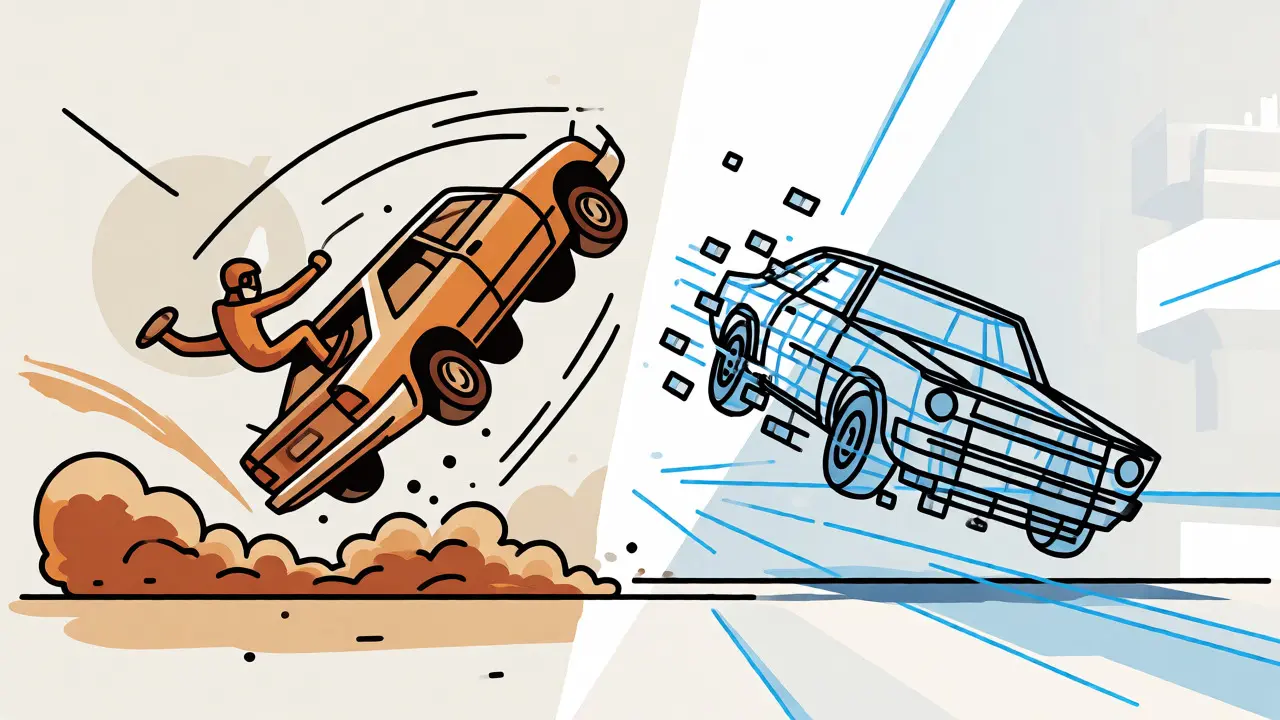
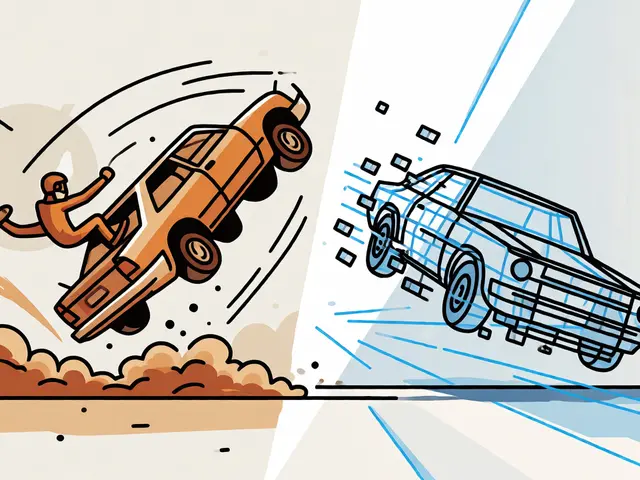
You watch a car flip three times in mid-air, the driver kicking out the windshield just as the vehicle slams into a concrete pillar. Your brain screams that this is impossible for a human to survive, yet the actor’s face looks terrifyingly real. Is that Tom Cruise actually hanging off the side of a plane, or did a team of artists in Vancouver paint the sky blue behind him? The line between physical danger and digital illusion has never been blurrier.
Modern action cinema isn't just about choosing one method over the other. It’s a messy, expensive negotiation between physics and pixels. If you’re trying to understand how your favorite blockbuster pulls off those jaw-dropping sequences, you need to look under the hood at the specific tools, risks, and costs involved. We aren’t talking about abstract theory here; we’re looking at why Christopher Nolan refuses to use digital doubles and why Marvel Studios can’t make a movie without them.
The Real Cost of Practical Stunts
Let’s start with the tangible stuff. A practical stunt is exactly what it sounds like: something happening on camera, in real time, with real objects. When Jackie Chan jumps off a clock tower, he isn’t waiting for post-production. He’s trusting gravity and his own reflexes. This approach carries massive weight because audiences have an innate ability to detect fake movement. Our eyes track motion differently when we know a human body is occupying that space.
But practical work is dangerous and slow. Consider the filming of Mad Max: Fury Road. Director George Miller insisted on using actual vehicles, many of which were destroyed during takes. They filmed in the Namibian desert for months. Why? Because the dust, the heat distortion, and the chaotic movement of real metal hitting real ground create a visceral texture that computers struggle to replicate perfectly.
The logistics are brutal. You need specialized rigs, safety crews, insurance premiums that would make your accountant cry, and actors willing to take hits. If a stunt fails, you might lose a day of shooting. If it goes wrong badly, someone gets hurt. In 2017, The Walking Dead had to pause production after a stunt accident involving a horse. These aren’t minor inconveniences; they are major financial and ethical hurdles.
- Safety Protocols: Every practical sequence requires rigorous testing and medical standby.
- Time Consumption: Setting up a complex rig can take hours before a single frame is captured.
- Irreversibility: Once a car explodes or a building collapses, you can’t reset the scene easily.
The Flexibility of Digital Effects
On the flip side, Computer-Generated Imagery (CGI) offers infinite control. If you want a dinosaur to roar while standing on a rooftop in New York, you don’t need to build a mechanical T-Rex. You need a render farm and a lot of RAM. CGI allows filmmakers to do things that physics forbids. Think of the zero-gravity fight scenes in Inception or the massive army clashes in Lord of the Rings. Without digital crowds, you’d need thousands of extras and weeks of scheduling.
The primary advantage here is iteration. If the director decides the explosion should be purple instead of orange, they change a parameter in software rather than blowing up another million-dollar set piece. It also solves location issues. You can shoot a scene in Atlanta and digitally insert the Swiss Alps in the background. This geographic flexibility saves travel costs and allows for consistent lighting conditions, which is a nightmare to manage on location.
However, CGI isn’t free. High-end visual effects studios charge by the second. A single shot of a fully digital character interacting with live-action elements can cost tens of thousands of dollars. And if the rendering doesn’t match the lighting of the original footage, you get that dreaded "video game" look where characters seem to float slightly above the ground. Audiences notice this immediately. It breaks immersion faster than a visible boom mic ever could.
The Hybrid Approach: Where Magic Happens
Most modern blockbusters don’t pick a side. They blend both methods. This is often called hybrid filmmaking. The goal is to capture the authenticity of practical elements and enhance them with digital cleanup or augmentation.
Take the Mission: Impossible franchise. Tom Cruise performs many of his own stunts, but the crew uses CGI to remove safety wires, extend the height of buildings, or add environmental hazards like rain or smoke. In Fallout, Cruise hangs off the side of a biplane. That’s real. But the clouds around him? Likely enhanced. The fear in his eyes? Real. The slight color grading shift to make the sky pop? Digital.
This hybrid model maximizes performance. Actors react to real stimuli-wind, noise, physical impact-which leads to better performances. If you ask an actor to pretend they’re falling from a building while staring at a green screen, their eyes often look vacant. Give them a real drop, even if it’s only ten feet onto a crash mat, and their adrenaline spikes. That spike reads on camera.
| Feature | Practical Stunts | CGI Effects |
|---|---|---|
| Realism | High (tactile feedback, natural physics) | Variable (depends on artist skill) |
| Cost Structure | High upfront (equipment, insurance, sets) | High post-production (rendering, labor) |
| Flexibility | Low (hard to change once shot) | High (easy to modify in edit) |
| Risk Factor | Physical injury to cast/crew | Project delays due to technical bugs |
| Best For | Fights, crashes, close-ups of impact | Creatures, large-scale disasters, fantasy worlds |

Why Audiences Prefer Practical Effects
There’s a growing backlash against over-reliance on CGI. Look at comments sections for recent superhero movies. People complain about "weightless" fights or backgrounds that look too clean. This isn’t just snobbery; it’s biological. Humans are evolved to recognize subtle cues in motion and light. When a digital object lacks proper interaction with its environment-like shadows not matching the sun angle or reflections missing on wet pavement-our brains flag it as artificial.
Directors like James Cameron (Avatar) and Steven Spielberg (Jaws) have long advocated for practical models when possible. Cameron used animatronics for the creatures in Avatar before layering digital textures on top. This gave the performers something to act against and provided accurate reference points for the VFX team.
Moreover, practical effects age better. Watch a film from the 1980s with heavy miniatures and makeup, like Alien. It still holds up because the physical presence feels grounded. Compare that to early 2000s CGI films, where the digital humans now look eerily outdated. Technology moves fast, and today’s cutting-edge render becomes tomorrow’s laughable artifact. Physical reality doesn’t suffer from version updates.
The Future of Action Filmmaking
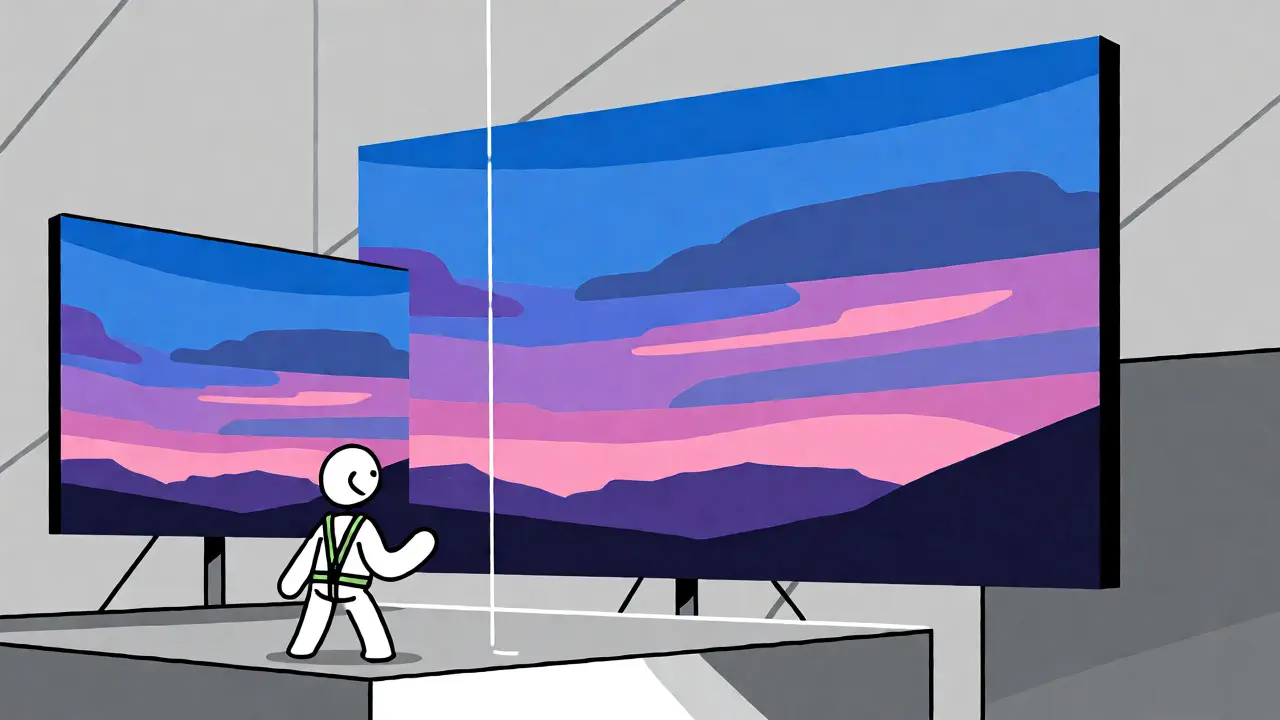
We are entering an era where the distinction is becoming irrelevant thanks to new technologies. Virtual Production, popularized by LED volume stages used in The Mandalorian, changes the game entirely. Instead of acting against a green screen, actors stand inside a massive curved LED wall displaying real-time 3D environments rendered by game engines like Unreal Engine.
This means the lighting on the actor’s face matches the virtual sunset behind them. Reflections appear naturally in their eyes. The camera tracks through a digital world in real-time. It combines the immediacy of practical shooting with the flexibility of CGI. Directors can change the weather instantly. If they want rain, they click a button. No waiting for clouds.
Additionally, Performance Capture technology has improved drastically. We no longer see the clunky dots on actors’ faces in final cuts. Tools like Faceware allow for markerless tracking, meaning an actor’s subtle facial twitch translates directly to a digital avatar. This bridges the emotional gap that previously plagued CGI characters.
So, next time you watch an action sequence, don’t just ask "Is this real?" Ask "How did they make me believe it?" The answer usually involves a clever mix of sweat, steel, and code. Neither method wins alone. The best films use CGI to hide the seams of practical work, and practical work to anchor the soul of digital creations.
Why do some directors refuse to use CGI?
Directors like Christopher Nolan prefer practical effects because they provide tangible interactions for actors and more realistic lighting and physics. Practical effects also tend to age better visually than CGI, which can look dated quickly as technology advances.
Is CGI always cheaper than practical stunts?
No. While CGI avoids the cost of destroying props or hiring stunt teams, high-quality visual effects require extensive labor hours, powerful computing resources, and multiple revision cycles. For simple shots, practical might be cheaper; for complex fantasy scenes, CGI is often the only viable option despite high costs.
What is Virtual Production?
Virtual Production uses large LED screens to display real-time 3D backgrounds behind actors. This allows for realistic reflections and lighting on subjects, eliminating the need for green screens and enabling directors to adjust environments instantly during filming.
Do actors really perform all the stunts shown in trailers?
Not always. Trailers often feature the most impressive moments, which may involve stunt doubles, digital enhancements, or edited sequences that combine multiple takes. Major stars like Tom Cruise do perform many of their own stunts, but most productions rely heavily on trained professionals for dangerous maneuvers.
Why does CGI sometimes look fake?
CGI looks fake when it fails to mimic natural physics, such as incorrect shadow casting, lack of motion blur, or poor integration with live-action lighting. Viewers are highly sensitive to these discrepancies, which break the suspension of disbelief.