19
The Zone of Interest Review: Jonathan Glazer’s Unnerving Holocaust Portrayal
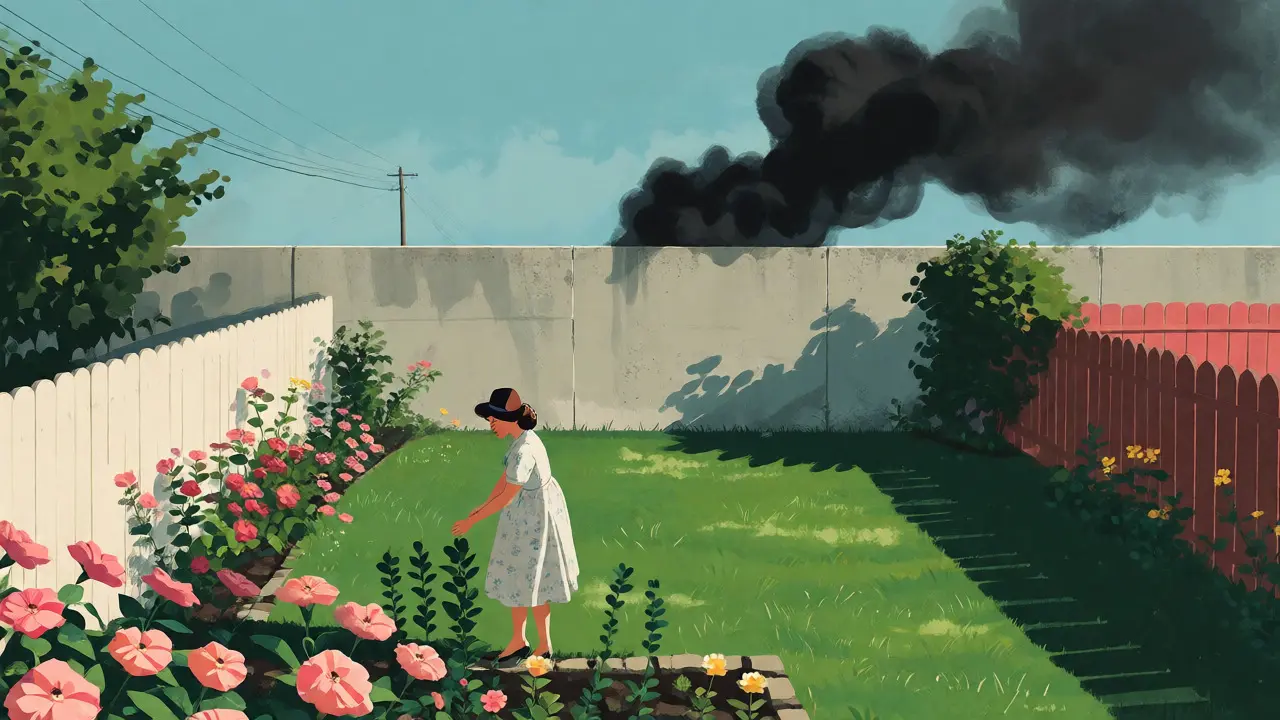
Imagine eating breakfast on a sunny terrace while the smell of burning flesh drifts in from next door. You don’t look up. You just add more sugar to your coffee. That is the terrifying genius of The Zone of Interest. It doesn't show you the horror; it makes you hear it. Most war movies scream at you with explosions and gore. This one whispers. And that whisper is louder than any bomb.
Director Jonathan Glazer spent ten years making this film. He wanted to break the mold of how we consume tragedy. Usually, cinema forces us to empathize with victims. Glazer does the opposite. He forces us to sit in the comfort of the perpetrators. It’s uncomfortable. It’s awkward. And by September 2026, it remains one of the most significant cinematic achievements of the decade.
The Banality of Evil in High Definition
You know the phrase "banality of evil"? Hannah Arendt coined it when covering Adolf Eichmann's trial. She meant that great atrocities aren't always committed by monsters with horns. They are often committed by bureaucrats who just want to do their job well. Rudolf Höss, the commandant of Auschwitz, was exactly that. In the film, he isn't portrayed as a raving lunatic. He’s a middle manager trying to balance his career ambitions with his desire for a nice garden.
Christian Friedel plays Höss with chilling precision. There are no grand speeches here. No villainous monologues. Just a man worrying about whether his wife will like the new house plans. This lack of theatricality makes him scarier. If he were screaming, you could dismiss him as insane. But he’s calm. He’s rational. He checks his watch before leaving for work. The horror lies in his normalcy.
Glazer uses static cameras and long takes to capture this mundane routine. The camera rarely moves unless necessary. It feels like surveillance footage. You are watching these people live their lives, completely unaware that history is judging them. Or perhaps they are aware, but they have chosen not to care. That choice is what keeps you awake at night.
Sandra Hüller’s Performance as Hedwig Höss
If Rudolf is the face of bureaucratic evil, Sandra Hüller’s character, Hedwig, is the face of domestic complicity. She is the queen of her little kingdom. Her garden is her pride. Her children are her legacy. She loves luxury. She complains about the heat. She tries on fur coats stolen from Jewish women without a second thought.
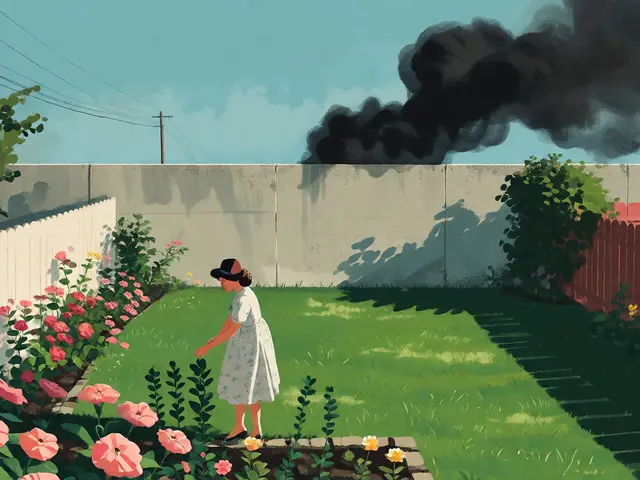
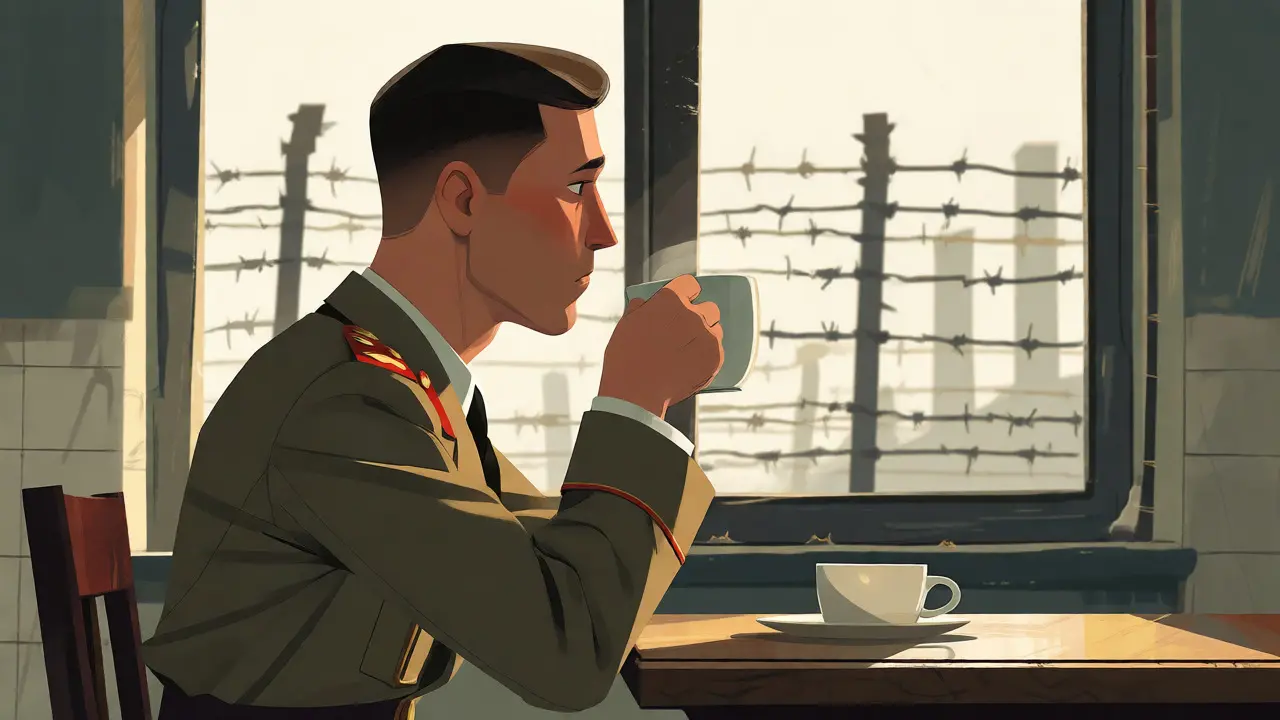
Hüller delivers a performance that is both glamorous and grotesque. In one scene, she walks through the garden, pointing out plants to her mother. Behind her, smoke rises from the crematorium chimneys. She doesn't acknowledge it. To her, the smoke is just part of the landscape, like a cloud or a bird. It’s naturalized violence. She has normalized genocide so thoroughly that it has become invisible to her.
This raises a difficult question for the audience: How much of our own comfort is built on invisible suffering? We see sweatshop labor on our phones, yet we buy the phone anyway. We ignore the homeless person on the street corner because we’re late for work. Hedwig Höss is an extreme version of this denial. She represents the human capacity to separate pleasure from pain. She wants the flowers. She wants the pool. She wants the status. The cost? Irrelevant.
The Sound Design: Hearing What You Cannot See
Here is the technical trick that makes the film work. Glazer almost never shows the inside of the camp. The screen stays focused on the Höss family home. But the sound design tells you everything. You hear screams. You hear gunshots. You hear the heavy thud of bodies being thrown into pits. These sounds are constant, woven into the ambient noise of birds chirping and lawnmowers humming.
Sound designer Johnnie Burn created a complex audio layering system. He recorded actual sounds from similar environments to ensure authenticity. When a train passes by, you don't see it. You hear the screech of metal and the faint, terrified cries of hundreds of people packed into cattle cars. It creates a cognitive dissonance. Your eyes see a peaceful Sunday afternoon. Your ears hear hell. This disconnect forces your brain to fill in the gaps. And what you imagine is often worse than what you would see.
Consider this comparison table of how traditional war films versus The Zone of Interest handle trauma:
| Feature | Traditional War Film (e.g., Schindler's List) | The Zone of Interest |
|---|---|---|
| Visual Focus | Victims and battlefield action | Perpetrators' domestic life |
| Audio Strategy | Score-driven emotional cues | Ambient horror and diegetic noise |
| Camera Movement | Dynamic, handheld, immersive | Static, detached, observational |
| Audience Role | Witness/Empathizer | Complicit Observer |
| Depiction of Violence | Explicit and graphic | Implied and auditory |
The Garden as a Metaphor
The garden is not just a setting. It is a character. It is lush, green, and meticulously maintained. Flowers bloom in vibrant colors. Children play in the grass. It looks like a postcard from paradise. But this paradise is built on a foundation of ash. The soil is enriched by the remains of those murdered nearby. Glazer uses infrared photography for certain sequences to highlight this artificial beauty. The greens pop unnaturally bright. It feels hyper-real, almost toxic.
Rudolf spends time planting trees. He talks about how they will grow tall over the years. He imagines his grandchildren playing under them. He is thinking decades ahead. Meanwhile, thousands of people are dying every day within sight of his fence. His ambition is long-term; their lives are short-term. This contrast highlights the sheer scale of indifference. The garden requires maintenance. Genocide requires logistics. Both demand attention to detail. One nurtures life; the other extinguishes it.
There is a moment where Hedwig finds a ring among the dirt. It belonged to a victim. She hesitates. Then she puts it on. It fits perfectly. She doesn't throw it back. She doesn't bury it. She wears it. This small action speaks volumes. It is theft, yes. But it is also assimilation. The object of death becomes an accessory of life. The boundary between the two worlds dissolves for her.
Why This Film Matters Now
We live in an era of information overload. We scroll past tragedies on social media every day. A video of a disaster appears, gets three seconds of attention, and then disappears. We are becoming desensitized. We are becoming like the Höss family. We live in our bubbles, insulated from the consequences of global systems.
The Zone of Interest acts as a mirror. It asks us to examine our own zones of interest. What do we ignore to maintain our comfort? Is it fast fashion? Is it electronic waste dumped in developing nations? Is it the labor behind our cheap groceries? The film doesn't preach. It doesn't tell you what to think. It simply places you in the room and lets the silence speak.
Jonathan Glazer’s direction is masterful because it trusts the audience. He knows we are intelligent enough to understand the subtext. He doesn't hold our hands. He lets the discomfort linger. By the end of the film, you feel exhausted. Not because of action scenes, but because of the emotional weight of witnessing indifference. It is a physically draining experience. And that exhaustion is proof that the film worked.

Technical Mastery and Cinematography
Cinematographer Łukasz Żal used multiple hidden cameras to capture the actors' performances in real-time. This allowed for a naturalistic flow. The actors lived in the set for weeks before filming began. They grew vegetables in the garden. They cleaned the house. They became the family. This method acting approach blurs the line between fiction and reality. When you see Christian Friedel drinking tea, it feels genuine because, in many ways, it is.
The lighting is another standout element. Natural light dominates the scenes. Sunlight floods the kitchen. Shadows stretch across the lawn. It feels like a documentary. This realism grounds the surreal horror. If the film looked stylized or dark, you might distance yourself. But because it looks like a home movie, you feel trapped in it. You can't look away because it looks so ordinary.
Editing plays a crucial role too. The cuts are slow. Transitions are subtle. There is no rush. Life in the Höss household moves at a leisurely pace. Time seems to stretch. This pacing forces the viewer to slow down and observe details. You notice the dust motes dancing in the air. You notice the slight twitch of a hand. These micro-expressions reveal more than dialogue ever could.
Frequently Asked Questions
Is The Zone of Interest based on a true story?
Yes, it is based on the novel by Martin Amis, which itself draws heavily from historical records of Rudolf Höss, the longest-serving commandant of Auschwitz concentration camp. While the specific domestic interactions are dramatized, the historical context and Höss's personality traits are rooted in fact.
Why are there no Jews shown in the film?
Director Jonathan Glazer intentionally excluded direct depictions of Jewish victims to avoid turning their suffering into spectacle. By keeping the victims off-screen, the film emphasizes the perspective of the perpetrators and forces the audience to confront the mechanics of indifference rather than just the visual horror of death.
What is the significance of the ending?
The final scene jumps to the present day, showing modern-day workers cleaning the museum site of Auschwitz. It connects the historical events to contemporary memory, suggesting that the capacity for such indifference exists in all eras. It serves as a reminder that 'never again' requires active vigilance.
Did The Zone of Interest win an Oscar?
Yes, the film won the Academy Award for Best International Feature Film in 2024. It also received nominations for Best Picture and Best Director, marking a rare instance where a non-English language film achieved such broad recognition in major categories.
Is the film hard to watch?
It depends on your tolerance for psychological tension. Because it lacks graphic violence, some viewers find it less visceral than typical war films. However, the relentless audio of suffering combined with the cheerful visuals creates a unique form of anxiety that many find more disturbing than blood and gore.
Final Thoughts on Complicity
You walk out of the theater feeling changed. You look at your own home differently. You wonder what walls you have built around your conscience. The Zone of Interest is not just a historical drama. It is a moral inquiry. It challenges the idea that evil is something external, something done by 'others.' Instead, it suggests that evil thrives in the spaces where we choose not to look.
Jonathan Glazer has crafted a masterpiece that respects the intelligence of its audience. It refuses to simplify the complexity of human behavior. It presents characters who are neither purely good nor purely evil, but tragically human in their ability to adapt to atrocity. As we move further away from the Second World War, films like this are vital. They keep the memory alive, not by repeating images we’ve seen a thousand times, but by forcing us to listen to the echoes of the past in our present silence.