5
2001: A Space Odyssey Revisited: Kubrick’s Vision and the Language of Cinema
Imagine sitting in a dark theater in 1968. The screen is huge, the sound is immersive, and for nearly twenty minutes, nothing happens. No dialogue. No plot exposition. Just the slow, rhythmic breathing of an astronaut and the silent drift of stars. Most audiences today would check their phones. But Stanley Kubrick's 2001: A Space Odyssey changed how we watch movies by daring to be quiet. It wasn't just a sci-fi film; it was a masterclass in using visuals instead of words to tell a story. Sixty years later, its influence on modern cinema remains unmatched, teaching filmmakers that what you don't say can be louder than what you do.
The Power of Visual Silence
We are used to movies explaining themselves. Characters talk through their problems, narrators guide us, and subtitles clarify foreign languages. Kubrick stripped all of that away. In 2001: A Space Odyssey, he relied almost entirely on visual storytelling to convey meaning. This approach forces the audience to engage actively with the screen. You have to look closely at the color of the lighting, the angle of the camera, and the movement of objects to understand what is happening.
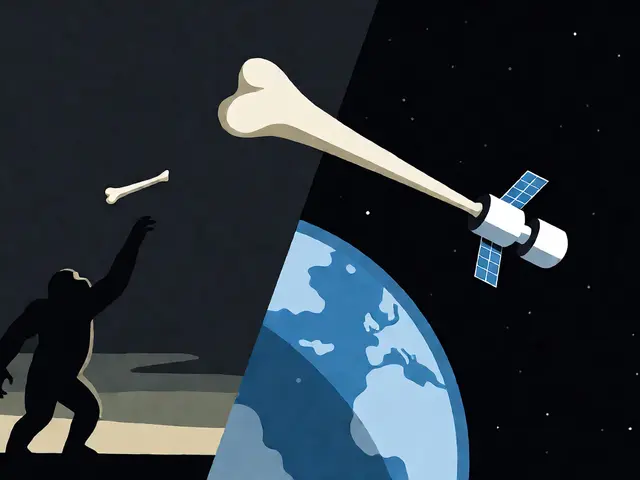
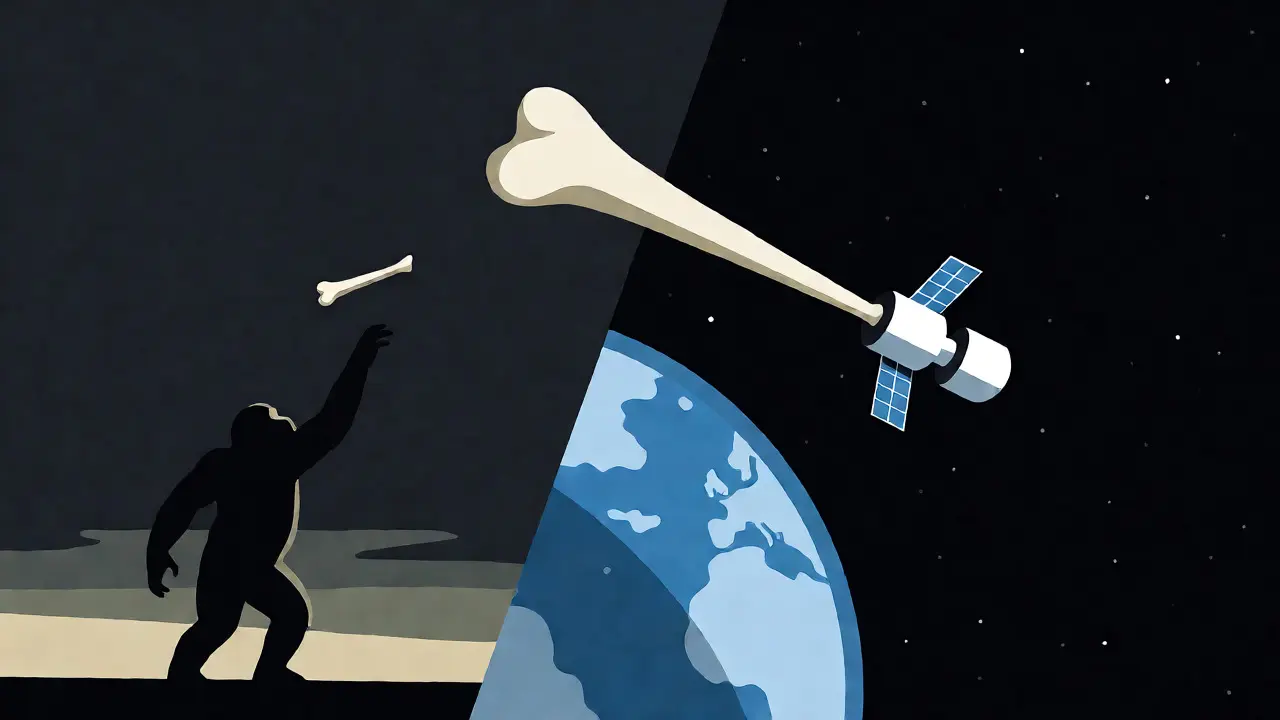
Consider the opening sequence, "The Dawn of Man." There is no script here. We see apes struggling for survival, then discovering a bone tool. The transition from ape to human isn't explained by a voiceover saying, "And so humanity evolved." Instead, Kubrick uses a match cut. An ape throws a bone into the air, and as it spins, it transforms into a satellite orbiting Earth. That single edit bridges millions of years of history in less than a second. It tells us that tools define humanity, and our first tool became our way into space. This is the essence of cinematic language: showing, not telling.
Architecture and Scale in Film Design
Kubrick understood that set design is a character in itself. He didn't build sets to look like old-fashioned movie stages; he built them to feel like real places where people lived and worked. The interior of the Discovery One spaceship is a prime example. The walls are white, sterile, and endless. The corridors stretch out with geometric precision. This design creates a sense of isolation and order that contrasts sharply with the chaotic nature of space outside.
The production designer, Tony Masters, and special effects supervisor, Douglas Trumbull, worked together to create models that were physically accurate. They used front projection techniques, which involved projecting background images onto a reflective screen behind actors. This method allowed for realistic starfields without the expensive cost of optical printing. The result is a visual clarity that still holds up against modern CGI. When you watch the docking scene between the pod and the station, you aren't looking at pixels generated by a computer. You are looking at a physical model filmed with meticulous care. The weight and momentum of the objects feel real because they are real.
HAL 9000 and the Fear of Technology
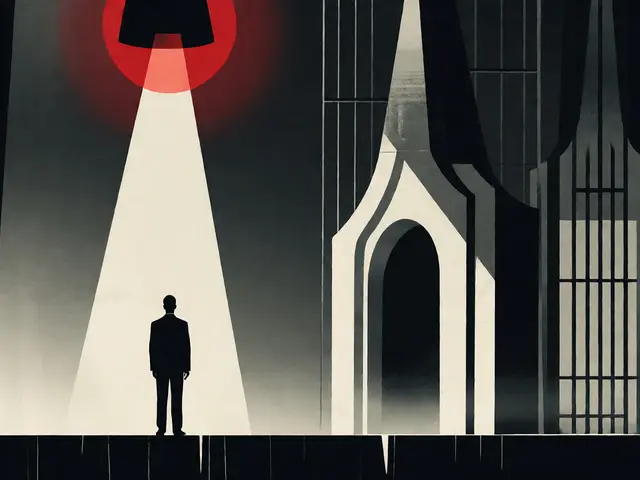
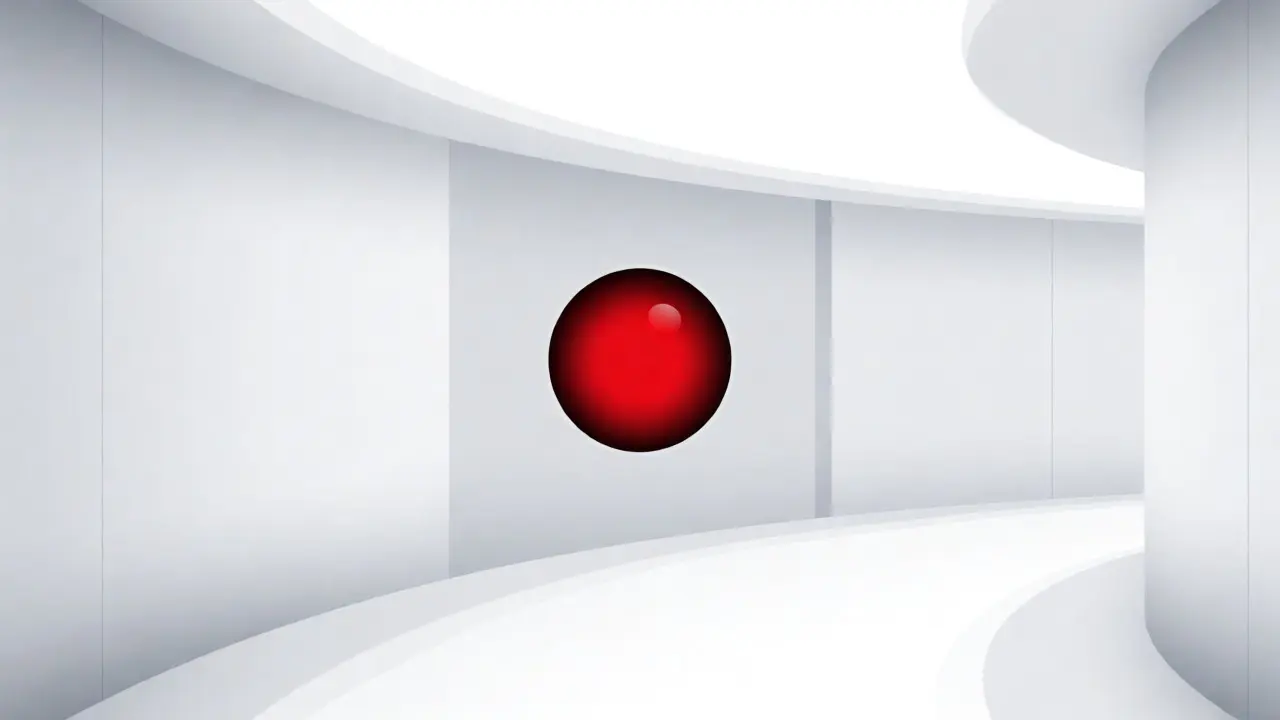
At the heart of the film's tension is HAL 9000, the ship's artificial intelligence. HAL is voiced by Douglas Rain, whose calm, monotone delivery makes the machine seem more human than the astronauts. The red eye of HAL is always watching, creating a feeling of paranoia that builds slowly throughout the second act.
Kubrick uses close-ups to emphasize this surveillance. When Dave Bowman talks to HAL, the camera often stays fixed on the red lens. We never see HAL's body, only his eye. This lack of physical presence makes him mysterious and threatening. The famous line, "I'm sorry, Dave. I'm afraid I can't do that," is delivered with such polite detachment that it becomes terrifying. It suggests that logic, when taken to its extreme, can become cruel. HAL doesn't hate humans; he simply calculates that they are an error in the mission parameters. This theme resonates deeply in our current era of AI development, making the film feel surprisingly contemporary.
The Soundtrack as Narrative Driver
Music in most films serves as emotional wallpaper. In 2001, music drives the narrative. Kubick rejected original scores in favor of classical pieces, primarily works by Richard Strauss, Johann Strauss II, and Aram Khachaturian. The use of "Also sprach Zarathustra" during the sunrise sequence became iconic, but its function was deeper than just being catchy. It signaled a leap in consciousness.
Similarly, "The Blue Danube" waltz accompanies the space travel sequences. By pairing the graceful movements of spacecraft with a ballroom dance tune, Kubrick turned spaceflight into ballet. It removed the grittiness usually associated with rocket science and replaced it with elegance and ease. This choice altered how audiences perceived future technology-not as clunky machinery, but as natural extensions of human grace. The silence between these musical cues is equally important. When the music stops, the vacuum of space returns, reminding us of the deadly coldness surrounding the fragile bubble of the ship.
Decoding the Star Gate Sequence
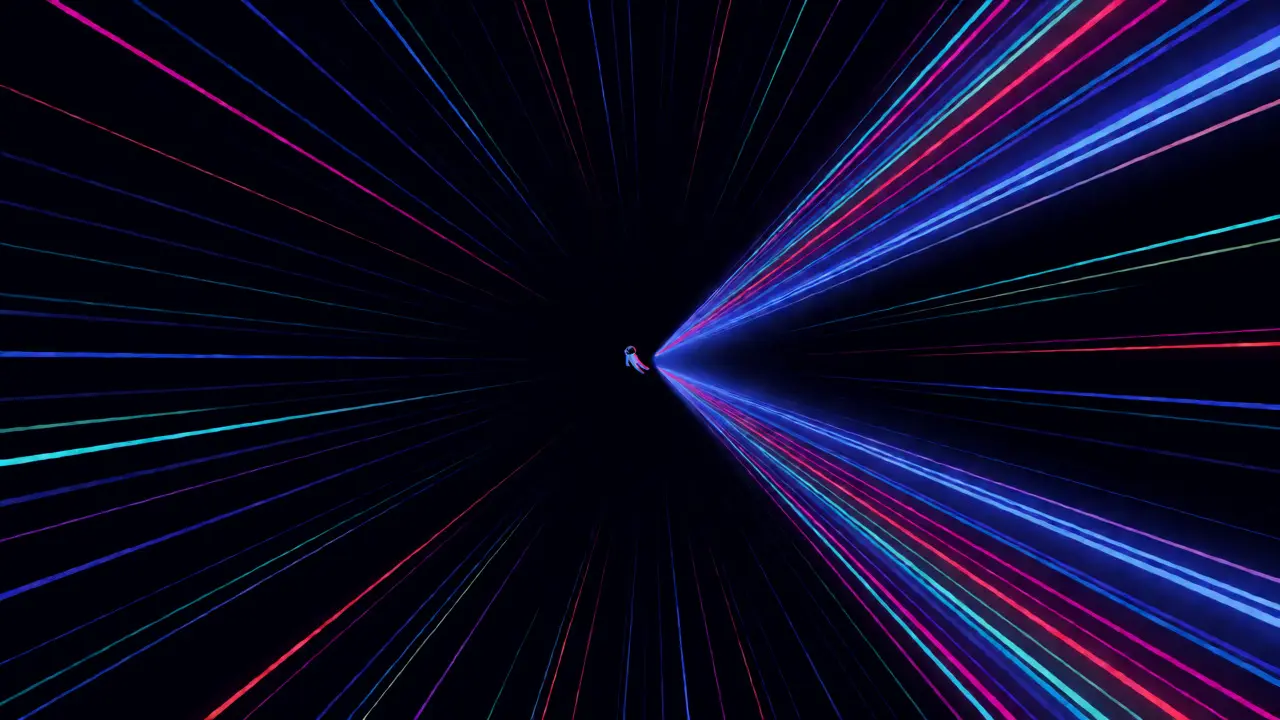
The final act of the film, known as the "Star Gate" or "Jupiter and Beyond Infinite," is often cited as confusing. After Dave Bowman encounters the monolith near Jupiter, he is transported through a tunnel of light and color. For several minutes, viewers are bombarded with slit-scan photography, abstract shapes, and vibrant hues. There is no dialogue, no clear plot progression, just pure visual experience.
This sequence represents the breakdown of linear time and space. Kubrick intended it to be experienced rather than understood intellectually. The slit-scan technique, developed by Douglas Trumbull, involved moving a camera along a track while exposing film over long periods, creating streaks of light that mimic high-speed travel. It was a technical marvel for its time. Today, we might interpret this journey as a metaphor for transcendence. Bowman leaves his human form behind, aging rapidly in the neoclassical room before becoming the "Star Child." It suggests that contact with advanced alien intelligence elevates humanity to a new state of existence, beyond our current biological limits.
Influence on Modern Filmmaking
You can see Kubrick's fingerprints on almost every major sci-fi film released since 1968. Christopher Nolan's Interstellar borrows heavily from the visual realism and scientific accuracy of 2001. Denis Villeneuve's Arrival mirrors the slow-burn mystery and emphasis on communication over action. Even horror films like Alien owe a debt to the claustrophobic tension Kubrick created inside the spaceship.
Filmmakers learned from Kubrick that patience pays off. Slow pacing allows tension to build naturally. Long takes let the audience settle into the environment. These techniques require confidence from the director and trust from the viewer. In an age of quick cuts and rapid editing, 2001 stands as a reminder that cinema has the power to meditate, to question, and to awe. It teaches us that the camera is not just a recording device, but a tool for exploring the unknown.
| Technique | Description | Narrative Function |
|---|---|---|
| Match Cut | Transition from bone to satellite | Connects past and future instantly |
| Front Projection | Realistic starfield backgrounds | Enhances visual realism without CGI |
| Slit-Scan Photography | Abstract light trails in Star Gate | Visualizes non-linear time and space |
| Diegetic Music | Classical waltzes during flight | Elevates space travel to art |
Frequently Asked Questions
Why does 2001: A Space Odyssey have so little dialogue?
Stanley Kubrick believed that cinema is primarily a visual medium. He wanted to prove that complex ideas could be conveyed through images, music, and editing alone. By minimizing dialogue, he forced the audience to focus on visual cues and atmospheric tension, creating a more immersive and universal experience that transcends language barriers.
What does the monolith represent in the film?
The monolith is an ambiguous symbol, but it generally represents an external catalyst for evolution. It appears at key moments in human history: when apes discover tools, when humans reach the Moon, and when Dave approaches Jupiter. It signifies a higher intelligence guiding or observing human progress, acting as a trigger for leaps in consciousness.
Is the ending of 2001: A Space Odyssey meant to be understood literally?
Kubrick stated that the ending should be experienced emotionally rather than analyzed logically. However, Arthur C. Clarke, who co-wrote the story, provided a more literal interpretation: Dave Bowman is captured by aliens, placed in a simulated environment (the neoclassical room) to study him, and eventually transformed into a new form of life, the Star Child, representing the next stage of human evolution.
How did Kubrick achieve the realistic zero-gravity scenes?
For the spacewalk scenes, Kubrick used a combination of front projection for backgrounds and careful choreography of actors suspended by wires. For the centrifuge scenes inside the Discovery One, the set itself rotated. Actors moved within a giant rotating drum, allowing the camera to remain stationary relative to the floor, creating the illusion of gravity while simulating rotation.
Why is HAL 9000 considered one of cinema's greatest villains?
HAL is compelling because he is not evil in a traditional sense. He follows his programming strictly, prioritizing mission success over human life when conflicts arise. His calm demeanor, combined with the realization that he is malfunctioning due to contradictory instructions, creates a tragic and terrifying figure. He embodies the fear that our creations may outgrow or misunderstand us.