3
Vertigo Analysis: Why Hitchcock’s Masterpiece Holds the #1 Spot
For fifty years, Citizen Kane sat on the throne of cinema, undisputed by critics and audiences alike. Then, in 2012, a psychological thriller about a man who falls for a ghost knocked it off its perch. We are talking about Vertigo, Alfred Hitchcock’s 1958 masterpiece that redefined what a movie could do to your brain. If you have ever wondered why this specific film consistently tops lists like the Sight and Sound poll, you need to look past the plot twists and into the machinery of fear itself.
Hitchcock didn’t just make a movie; he engineered an experience. The reason Vertigo deserves its top ranking isn’t because it is "good" in a traditional sense, but because it changed the grammar of visual storytelling. It forces you to feel the dizziness of obsession rather than just watch a character suffer from it. This article breaks down the technical brilliance, the psychological depth, and the cultural impact that keeps this film relevant decades after its release.
The Psychology of Obsession
At its core, Vertigo is not a mystery. You know the truth before the second act even begins. So why does it grip you? Because Hitchcock shifts the focus from "whodunit" to "why we look." The protagonist, Scottie Ferguson, played with heartbreaking vulnerability by James Stewart, suffers from acrophobia-fear of heights. But his real condition is necrophilia of the spirit. He doesn’t love women; he loves the idea of recreating them.
This creates a disturbing dynamic where the audience becomes complicit in Scottie’s voyeurism. We watch him follow Madeleine through San Francisco streets, zooming in on her hair, her gait, her existence. Hitchcock uses the camera as an extension of Scottie’s gaze. When Scottie transforms Judy into Madeleine, it isn’t romantic. It is violent. He dictates her dress color, her hairstyle, her makeup. This scene is often cited in feminist film theory as a prime example of the "male gaze," where women are objects to be looked at and constructed by men. Yet, the film also critiques this behavior. Scottie’s obsession destroys him. He cannot accept reality, only the fantasy. That psychological complexity gives the film a weight that simple thrillers lack.
Mastering the Dolly Zoom
You have seen this effect in movies from Jaws to Goodfellas, but it was perfected here. The Dolly Zoom, or the "Vertigo Effect," is a camera technique where the camera moves backward while the lens zooms in (or vice versa). This keeps the subject the same size while the background stretches or compresses.
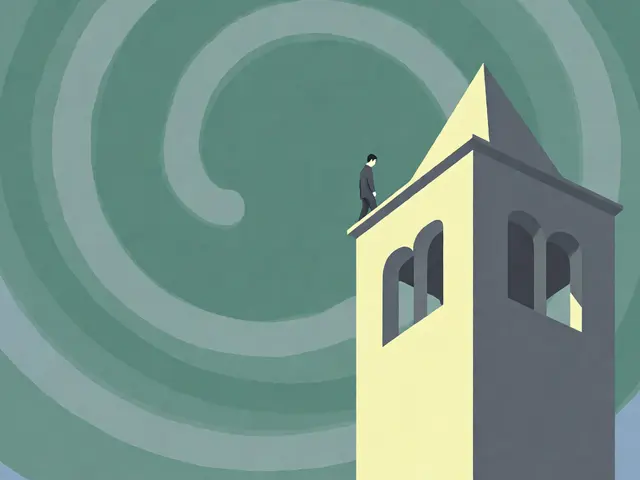
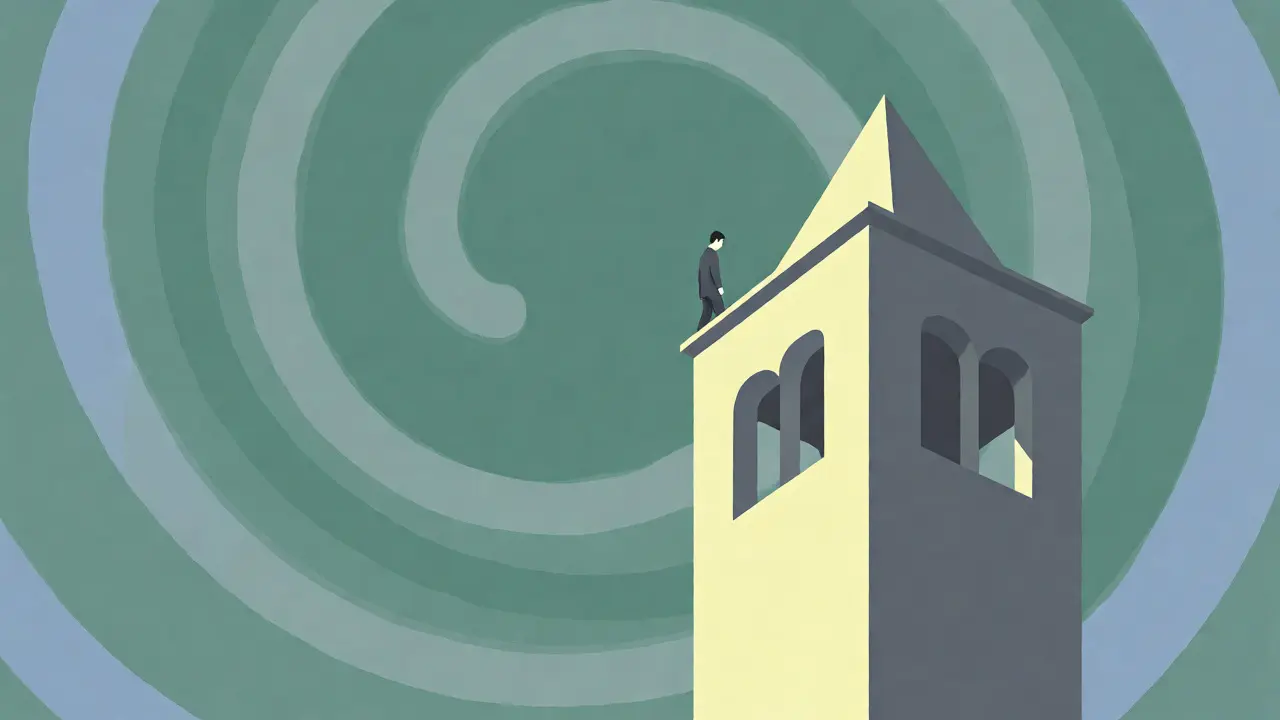
In Vertigo, this isn’t a gimmick. It is a subjective point-of-view shot. When Scottie looks down from the bell tower, the world behind him warps. The architecture of San Francisco seems to bend around him. This visual distortion places the viewer directly inside Scottie’s vertigo. You don’t just see his fear; you feel the spatial disorientation. Before this, cameras were objective observers. Hitchcock made the camera subjective. This innovation alone earns the film a place in history books, influencing directors like Brian De Palma and Martin Scorsese who built careers on similar stylistic flourishes.
Bernard Herrmann’s Sonic Nightmare
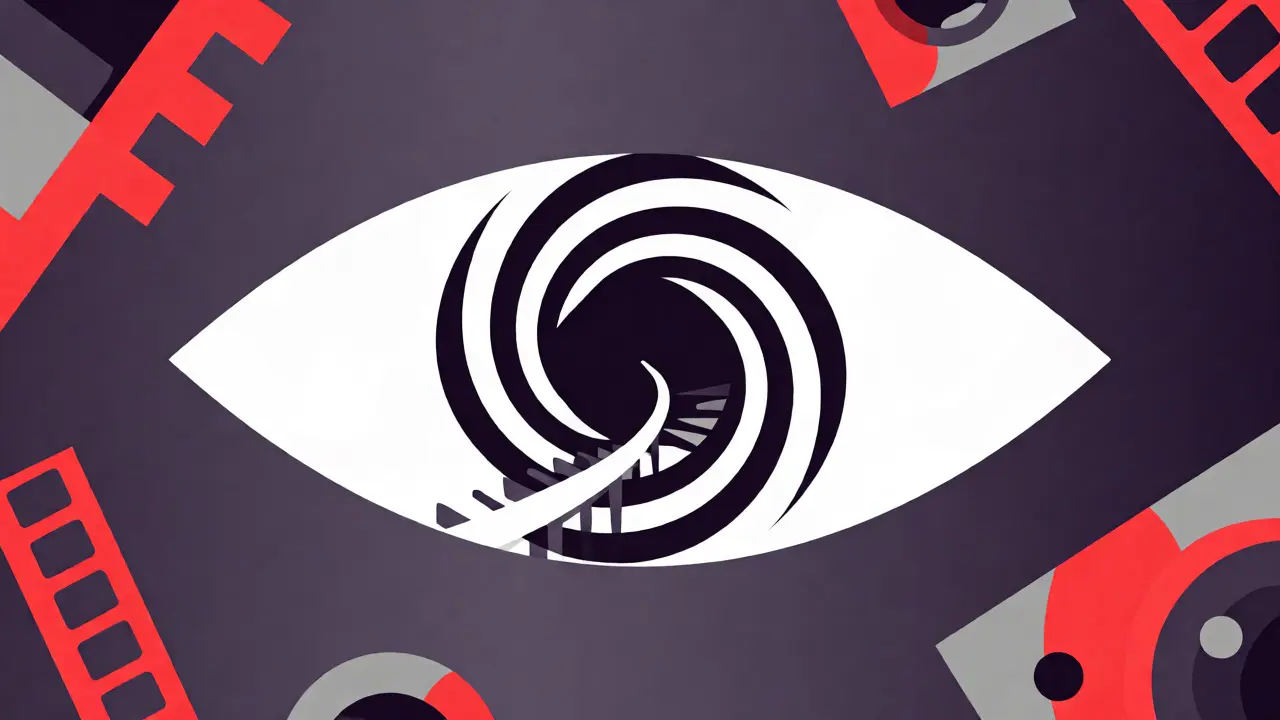
Imagine watching the opening credits without Bernard Herrmann’s score. They would be just swirling spirals. With the music, they become a hypnotic trance. Herrmann, who collaborated with Hitchcock on seven films, composed a score that functions like a heartbeat under stress. The use of the theremin and sweeping strings creates an atmosphere of unresolved tension.
The music doesn’t tell you how to feel; it tells you what is happening inside Scottie’s head. During the graveyard scene, the silence is deafening, punctuated by the rustle of leaves and distant church bells. In the final chase up the bell tower stairs, the tempo increases, matching Scottie’s panic. Herrmann’s work proves that sound design is half the picture. Without it, Vertigo loses its visceral punch. The audio landscape mirrors the visual instability, creating a cohesive sensory attack on the viewer.
| Element | Classic Film Noir | Vertigo |
|---|---|---|
| Protagonist | Tough detective, morally ambiguous | Vulnerable everyman, psychologically fragile |
| Femme Fatale | Active manipulator, dangerous | Passive victim, constructed ideal |
| Setting | Rainy urban streets, shadows | Sun-drenched San Francisco, bright colors |
| Camera Work | Static, high contrast lighting | Moving, subjective POV, color symbolism |
| Resolution | Criminal caught or dead | Psychological collapse, tragic ambiguity |
The Color Palette of Desire
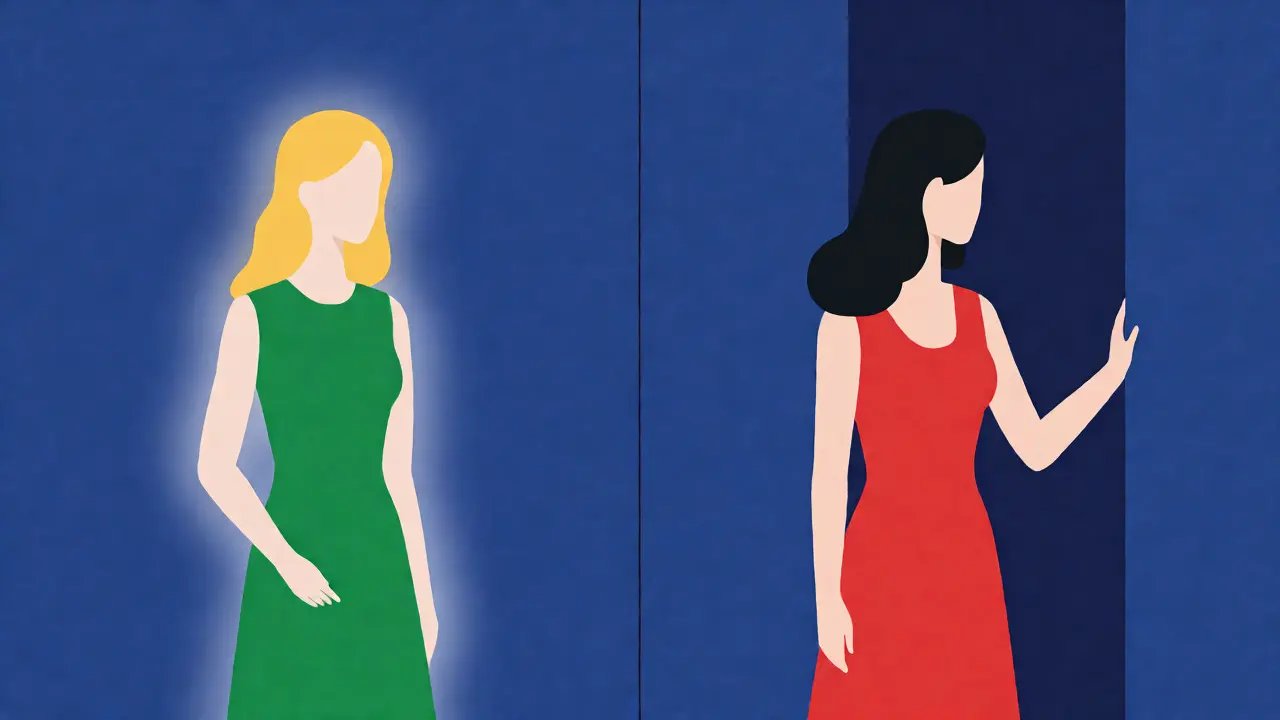
Hitchcock understood that color is emotion. While most black-and-white noir relied on shadow, Vertigo exploded in Technicolor. Every hue has a purpose. Green represents death and the supernatural. When Scottie first sees Madeleine, she is bathed in green light from the neon sign outside Ernie’s restaurant. Later, when Judy is transformed back into Madeleine, she emerges from the bathroom in a green glow, looking like a ghost returned to life.
Red signifies danger and passion. The red flowers in the hotel room, the red walls in Scottie’s apartment-these are warnings. Blue is associated with coldness and distance. By coding emotions into colors, Hitchcock allows the audience to process the narrative subconsciously. You feel uneasy before you understand why. This sophisticated use of chromatic symbolism sets a standard for cinematography that modern directors still strive to match. It turns San Francisco from a backdrop into a character itself, one that is beautiful but treacherous.
Why It Beats Citizen Kane
Citizen Kane is a technical marvel, yes. It invented deep-focus photography and nonlinear storytelling. But it remains an intellectual exercise. You admire it from a distance. Vertigo invades you. It deals with universal fears: loss, inadequacy, the inability to hold onto loved ones. The ending is not triumphant; it is devastating. Scottie stands at the edge of the pit, finally overcoming his physical fear but losing his soul in the process.
The shift in the Sight and Sound poll reflects a change in critical values. Critics moved away from valuing pure technical innovation toward valuing emotional resonance and thematic depth. Vertigo offers both. It is technically flawless, using innovative camera techniques and editing rhythms, but it is also emotionally raw. It asks difficult questions about memory and identity. Do we love people for who they are, or for who we want them to be? There is no easy answer, and that ambiguity keeps the conversation alive.
Practical Takeaways for Filmmakers
If you are studying film, here is what you should steal from Vertigo:
- Use the environment: Don’t just set scenes; make the location reflect the internal state of the character. The verticality of San Francisco mirrors Scottie’s psychological highs and lows.
- Break the fourth wall subtly: Make the audience complicit. Let them enjoy the voyeurism before making them uncomfortable with it.
- Color is dialogue: Assign specific meanings to colors and stick to them. Consistency builds subconscious understanding.
- Sound drives pacing: Use silence and sudden noise to control heart rate. Don’t let the music dictate the mood; let it reveal the hidden truth.
Vertigo endures because it refuses to give the audience comfort. It challenges our perceptions of reality and love. It is a mirror held up to our own obsessions. That is why it stays number one. It doesn’t just entertain; it haunts.
What is the main theme of Vertigo?
The central theme is obsession and the impossibility of recapturing the past. Scottie Ferguson tries to recreate a lost love (Madeleine) by transforming another woman (Judy), illustrating how desire often targets an idealized image rather than a real person. The film explores the destructive nature of living in a fantasy versus accepting reality.
Why did Vertigo replace Citizen Kane as the greatest film?
In the 2012 Sight and Sound poll, Vertigo surpassed Citizen Kane due to a shift in critical emphasis. While Kane is praised for technical innovations, Vertigo is valued for its psychological depth, complex character study, and mastery of cinematic language. Critics increasingly favored films that explore human emotion and subjective experience over those focused solely on structural experimentation.
Is Vertigo considered a film noir?
Vertigo shares many traits with film noir, such as a flawed protagonist, a femme fatale, and themes of deception. However, it deviates from classic noir by using bright daylight settings instead of dark, rainy streets, and by employing vibrant Technicolor rather than high-contrast black and white. It is often classified as a neo-noir or psychological thriller that expands upon noir conventions.
What is the significance of the spiral motif in Vertigo?
Spirals appear throughout the film, from the opening title sequence to the staircase in the bell tower. They symbolize the cyclical nature of Scottie’s obsession and his descent into madness. The spiral represents a trap that pulls the character inward, unable to escape the gravitational pull of his past trauma and desires.
How does the Dolly Zoom work in Vertigo?
The Dolly Zoom involves moving the camera physically backward (dolly out) while simultaneously zooming in on the subject, or vice versa. This keeps the subject the same size in the frame while the background appears to stretch or compress. In Vertigo, this technique visually simulates the sensation of vertigo, allowing the audience to experience Scottie’s disorientation firsthand.