1
Ethics of Subject Relationships in Documentary Filmmaking: Power, Consent, and Follow-Up
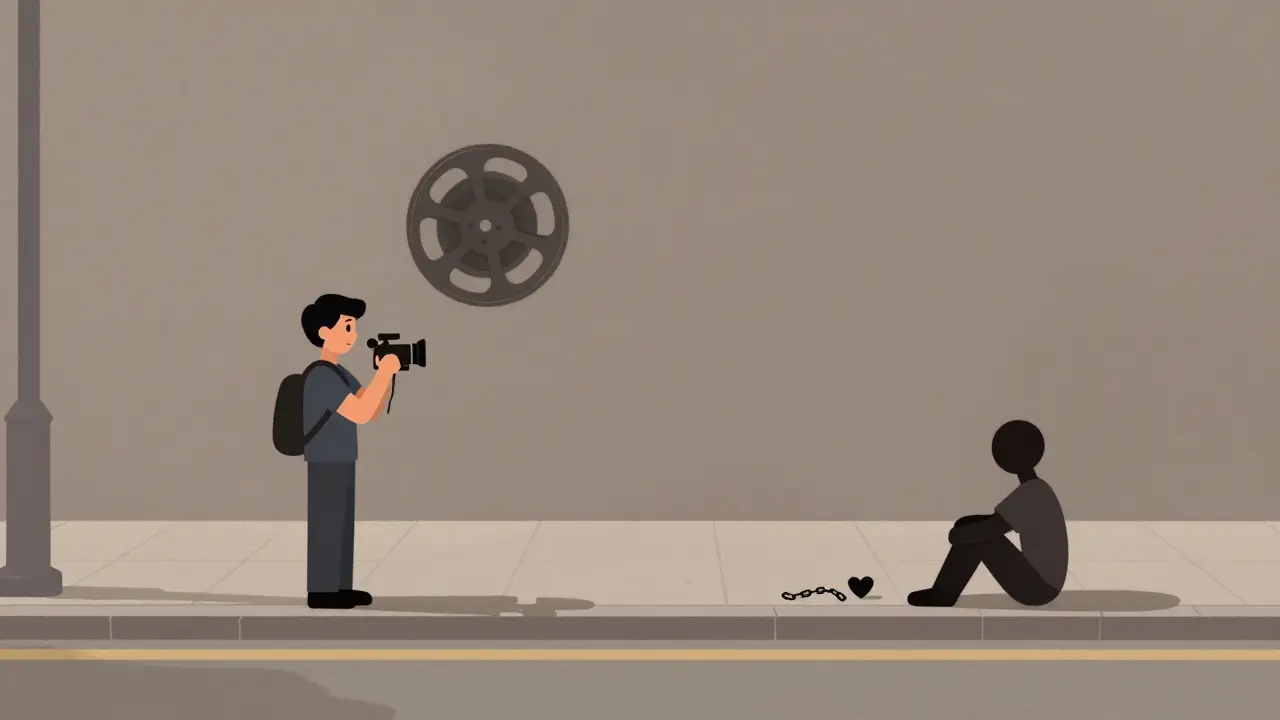
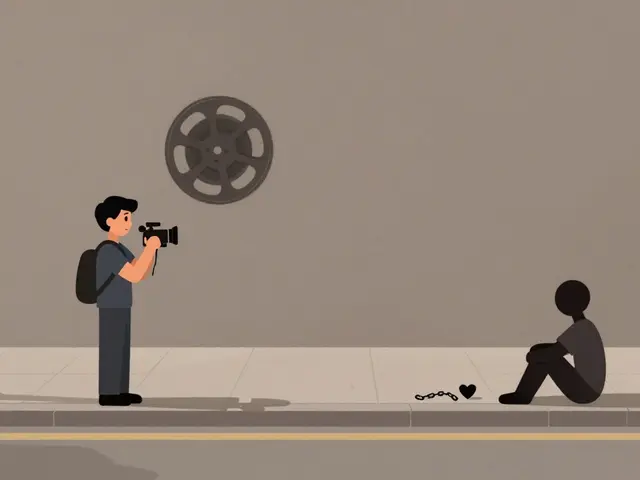
When you point a camera at someone’s life, you’re not just recording images-you’re entering a relationship. And like any relationship, it comes with responsibility. Too often, documentary filmmakers focus on the story, the shot, the edit, and forget the person behind it. The ethics of subject relationships aren’t a footnote. They’re the foundation. Without them, even the most powerful film can become exploitation dressed up as art.
Power Isn’t Just in the Camera
The person holding the camera always has more control. They decide when to start, when to stop, what to cut, and what to leave out. The subject? They’re often vulnerable-facing trauma, poverty, stigma, or isolation. They may say yes because they trust you, because they want their voice heard, or because they don’t know what else to do. That imbalance isn’t accidental. It’s structural.
Think about a film about a homeless veteran. You show their daily struggle. You capture their tears. You win awards. But what happens after the cameras leave? Do they still have a place to sleep? Do they get therapy? Do they even know how the film will be used? If the answer is no, then you didn’t just make a documentary-you made a transaction without fairness.
Power isn’t just about who controls the equipment. It’s about who controls the narrative, the access, the outcome. And if the subject doesn’t have real agency in that process, you’re not documenting truth-you’re curating a version that serves your goals, not theirs.
Consent Isn’t a One-Time Signature
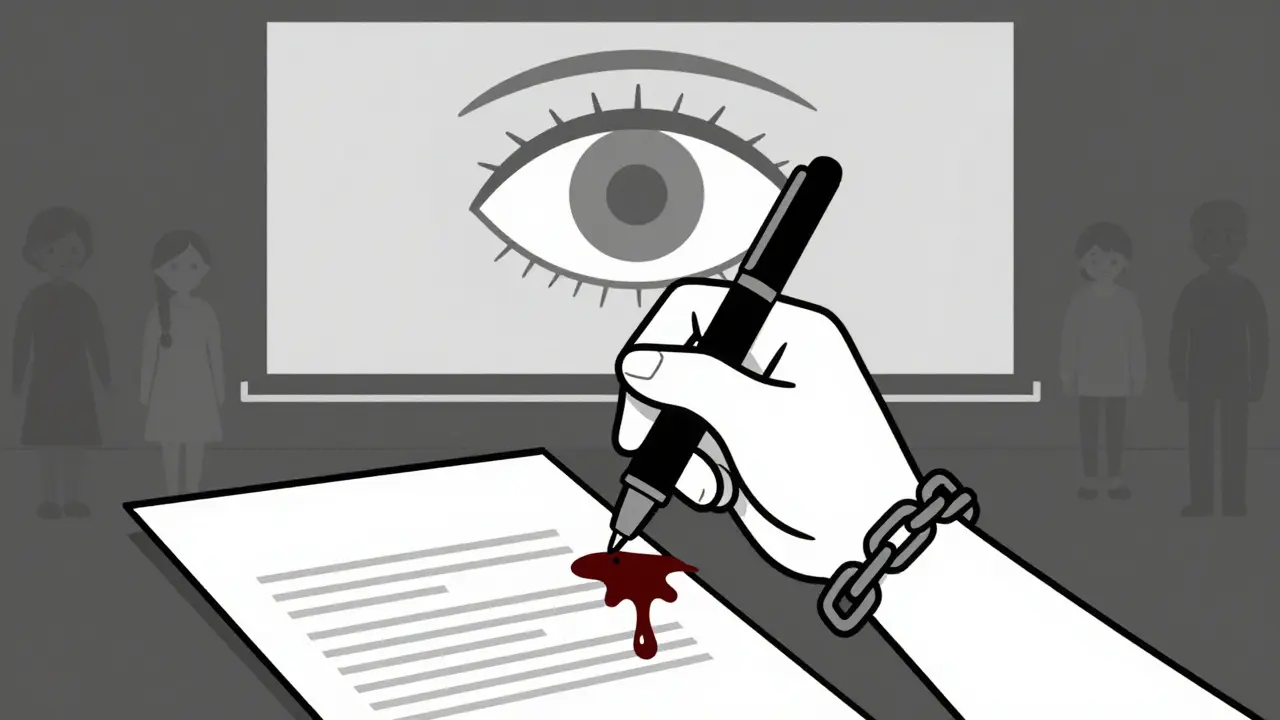
Most filmmakers get a release form signed. Big deal. A signature doesn’t mean understanding. A person might sign because they’re desperate for help, because they don’t speak the language well, or because they think it’s their only chance to be seen. That’s not informed consent. That’s coercion disguised as opportunity.
True consent is ongoing. It’s a conversation, not a form. It means checking in months later: Do you still feel okay with this being shown? Do you understand how it might affect your family? Are you prepared for strangers to know your story? Some subjects change their minds after seeing the rough cut. Others realize too late how their words were twisted. And some-especially those from marginalized communities-never had the power to say no in the first place.
In 2023, a documentary about Indigenous land defenders in Queensland was pulled from festivals after one subject withdrew consent. They hadn’t realized the film would be used in a university course without their permission. The filmmaker had followed standard procedure: signed release, legal clearance. But the subject didn’t know what a university course meant. They didn’t know their face would be projected on screens for strangers to analyze. That’s not ethics. That’s negligence.
Follow-Up Isn’t Optional-It’s the Point
Too many filmmakers treat the premiere as the end. The film screens. The audience cries. The filmmaker gets a standing ovation. And then? Silence.
But the subject? They live with the consequences every day. A woman featured in a film about domestic abuse might get recognized on the street. Her children might be bullied. Her job might vanish. Her community might turn against her. If you didn’t plan for that, you didn’t plan at all.
Responsible follow-up means more than sending a thank-you note. It means:
- Offering ongoing emotional support-linking subjects to counselors or community groups
- Providing copies of the film in accessible formats for their family
- Sharing revenue if the film makes money-especially if the subject’s story was central to its success
- Letting them control how their image is used after release
- Being available for years, not just weeks
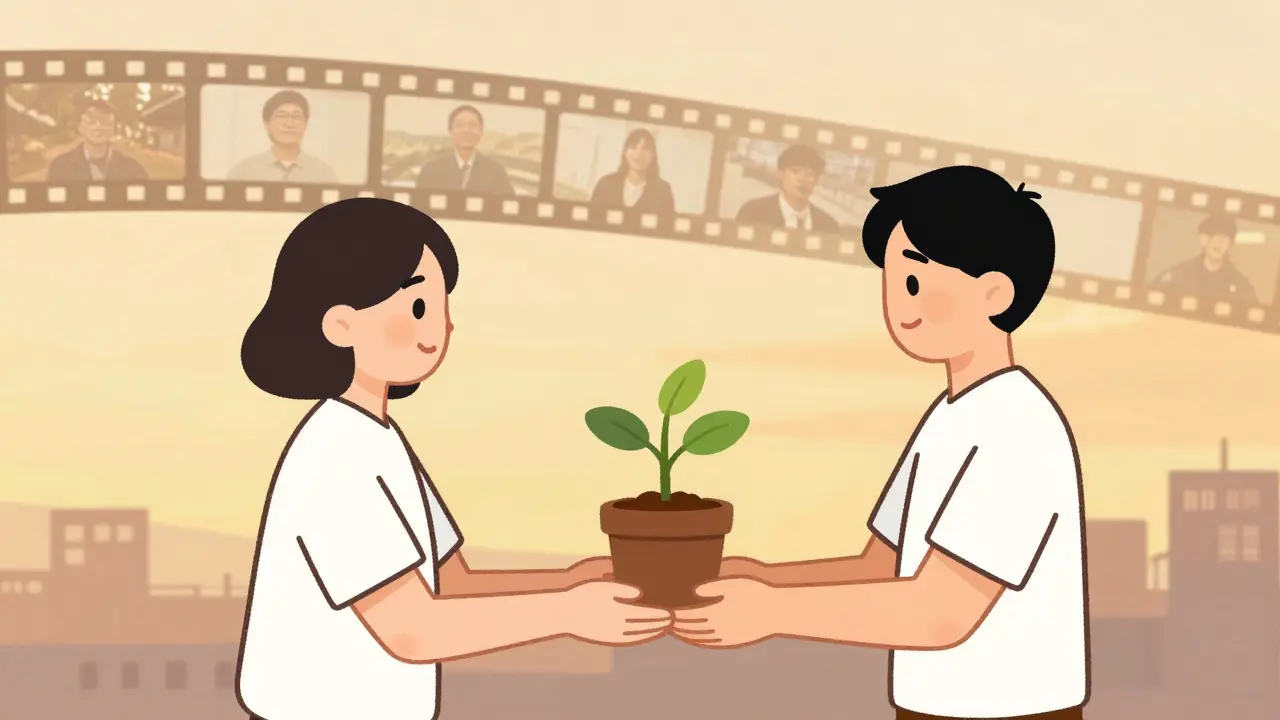
There’s a documentary from 2022 about teen mothers in regional New South Wales. The filmmaker didn’t just film them. They helped two of the subjects enroll in a vocational program. They paid for childcare so the women could attend editing sessions. They gave each of them a percentage of the film’s festival revenue. That’s not charity. That’s reciprocity.
The Cost of Not Doing This Right
When ethics are ignored, the damage isn’t just moral-it’s real. People lose jobs. Families fracture. Communities feel betrayed. And the documentary industry? It loses trust.
Remember the backlash against The Act of Killing? Critics didn’t just question the filmmaking style-they asked: Did the perpetrators really understand what they were signing? Were they aware they’d be shown as monsters? The film won awards, but it also sparked global debate about whether art justifies harm.
And then there’s the opposite side: films that do it right. 13th by Ava DuVernay didn’t just expose mass incarceration-it connected subjects to legal aid networks. My Octopus Teacher didn’t just capture a bond with an octopus-it funded marine conservation efforts in the same waters where the footage was shot.
These aren’t exceptions. They’re models. Ethics isn’t a burden. It’s what makes your film matter beyond the screen.
Building an Ethical Framework Before You Shoot
You don’t wait until the film is done to ask, Was this fair? You build fairness into every step.
Here’s how:
- Pre-production: Meet subjects multiple times before signing anything. Explain how the film will be distributed, who will see it, and what could happen. Use plain language. No jargon.
- Consent process: Make consent revocable at any time. Offer a 30-day cooling-off period after signing. Record verbal confirmation, not just signatures.
- During filming: Check in weekly. Ask: Is this still okay? Let subjects review footage before it’s locked. Don’t pressure them to perform.
- Post-production: Offer to share the final cut with them before submission. Let them suggest edits. If they want to remove themselves, honor it-even if it ruins your narrative.
- After release: Assign someone on your team to stay in touch. Budget for follow-up support. Don’t assume they’re fine because they smiled on camera.
It’s not about being perfect. It’s about being present.
What Happens When You Get It Wrong
There’s a quiet epidemic in documentary filmmaking: subjects who disappear after their film airs. They turn off their phones. Change their names. Avoid social media. Some never watch the film. Why? Because it hurt them.
One subject from a 2021 film about addiction in Tasmania told a journalist: They made me look broken. They never asked if I was healing.
That’s not storytelling. That’s trauma tourism.
And the industry pays a price. Audiences are getting smarter. They’re asking: Who benefits here? Who got paid? Who got left behind? If you can’t answer those questions honestly, your film won’t just be ignored-it could be condemned.
It’s Not About Being a Hero-It’s About Being Human
You don’t need to be a saint to make ethical documentaries. You just need to be honest. You need to care more about the person than the prize. You need to ask: Would I be okay with this if it were me?
There’s no checklist that replaces empathy. No legal form that replaces trust. No award that redeems a broken relationship.
The best documentaries aren’t the ones that win Oscars. They’re the ones that leave the subject stronger than they found them.
So when you pick up your camera next time-remember: you’re not just capturing a story. You’re holding someone’s life in your hands. Handle it with care.
What if a subject wants to withdraw consent after the film is released?
If a subject withdraws consent after release, you have an ethical obligation to remove their footage from all public platforms, including streaming services, festivals, and educational screenings. Legally, this depends on your contract and jurisdiction-but ethically, their right to control their image overrides your creative goals. Some filmmakers include a clause in their release forms allowing for removal under specific conditions. Others build in a cooling-off period before distribution. The most ethical approach is to prioritize the subject’s well-being over the film’s availability.
Do I need to pay my documentary subjects?
You’re not legally required to pay subjects in most countries-but if your film makes money, and their story is central to its success, you owe them a share. Many ethical filmmakers use a revenue-sharing model, especially for subjects from low-income backgrounds. Paying isn’t charity-it’s fairness. Some documentaries set aside 10-20% of profits for subjects and their communities. Others fund services like therapy, housing, or education instead of cash. The key is transparency: if you’re making money from their life, they should benefit too.
How do I know if my subject truly understands what they’re agreeing to?
Ask them to explain it back to you in their own words. Don’t rely on them saying ‘yes’ because they’re nervous or grateful. Test their understanding: Can you tell me how this film might affect your job or family? Do you know it could be shown in schools or online forever? If they can’t answer, you haven’t explained it well enough. Use visual aids, translators, or community advocates if needed. Consent isn’t a form-it’s a conversation that ends only when they feel fully informed.
Can I film someone without their consent if it’s in public?
Legally, yes-in public spaces, you often don’t need consent for filming. Ethically? That’s a different question. If you’re focusing on someone’s vulnerability-homelessness, grief, illness-you’re not just capturing a public moment. You’re turning their private pain into public content. Even if the law allows it, the morality doesn’t. Always ask. Always respect a ‘no.’ Public space doesn’t mean public property.
What should I do if my subject is a child or someone with cognitive impairments?
For minors or individuals with cognitive impairments, you need consent from a legal guardian-but that’s not enough. You must also assess whether the person themselves understands and agrees. Use simple language. Show them examples. Watch their body language. If they seem confused, scared, or pressured, stop. Many ethical filmmakers avoid featuring vulnerable individuals altogether unless there’s direct community support and long-term care planned. The goal isn’t to capture their story-it’s to protect their dignity.