7
Highest-Grossing Movies of All Time Adjusted for Inflation: The Real Box Office Titans

Look at any standard "Top 10" movie list, and Avatar is sitting comfortably at number one. It made nearly $3 billion, a staggering amount that dwarfs almost everything else in history. But if you stop there, you are missing the bigger picture. Money has a habit of losing its punch over time. A ticket that cost fifty cents in 1939 bought far more than a twenty-dollar ticket does today. When we strip away the illusion of modern marketing budgets and adjust for inflation, the hierarchy of cinema’s greatest hits shifts dramatically. The real titans aren’t just the ones who sold the most tickets recently; they are the films that captured the cultural zeitgeist so completely that people lined up around the block for months.
The Illusion of Modern Box Office Records
We live in an era where blockbuster budgets routinely exceed $200 million. Studios spend fortunes on global marketing campaigns before a single frame is shot. This changes the math entirely. When Avengers: Endgame earned over $2.7 billion in 2019, it was a massive achievement. However, because so many people already owned high-definition TVs and streaming subscriptions, the opportunity cost of going to the theater was higher. Compare this to the late 1970s or early 1980s, when television options were limited and going to the cinema was one of the few major entertainment expenses families could afford. The raw dollar amounts look smaller then, but the percentage of disposable income spent was significantly larger.
Inflation adjustment isn't just about applying a calculator formula from the Bureau of Labor Statistics. It is about understanding purchasing power parity. If a movie made $100 million in 1975, that money had the same buying power as roughly $550 million today. This means that older classics often outperform modern spectacles when viewed through this lens. It also highlights why certain genres dominated specific eras. Musicals and epics ruled the mid-20th century because they offered an experience that home viewing simply couldn't replicate. Today, visual effects can be seen in your living room, which makes the theatrical window less critical for retention, though still vital for initial revenue spikes.
Gone with the Wind: The Unbeatable Champion
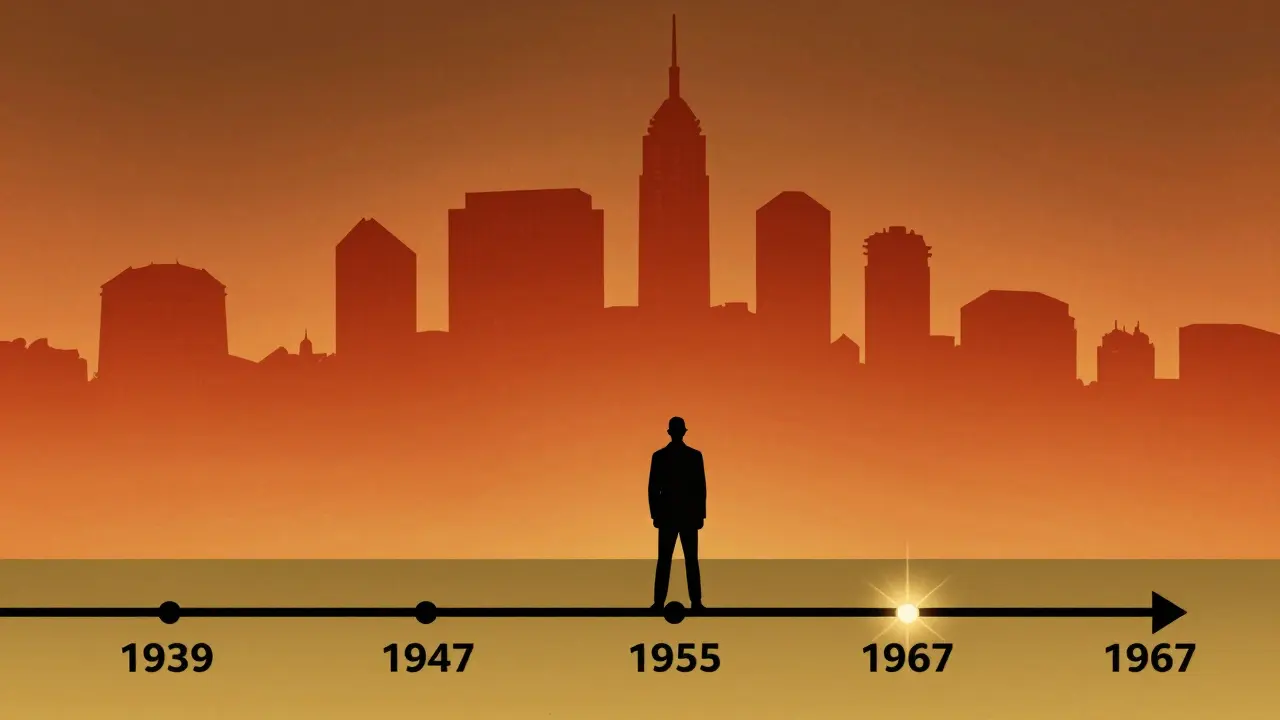
If you want to know what true dominance looks like, look no further than Gone with the Wind, released in 1939. Directed by Victor Fleming and produced by David O. Selznick, this epic drama didn't just make money; it defined the concept of a blockbuster. Adjusted for inflation, it remains the highest-grossing film in history by a wide margin, with estimated earnings exceeding $4 billion in today's dollars. How did it achieve this? Partly because it was re-released multiple times. Unlike modern films that fade into obscurity after their initial run, Gone with the Wind was brought back to theaters in 1947, 1955, and 1967, each time drawing massive audiences who wanted to see the spectacle on the big screen again.
The film's longevity is tied to its scale. At nearly four hours long, it demanded a commitment from viewers that mirrors the marathon nature of today's franchise finales. It featured groundbreaking special effects for its time, including the burning of Atlanta, which required innovative compositing techniques. More importantly, it tapped into a complex national narrative about the American Civil War, making it a cultural event rather than just a movie night. While modern critics rightly critique its portrayal of slavery and racial dynamics, its commercial success is undeniable. It set the template for the modern tentpole release: high budget, wide distribution, and massive promotional push.
Jaws and E.T.: Birth of the Summer Blockbuster
Before 1975, studios released their biggest films in the fall and winter, aiming for awards season. That changed with Jaws. Steven Spielberg’s thriller premiered in June and stayed in theaters all summer, generating unprecedented word-of-mouth buzz. Adjusted for inflation, Jaws ranks among the top five highest-grossing films ever. Its success proved that a well-marketed thriller could draw audiences away from the beach and into the dark. It introduced the concept of the "platform release," where a film opens in a few key markets and expands based on performance, a strategy still used today by indie darlings and superhero franchises alike.
Just three years later, Spielberg returned with E.T. the Extra-Terrestrial. This family-friendly sci-fi film became a phenomenon, earning enough to rank second only to Gone with the Wind in inflation-adjusted terms. E.T. succeeded because it appealed to both children and adults, creating a shared cultural moment. Parents took their kids, and kids begged their parents. The marketing was subtle but effective, focusing on emotional connection rather than action sequences. It demonstrated that heart could beat spectacle at the box office, a lesson that some modern studios have forgotten in their rush to create louder, brighter spectacles.
Star Wars: The Franchise That Changed Everything
You cannot discuss inflation-adjusted box office records without talking about Star Wars (1977). Originally titled Star Wars: Episode IV - A New Hope, this film didn't just make money; it created merchandising as a primary revenue stream for Hollywood. Lucasfilm licensed toys, books, and games, turning the movie into a brand. Adjusted for inflation, the original trilogy-A New Hope, The Empire Strikes Back, and Return of the Jedi-all rank in the top ten highest-grossing films. The Empire Strikes Back alone has earned over $1 billion in today's dollars during its initial run and subsequent re-releases.
What made Star Wars unique was its re-release strategy. Like Gone with the Wind, it came back to theaters every few years, updated with new effects or soundtracks. Each return introduced the saga to a new generation while allowing older fans to relive the magic. This cyclical revenue model is rare in modern cinema, where films typically have a finite theatrical window. The enduring popularity of the franchise shows that strong storytelling and iconic characters can transcend technological advancements. Even as CGI evolved from practical models to digital wizardry, the core appeal remained unchanged.
Titanic and Avatar: The Visual Spectacle Era
In the late 1990s and early 2000s, James Cameron redefined what was possible in cinema with Titanic and Avatar. Titanic, released in 1997, held the record for highest-grossing film for over a decade until Cameron surpassed himself with Avatar in 2009. Both films benefited from the rise of IMAX and 3D technology, which commanded premium ticket prices. Adjusted for inflation, Titanic sits firmly in the top five, having earned nearly $2 billion in nominal dollars, which translates to over $3.5 billion today. Its success was driven by a broad demographic appeal, attracting not just young couples but also older audiences who remembered the historical event.
Avatar pushed the envelope further with motion-capture technology and immersive world-building. It earned $2.9 billion initially and saw a resurgence during the pandemic-era re-releases in China and other international markets. While its inflation-adjusted total is impressive, it doesn't quite reach the heights of Gone with the Wind or Jaws. Why? Because Avatar's reliance on cutting-edge tech meant that much of its value was experienced best in theaters, yet the rapid advancement of home viewing technology began to erode the exclusivity of the cinematic experience. Still, it proved that spectacle alone could drive global attendance, setting a new benchmark for production values.
| Movie Title | Release Year | Nominal Gross ($) | Inflation-Adjusted Gross ($) | Key Success Factor |
|---|---|---|---|---|
| Gone with the Wind | 1939 | $399M | $4.2B+ | Cultural phenomenon, multiple re-releases |
| Jaws | 1975 | $470M | $3.2B+ | Birth of summer blockbuster, marketing innovation |
| E.T. the Extra-Terrestrial | 1982 | $792M | $3.1B+ | Family appeal, emotional storytelling |
| Star Wars (A New Hope) | 1977 | $775M | $3.0B+ | Merchandising, re-releases, fan culture |
| Titanic | 1997 | $2.2B | $3.5B+ | Broad demographic appeal, IMAX/3D |
Why Inflation Adjustment Matters for Filmmakers
Understanding these numbers isn't just an academic exercise for movie buffs. It provides crucial insights for filmmakers and studio executives. First, it highlights the importance of longevity over immediate hype. Films that rely solely on opening weekend explosions often fade quickly, whereas stories with universal themes endure. Second, it underscores the value of re-releases. In an age where streaming dominates, bringing a film back to theaters can generate significant additional revenue and reintroduce classic works to new audiences. Finally, it reminds us that context matters. A film's success is tied to the economic and social climate of its release. During times of uncertainty, escapist fantasies like Jaws or Star Wars tend to thrive because they offer hope and adventure.
For independent filmmakers, the lesson is clear: focus on story and character. You may not have the budget for Avatar-level visuals, but you can craft a narrative that resonates deeply with audiences. Look at Parasite, which broke barriers globally not through spectacle but through sharp social commentary and brilliant direction. While it won't top the inflation-adjusted charts, its impact proves that quality storytelling can cut through noise regardless of budget size.
The Future of Box Office Metrics
As we move further into the 2020s, the definition of "success" continues to evolve. Streaming platforms now report "hours viewed" rather than ticket sales, making direct comparisons difficult. However, the principles remain the same: audience engagement drives revenue. Whether through a theatrical release or a digital premiere, the goal is to capture attention in a crowded marketplace. Inflation-adjusted metrics will always provide a clearer picture of a film's true cultural impact, stripping away the distortions of currency devaluation and marketing spend. They remind us that while technology changes, human desire for compelling stories remains constant.
So, the next time you hear about a new record-breaking film, remember to ask: how does it compare historically? Who really holds the crown? The answer might surprise you, taking you back to the golden age of Hollywood where epic tales and simple thrills ruled the box office.
What is the highest-grossing movie of all time adjusted for inflation?
Gone with the Wind (1939) is widely considered the highest-grossing film of all time when adjusted for inflation, with estimates exceeding $4 billion in today's dollars. Its success was driven by multiple re-releases and its status as a cultural phenomenon.
Why do older movies rank higher when adjusted for inflation?
Older movies rank higher because ticket prices were significantly lower relative to average income. A movie ticket in the 1930s or 1970s represented a larger portion of disposable income than it does today. Additionally, fewer entertainment alternatives existed, making cinema the primary form of mass leisure.
How does Jaws compare to modern blockbusters like Avengers?
When adjusted for inflation, Jaws (1975) has earned more than Avengers: Endgame (2019). Jaws pioneered the summer blockbuster model and sustained interest through word-of-mouth, whereas modern blockbusters rely heavily on pre-existing fan bases and massive marketing budgets.
Did Star Wars earn more than Titanic in real terms?
Yes, the original Star Wars trilogy, particularly A New Hope, has generated more inflation-adjusted revenue than Titanic. This is largely due to frequent re-releases that kept the franchise in theaters for decades, accumulating ticket sales across multiple generations.
Does inflation adjustment account for population growth?
Standard inflation adjustments do not fully account for population growth, which can skew comparisons. Some analysts use per-capita spending metrics to get a more accurate picture of a film's popularity relative to the potential audience size at the time of release.