18
IMDb Bottom 100: Why We Track the Worst-Rated Films
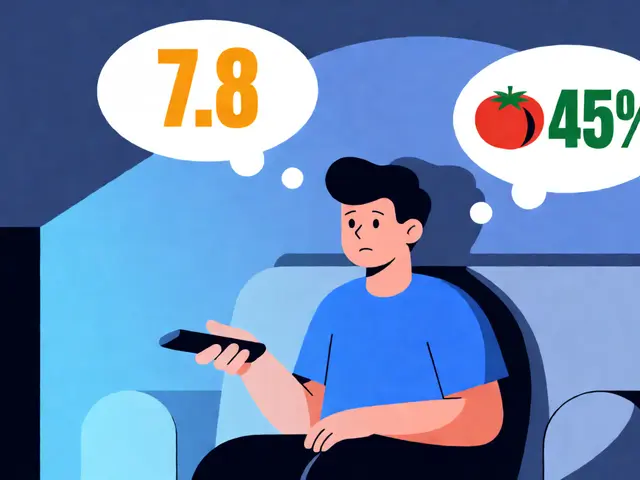
You probably know the IMDb Top 250. It is the gold standard for "what to watch tonight." But have you ever scrolled all the way down? I mean really down. Past the cult classics, past the guilty pleasures, all the way to the bottom of the barrel. That is where you find the IMDb Bottom 100, a list so infamous it has its own subreddit, its own YouTube channels, and a dedicated fanbase that treats bad cinema with the same reverence cinephiles give to Tarkovsky.
Why do we care about the worst-rated films? It seems counterintuitive. If a movie scores a 1.8 out of 10, surely it isn't worth your two hours, right? Wrong. The IMDb Bottom 100 is not just a graveyard of forgotten flops; it is a fascinating study in audience psychology, production disasters, and the weird joy of shared suffering. As someone who has spent more nights than I can count watching Disaster Movie or Cats (the 2019 one, obviously), I can tell you there is method to this madness.
The Algorithm of Hate: How IMDb Ranks Bad Movies
To understand the Bottom 100, you first need to understand how IMDb calculates its scores. It is not an average. If it were, a single angry user giving a 1/10 would tank a decent movie. Instead, IMDb uses a weighted average based on Bayesian mathematics. This means the score is adjusted by the number of votes. A movie needs at least 1,500 regular votes to even qualify for the main lists. This filter is crucial because it keeps obscure student films from clogging up the rankings. You are only seeing movies that a significant number of people actually watched and hated.
The formula looks something like this: $WR = (v / (v + m)) \times R + (m / (v + m)) \times C$. Don't let the math scare you off. In plain English, it balances the raw rating ($R$) against the overall mean rating of all movies ($C$). For the Bottom 100, this system ensures that a movie doesn't land on the list just because ten friends gave it a zero. It has to be widely disliked. This creates a specific type of "badness"-not just mediocre, but actively reviled by the masses.
Why "So Bad It's Good" Works
There is a distinct difference between boring and terrible. Boring is forgettable. Terrible is memorable. The films on the Bottom 100 usually fall into the latter category. Think about The Room. It wasn't just a bad movie; it was a surreal experience where the dialogue made no sense, the editing jumped timelines randomly, and the lead actor seemed to be performing in a different genre than everyone else. Watching it alone is sad. Watching it with twenty other people throwing spoons at the screen is a ritual.
This phenomenon is known as "camp," but in the internet age, it has evolved into something more communal. When you watch a movie rated 1.9/10, you are part of a club. You are participating in a collective critique. The Bottom 100 provides a roadmap for these experiences. It tells you exactly where the pain threshold lies. Do you want mild discomfort? Try a 3.5. Do you want existential dread? Go for a 1.5.
| Category | Typical IMDb Score | Viewer Expectation | Social Value |
|---|---|---|---|
| Blockbuster Hits | 7.5 - 8.5 | Pleasure, Escapism | Low (Everyone agrees) |
| Cult Classics | 6.0 - 7.0 | Nostalgia, Irony | Medium (Niche appeal) |
| Middle-of-the-Road | 5.0 - 6.0 | Indifference | Very Low (Forgotten quickly) |
| IMDb Bottom 100 | 1.0 - 3.5 | Suffering, Amusement | High (Shared trauma/bonding) |
The Anatomy of a Disaster
If you analyze the top contenders for the #1 spot over the years, patterns emerge. These aren't just random failures. They share specific traits that drive audiences to hit that 1-star button with aggressive precision.
- Betrayal of Trust: The most hated movies often had huge marketing budgets or famous directors. When Superman IV: The Quest for Peace came out, fans expected greatness. They got special effects that looked like they were rendered on a calculator. The gap between expectation and reality fuels rage.
- Incoherent Storytelling: Humans crave narrative logic. When a plot breaks fundamental rules of cause and effect, viewers feel cheated. See Battlefield Earth, where the aliens speak in riddles and wear wigs that defy gravity.
- Audience Disrespect: Sometimes, a movie feels lazy. Reused footage, nonsensical dialogue, and obvious green-screen fails signal that the filmmakers didn't care. Audiences punish apathy harder than incompetence.
Taking notes on these failures is surprisingly useful. Screenwriters often study the Bottom 100 to see what not to do. It is a free masterclass in pacing, dialogue, and tone. If you are writing a script, ask yourself: "Does my protagonist act like the guy in Epic Movie?" If yes, rewrite it.
The Rise of the "Bad Movie" Community
Before streaming services, finding a bad movie required digging through dusty video store shelves. Now, the IMDb Bottom 100 is accessible with a few clicks. This accessibility has spawned a subculture. Channels like Cinema Snob or Red Letter Media build entire careers around dissecting these films. They don't just mock them; they analyze why they failed. Was it the budget? The director's ego? The studio interference?
This community aspect transforms viewing from a passive activity into an active investigation. You start looking for clues. Why did the actor deliver that line like that? Why is the lighting so flat? The Bottom 100 turns every viewer into a critic. You stop asking "Is this good?" and start asking "How did this happen?" It is detective work with popcorn.
Are the Ratings Fair?
Here is the controversial part: Are these movies actually the worst ever made? Probably not. There are thousands of unreleased, unwatched, or obscure films that are objectively worse. But they lack the vote count to qualify. The Bottom 100 is a measure of popular dislike, not absolute quality.
Furthermore, some genres are penalized unfairly. Horror and comedy often get lower scores because they are polarizing. A scary movie might be terrifying to half the audience and laughable to the other half. The average drops. Meanwhile, dramas tend to score higher because they are easier to rate neutrally. So, when you look at the Bottom 100, remember: you are looking at a curated list of high-profile disappointments, not a definitive encyclopedia of cinematic failure.
Also, consider the bias of the demographic. IMDb users skew towards younger, tech-savvy males. Their tastes influence the rankings. A classic melodrama from the 1950s might not appear simply because the target demographic didn't vote enough times to push it onto the list. Context matters. A 2.0 rating for a big-budget superhero flick is catastrophic. A 2.0 for an experimental art-house piece might just mean "too weird for me."
How to Use the List Without Ruining Your Night
So, should you trust the Bottom 100? Yes, but with caveats. Here is a quick guide for navigating the abyss:
- Read the Comments: The score is the headline, but the comments are the story. Look for recurring complaints. If everyone says the sound mix is terrible, believe them. If everyone says the plot is confusing, prepare for confusion.
- Check the Vote Count: A movie with 2,000 votes and a 2.0 is different from one with 50,000 votes and a 2.0. The latter represents a widespread consensus. The former might be a niche hate-watch.
- Know Your Threshold: Can you handle unintentional humor? Or do you prefer sincere failures? Some people love The Room because it is funny. Others hate it because it is frustrating. Know which camp you are in.
- Watch with Friends: Never watch a Bottom 100 film alone unless you enjoy self-flagellation. Shared misery is lighter misery. Plus, you need someone to turn to and say, "Did he just say that?"
Ultimately, the IMDb Bottom 100 serves a purpose beyond mockery. It reminds us that filmmaking is hard. It is a collaborative, chaotic, expensive process where things go wrong constantly. Celebrating the best requires acknowledging the worst. And sometimes, the worst is far more entertaining than the safe, polished middle ground.
Next time you are stuck in a decision paralysis loop, scrolling through Netflix for forty minutes, skip the 7.5-rated thriller. Pick the lowest thing on the list. Press play. Let the chaos unfold. You might not learn anything profound about the human condition, but you will definitely have a story to tell tomorrow.
What is the current #1 worst movie on IMDb?
The rankings fluctuate daily as new votes come in. However, films like Disaster Movie, Superman IV: The Quest for Peace, and Ballistic: Ecks vs. Sever frequently trade places at the very bottom. Check the live IMDb Bottom 100 page for the real-time leader.
Why does IMDb use a weighted average instead of a simple average?
A simple average allows a small group of voters to manipulate a movie's score easily. By using a Bayesian weighted average, IMDb gives more weight to movies with higher vote counts, ensuring that popular opinions reflect broader consensus rather than organized voting campaigns.
Can a movie leave the Bottom 100?
Yes. As new votes are cast, scores change. If a previously hated movie gains a cult following and receives more positive ratings over time, its score may rise enough to drop it out of the Bottom 100. Conversely, new releases can enter the list if they receive enough negative feedback.
Are all movies on the Bottom 100 truly terrible?
Not necessarily. Some are "so bad they're good," offering entertainment value through absurdity. Others are merely divisive. Additionally, the list only includes movies with over 1,500 votes, meaning many objectively worse obscure films are excluded due to low visibility.
How many votes are needed to qualify for the IMDb Bottom 100?
To be eligible for any of IMDb's major lists, including the Bottom 100, a title must have received at least 1,500 regular user votes. This threshold helps maintain the integrity of the rankings by excluding minor productions with insufficient data.