Shared Internet Costs
When you live with others, shared internet costs, the combined expense of a single broadband connection used by multiple people in one household. Also known as household internet splitting, it’s one of the most common sources of tension in co-living situations—especially when someone’s streaming 4K movies all night while others are just checking email. It’s not just about money. It’s about fairness, usage, and respect.
Most people don’t realize that internet plans aren’t designed for group use. Carriers sell speed and data limits, not usage rights. So if three people share a $60 plan but one person downloads 50GB of games while another only uses 5GB for Zoom calls, the math doesn’t add up. That’s where family internet plans, broadband packages marketed as multi-user solutions, often with parental controls and device limits come in. But even those can be misleading. A "family plan" doesn’t mean equal access—it just means more devices can connect. You still need to decide who pays what.
Then there’s co-living internet, a modern housing model where shared utilities, including internet, are bundled into rent or split separately among unrelated tenants. This setup is growing fast in cities, and it’s where things get messy. Some landlords include internet in rent, but the quality often suffers because no one’s accountable. Others charge a flat fee, which feels fair until someone starts running a Twitch stream 12 hours a day. The real solution isn’t more bandwidth—it’s transparency. Track usage. Set limits. Use router tools to see who’s hogging the connection. Apps like NetWorx or GlassWire can show daily data use per device. Even a simple spreadsheet shared in a group chat can prevent arguments.
And don’t forget: speed isn’t everything. If you’re all just browsing, video calling, or scrolling, a 100 Mbps plan is overkill. You could save $20 a month by downgrading—and still have plenty. But if someone’s gaming, editing videos, or running a home studio, they might need more. The key is matching cost to need, not just splitting the bill evenly. Some households use a tiered system: basic users pay less, heavy users pay more. Others rotate the bill each month. One group even uses a digital pot—everyone chips in $15, and whoever uses the most data next month pays the extra $10.
What you’ll find below are real, tested ways people handle this exact problem. From how to set up parental controls so kids don’t drain bandwidth, to how to cancel a shared plan without angering your roommates, to how to argue for a better deal using your own usage data. There’s no one-size-fits-all fix. But there are plenty of smart, simple fixes that actually work. You just need to know where to look.
8
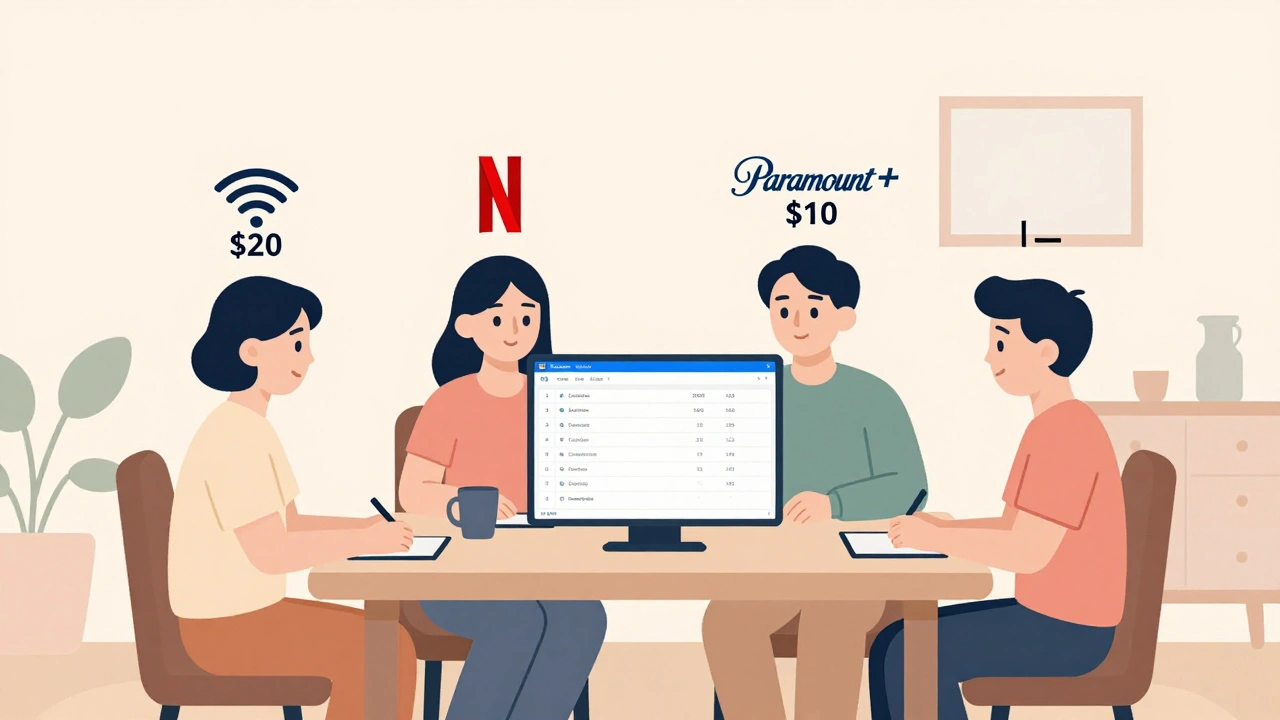
How Roommates Can Fairly Share Wi-Fi and Streaming Costs
Learn how to fairly split Wi-Fi and streaming costs with roommates to avoid conflict, save money, and keep relationships smooth. Simple, practical system for 2025.
Latest Posts



Popular Posts
-
 Wireless vs. Wired Streaming Connections: Which One Should You Use?
-
 Adventure Pulp on Screen: Analyzing The Mummy, The Rocketeer, and Serial DNA
-
 Accessibility for Kids: How Captions and Audio Descriptions Help Learning
-
 How to Secure Your Netflix Account: 2FA and Login Alerts Guide
-
 Paramount+ 4K Devices: Best TVs and Streamers for Ultra HD