29
The Shawshank Redemption Score Review: Why Simple Works Best
You expect a prison drama about two men breaking out of jail to have a soundtrack that screams. You expect brass fanfares, pounding drums, maybe some soaring strings telling you exactly when to cry. But Thomas Newman’s score for The Shawshank Redemption does the opposite. It whispers. And that’s why it works.
If you’ve ever wondered why this 1994 classic still hits harder than most modern blockbusters with their million-dollar sound design, look no further than the audio track. The score isn’t just background noise; it’s the emotional architecture of the film. It proves that in film music, restraint is often more powerful than volume. Let’s break down why this specific approach to scoring remains a masterclass in subtlety.
The Power of Minimalism in Film Scoring
Most people think of film scores as big orchestral events. Think John Williams or Hans Zimmer-massive walls of sound that dictate how you feel. Minimalist film scoring relies on sparse instrumentation, repetitive motifs, and silence to create tension rather than release. In The Shawshank Redemption, Newman avoids the temptation to over-explain the emotion on screen.
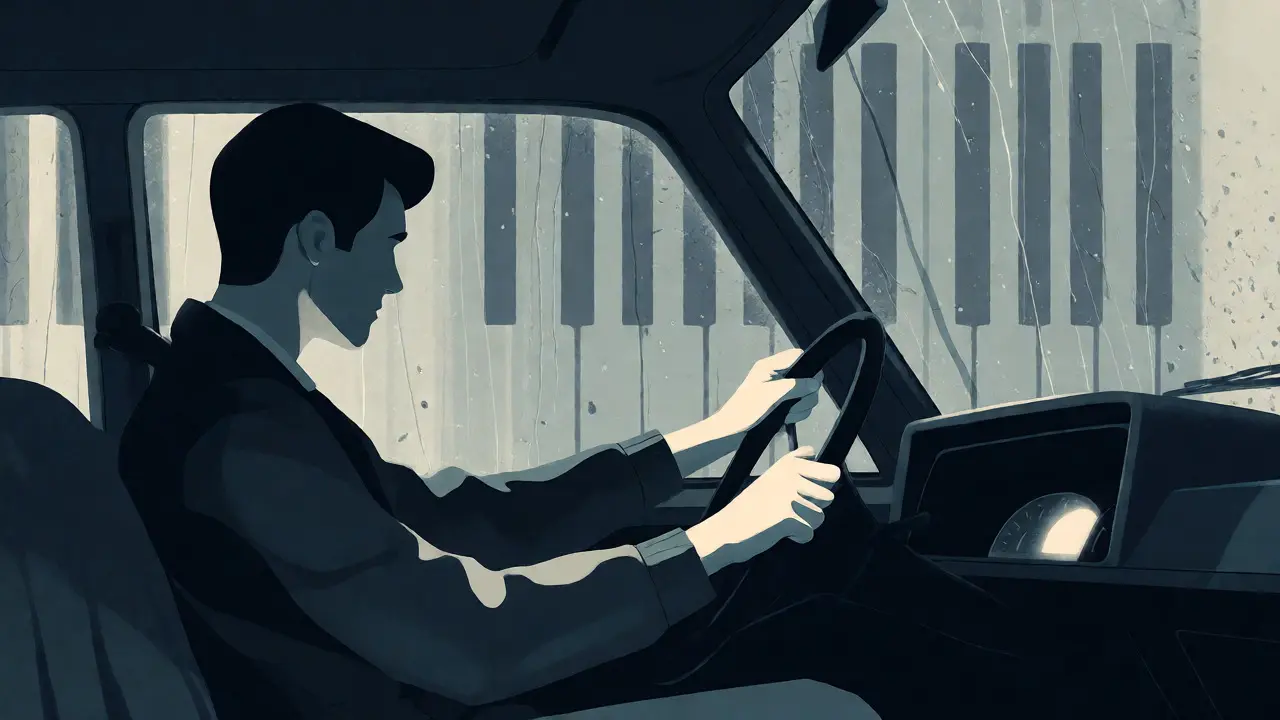
Consider the opening sequence. We see Andy Dufresne sitting in his car, holding a gun, rain pouring down. A conventional composer might have used dissonant chords to signal danger or tragedy. Instead, Newman uses a simple, repeating piano motif. It’s melancholic but not desperate. This choice forces the audience to lean in. You aren’t being shouted at; you’re being invited into Andy’s headspace. The music doesn’t tell you he’s guilty or innocent; it tells you he’s trapped.
This technique aligns with the "less is more" philosophy prevalent in high-end art direction. By stripping away the clutter, the few notes that remain carry significantly more weight. When the piano finally resolves, the relief feels earned because the tension was built through absence, not presence.
Instrumentation Choices That Define Atmosphere
Newman didn’t hire a standard symphony orchestra. He opted for a hybrid setup that felt intimate and slightly detached from reality. The primary instruments include:
- Piano: Used for introspection and isolation.
- Synthesizers: Subtle pads that create a cold, institutional atmosphere.
- Strings: Sparse arrangements that swell only during key emotional breakthroughs.
- Percussion: Minimal, often mimicking the ticking of clocks or dripping water.
The use of synthesizers is particularly interesting here. In 1994, synths were often associated with sci-fi or thrillers. Using them in a period drama creates a timeless quality. It prevents the score from sounding like a generic 1940s war movie, which would have dated the film quickly. Instead, the soundscape feels psychological. It reflects the internal state of the characters rather than the external setting of Maine.
Compare this to the score for Gladiator, released five years later. Hans Zimmer and Lisa Gerrard used massive choral arrangements to convey epic scale. Newman used small textures to convey claustrophobia. Both are effective, but they serve different narrative goals. For Shawshank, the goal wasn’t to make the prison feel huge; it was to make it feel suffocating.
| Feature | The Shawshank Redemption (Newman) | Typical Action/Drama (e.g., Zimmer/Williams) |
|---|---|---|
| Primary Emotion | Hope, Isolation, Resilience | Triumph, Danger, Excitement |
| Instrumentation | Piano, Synth, Small Strings | Full Orchestra, Brass, Choir |
| Dynamics | Quiet, Gradual Swells | Loud Peaks, Sharp Contrasts |
| Narrative Role | Internal Monologue | External Commentary |
Analyzing Key Tracks: From "Brooks Was Here" to "Zihuatanejo"
To understand the genius of this score, you have to listen to specific tracks in isolation. Take "Brooks Was Here." This piece accompanies the tragic arc of Brooks Hatlen, the elderly librarian who cannot survive outside prison walls. The melody is fragile, almost hesitant. It doesn’t try to manipulate your tears with heavy violins. It simply states the sadness of obsolescence.
Then there’s "Zihuatanejo," the theme associated with Andy’s dream of freedom. Notice how it differs from the rest of the score. It’s warmer, more open. The harmonic progression moves upward, suggesting ascent and possibility. Yet, even here, Newman keeps the arrangement light. He trusts the visual of the Pacific Ocean to do the heavy lifting. If the music had been too grand, it would have competed with the image. Instead, it complements it.
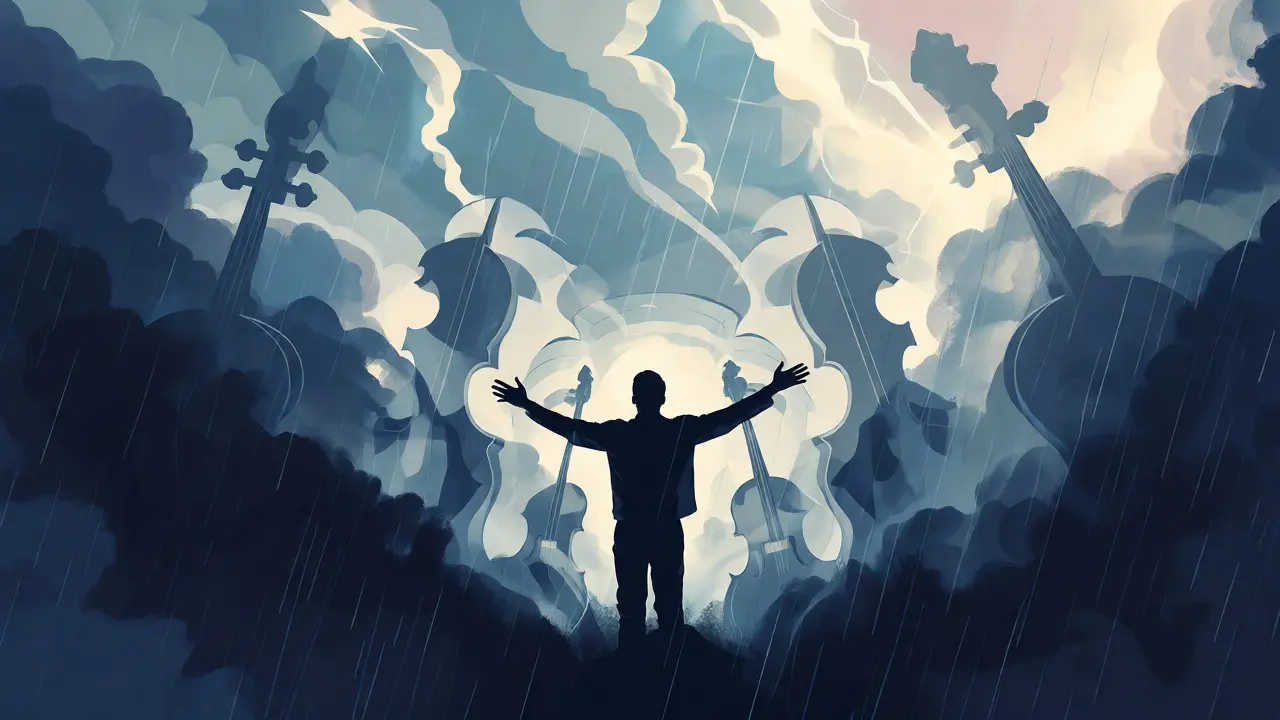
Another standout is "A Little Good Luck." This track plays during the escape sequence. Most composers would ramp up the tempo and volume as Andy crawls through the sewage pipe. Newman does the opposite. The music slows down. It becomes ethereal. The climax of the scene-the thunderstorm and Andy raising his arms-is accompanied by a swelling string section that feels like a sigh of relief rather than a victory march. It’s spiritual, not heroic.

Why Silence Matters More Than Sound
In film editing, silence is a tool. In scoring, it’s a weapon. Newman leaves large gaps in the audio track. During the scenes where Andy and Red talk on the wall, there is often no music at all. Just the ambient sound of the yard, the wind, and their voices. This creates a stark contrast when the music finally enters.
When the score returns after these silent moments, it hits harder because the audience has been denied emotional cues. You start paying attention to the dialogue more closely. Then, when the piano enters, it feels like an intrusion into that private space. It signals that something internal is shifting. This dynamic interplay between sound and silence keeps the viewer engaged on a subconscious level.
Think about your own conversations with close friends. Do you need background music? No. The connection happens in the quiet. Shawshank’s score replicates that intimacy. It treats the relationship between Andy and Red with the same respect, letting their bond breathe without constant musical commentary.
Legacy and Influence on Modern Cinema
The impact of this score extends far beyond 1994. It paved the way for the minimalist aesthetic seen in films like There Will Be Blood and No Country for Old Men. Directors began realizing that audiences could handle ambiguity. They didn’t need to be told how to feel every second.
Thomas Newman’s work here also influenced video game soundtracks. Games like Journey and Gris rely heavily on atmospheric, piano-driven scores that prioritize mood over action. The idea that music can represent environment rather than plot points became mainstream thanks to examples like Shawshank.
Furthermore, the score’s longevity is tied to its adaptability. Because it isn’t overly specific to the 1940s jazz era, it resonates with contemporary listeners. It fits on a playlist alongside modern indie folk or ambient electronic music. This cross-generational appeal ensures that new viewers discovering the film today won’t find the audio experience dated.
How to Listen to the Score Effectively
If you want to truly appreciate the craftsmanship, don’t just play it in the background while cleaning. Try this active listening exercise:
- Watch the Escape Scene Muted: First, watch the final act without sound. Notice how tense it feels visually.
- Add the Audio Back: Watch it again with the score. Observe how the pacing changes. Does the music make the crawl through the pipe feel faster or slower?
- Isolate the Piano: Put on headphones and listen to "Theme from Shawshank Redemption" alone. Focus on the left hand of the piano. Notice the slow, deliberate rhythm. It mimics the passage of time.
- Compare with the Trailer: Listen to the original theatrical trailer. Note how the music was edited to fit a two-minute promo. Often, trailers use louder cuts. The full album version reveals the subtlety that gets lost in marketing.
This method highlights how integral the score is to the storytelling. Without it, the film is a good crime drama. With it, it becomes a meditation on hope.
Frequently Asked Questions
Who composed the score for The Shawshank Redemption?
Thomas Newman composed the score. He is known for his minimalist style and has worked on other notable films like American Beauty and Finding Nemo.
Why is the Shawshank Redemption score considered minimalist?
It uses sparse instrumentation, primarily piano and synthesizers, and avoids complex orchestral arrangements. The focus is on creating atmosphere and internal emotion rather than driving the plot with loud themes.
Did the Shawshank Redemption score win any awards?
While the film itself received seven Academy Award nominations, it did not win for Best Original Score. However, the soundtrack has become one of the most celebrated and enduring in cinema history despite lacking major trophies.
What instruments are featured in the soundtrack?
The primary instruments are piano, synthesizers, and a small string section. There is minimal percussion, used sparingly to emphasize timing and isolation.
How does the music change when Andy escapes?
The music shifts from dark, confined tones to expansive, uplifting harmonies. The track "Zihuatanejo" introduces warmer chords and higher registers, symbolizing freedom and hope.
Is the Shawshank Redemption score suitable for studying?
Yes, many people use it for study or relaxation due to its calm, non-intrusive nature. The lack of sudden loud peaks makes it ideal for maintaining focus without distraction.