19
Theater Chains and Consolidation: Mergers, Closures, and New Builds
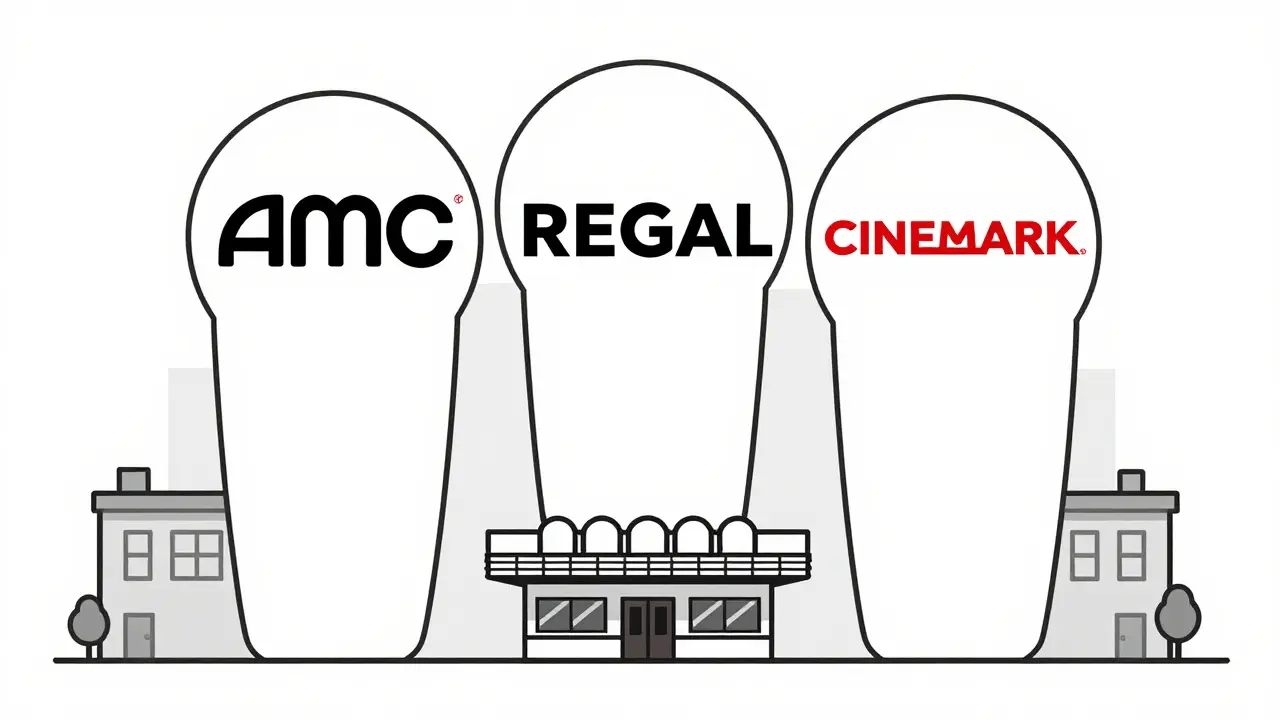
Walk into a movie theater today, and you are likely walking into a building owned by one of three massive companies. It feels like local variety, but the reality is starkly different. The landscape of cinema exhibition has shifted from a fragmented collection of neighborhood theaters to an oligopoly dominated by giants. For decades, we watched independent owners get squeezed out. Now, in mid-2026, that squeeze has reached a breaking point. We are witnessing a strange paradox: while historic screens go dark forever, new mega-complexes are rising in suburban sprawl. This isn't just about where you watch movies; it's about who controls the culture.
The Big Three Dominate the Screen
To understand why your local theater closed, you have to look at the top of the food chain. In the United States, the market is effectively controlled by AMC Theatres, the largest movie theater chain in North America, operating over 900 locations across 47 states and Guam., Regal Cinemas, a major competitor to AMC with a vast network of large-format auditoriums and premium dining options., and Cinemark Holdings, the third-largest exhibitor known for its focus on value pricing and extensive international presence.. Together, these three entities control more than half of all domestic box office revenue. When they negotiate with studios like Disney or Warner Bros., they hold significant leverage regarding how much of the ticket price they keep versus what goes to the film producer.
This consolidation wasn't accidental. Over the last thirty years, smaller regional chains like Carmike, Edwards, and Kerasotes were bought up or forced into bankruptcy. The logic was simple: economies of scale. A giant chain can negotiate better terms for concessions-the real profit center-than a single-owner theater ever could. They can spread the cost of expensive projection technology across thousands of screens rather than hundreds. But this efficiency comes at a cost to consumer choice and community infrastructure.
The Wave of Closures: Why Screens Are Going Dark
If you think the movie theater business is booming because blockbuster numbers hit record highs, you are missing the structural decay happening beneath the surface. Throughout 2025 and early 2026, dozens of locations shut their doors permanently. These aren't just tiny independents; they are branches of the major chains. Why? Because not every location is profitable anymore.
The economics of running a theater have become brutal. Rent in urban centers has skyrocketed. Labor costs have risen significantly since the post-pandemic hiring crunch. Meanwhile, the average ticket price, adjusted for inflation, hasn't kept pace with the operational burden. Studios are also changing the game. With the rise of direct-to-streaming releases and shorter theatrical windows for non-franchise films, theaters are getting fewer guaranteed hits to draw crowds on Tuesday nights.
Consider the case of many downtown urban locations. During the pandemic, foot traffic vanished. When people returned, they didn't go back to cramped downtown seats; they went to spacious suburbs with free parking. Chains realized that maintaining high-rent urban properties was unsustainable unless those locations were converted into luxury experiences. If a theater couldn't justify the upgrade, it got closed. We saw this play out repeatedly in cities like Chicago, New York, and Los Angeles, where historic landmarks were sold off to developers for condos or offices.
New Builds: The Rise of the Premium Large Format
While old screens close, new ones are being built-but they look completely different. You won't find many standard multiplexes breaking ground in 2026. Instead, you will see "experience centers." These new builds are designed to compete with streaming services by offering something you cannot get at home: immersion.
The key driver here is Premium Large Format (PLF) screens. Think IMAX, Dolby Cinema, RealD 3D, and proprietary formats like AMC's Prime or Regal's RPX. These auditoriums feature higher resolution projectors, superior sound systems, and reclining leather seats. They charge a premium ticket price, often $15 to $25 more per person than a standard show. This margin allows chains to absorb the high construction costs. A new theater build today might only have twelve screens instead of twenty, but each screen is larger, more comfortable, and generates more revenue per square foot.
These new complexes are almost exclusively located in suburban shopping plazas or standalone pads near highways. They target families and groups looking for a night out that includes dinner, drinks, and a movie. The design philosophy has shifted from showing as many movies as possible to creating a destination event. If you live in a growing suburb in Texas, Florida, or the Pacific Northwest, you have likely noticed a gleaming new complex opening recently. That is the future of exhibition: fewer locations, bigger bets, higher prices.
Mergers and Acquisitions: The Next Move?
With the market so concentrated, rumors of further mergers never die down. Analysts have long speculated whether AMC and Regal would eventually combine to form an unstoppable behemoth. However, regulatory hurdles make this unlikely. The Federal Trade Commission (FTC) has become increasingly aggressive about blocking mergers that reduce competition. In 2025, the FTC signaled it would scrutinize any deal that threatened to give one company too much power over studio negotiations.
Instead of horizontal mergers (chain buying chain), we are seeing vertical integration attempts. Exhibitors are trying to own more of the customer journey. This means expanding their loyalty apps, selling merchandise directly, and even producing content themselves. Some chains have started investing in indie film distribution to fill the gaps left by studios holding back blockbusters. This shift turns theaters from passive rental spaces into active media companies.
| Chain | Approx. Screens | Key Strategy | Recent Trend | |
|---|---|---|---|---|
| AMC Theatres | 9,300+ | A-List Subscription Loyalty | Closing underperforming urban sites | |
| Regal Cinemas | 4,100+ | Premium Recliners & Dining | Focusing on suburban expansion | |
| Cinemark | 10,000+ (Global) | Value Pricing & International Growth | Stabilizing US domestic portfolio |
The Impact on Independent and Art House Theaters
While the big chains fight for dominance, independent theaters face a different set of challenges. They cannot compete on price or PLF technology. Their survival depends on community connection and curating unique content. Many indies have survived by becoming hybrid venues, hosting live streams, comedy shows, and local events to supplement ticket sales.
However, the consolidation of the major chains hurts indies indirectly. When the big players buy up all the prime real estate and secure exclusive first-run deals for major franchises, independents are left scrambling for leftover inventory. They rely heavily on foreign films, documentaries, and classics. If distributors raise fees for these titles due to inflation, the thin margins of indie theaters vanish. The result is a polarized market: either you go to a massive, expensive multiplex for Marvel movies, or you support a struggling local gem for everything else. There is less middle ground than there used to be.
What This Means for Moviegoers
For you, the audience, the changes are tangible. Ticket prices will continue to rise. Concession costs are already at an all-time high, and chains are experimenting with alcohol service and full kitchens to boost spending per head. The "cheap date night" is dying out. If you want to see a movie, you need to budget for an experience, not just entertainment.
On the flip side, subscription models are saving some viewers money. Services like AMC Stubs A-List allow unlimited visits for a monthly fee. This locks customers into specific chains and ensures steady cash flow for the theaters. It’s a win-win on paper, but it reinforces the monopoly power of the big three. You stay loyal to the chain that offers the best subscription, not necessarily the theater closest to your home.
We are also seeing a decline in the number of simultaneous screenings for smaller films. With fewer screens overall, chains prioritize blockbusters that guarantee occupancy. This makes it harder for mid-budget dramas or comedies to find an audience. The cultural conversation becomes narrower, focused only on the biggest spectacles.
Looking Ahead: Sustainability and Technology
As we move through the rest of 2026 and into 2027, two factors will shape the next wave of changes: sustainability and technology. Older theaters are energy hogs. Lighting, HVAC, and projection equipment consume massive amounts of electricity. New builds are required to meet stricter green building codes. Retrofitting old buildings is expensive, which accelerates the closure of aging assets. Chains are investing in LED lighting and efficient cooling systems, but the transition is costly.
Technologically, laser projection is now the standard for new installations. It offers brighter images and lower maintenance costs compared to traditional xenon bulbs. Additionally, digital advertising networks within theaters are becoming a major revenue stream. Those ads playing before the trailers are targeted based on your loyalty app data. Your movie-going habits are being monetized beyond the ticket purchase.
The era of the neighborhood five-screen multiplex is over. What remains is a bifurcated industry: high-end, tech-heavy suburban destinations and niche, community-focused independents. The middle class of cinema exhibition has been consolidated away. Understanding this shift helps explain why your favorite local spot might have closed and why the new place down the highway charges $20 for a soda. It’s not bad luck; it’s business strategy.
Why are so many movie theaters closing in 2026?
Theaters are closing due to a combination of high operational costs, including rent and labor, and shifting consumer habits. Many urban locations lost profitability after the pandemic, as audiences preferred suburban complexes with better amenities and free parking. Chains are strategically shutting down underperforming older sites to focus resources on newer, premium locations.
Who owns most movie theaters in the US?
The US market is dominated by three major chains: AMC Theatres, Regal Cinemas, and Cinemark Holdings. Together, they control the majority of box office revenue and screen counts, having acquired or outcompeted smaller regional chains over the past few decades.
Are new movie theaters being built?
Yes, but they are different from the past. New builds focus on Premium Large Formats (PLF) like IMAX and Dolby Cinema, featuring reclining seats and enhanced audio. These complexes are typically located in suburbs and have fewer but larger auditoriums designed to offer an immersive experience that competes with home streaming.
How does consolidation affect ticket prices?
Consolidation reduces competition, allowing major chains to maintain higher ticket and concession prices. With fewer alternatives for consumers, especially in areas served by only one major chain, pricing power remains strong. Chains also push premium formats and subscriptions to increase revenue per customer.
Will independent theaters survive this trend?
Independent theaters face significant challenges but can survive by focusing on community engagement and niche programming. They often diversify revenue through events, live streams, and local partnerships. While they cannot compete on blockbuster volume, their unique curation fosters loyal local audiences that support them financially.