24
Tidal vs. Spotify vs. Apple Music: Best Music Streaming Service Comparison
You are sitting on your couch, headphones on, trying to decide which app gets you the cleanest sound for your money. It is a common dilemma in late 2026. The market has settled into a three-way battle between Spotify, the dominant global platform known for its algorithmic playlists and social features, Apple Music, a premium ecosystem-integrated service offering lossless and spatial audio, and Tidal, an artist-focused platform prioritizing high-fidelity audio and direct artist payouts. Each claims to be the "best," but they serve different types of listeners.
If you care about discovering new bands through friend activity, one wins. If you own an iPhone and want Dolby Atmos without extra fees, another takes the lead. If you are an audiophile with expensive gear who hates compressed files, the third is your only real option. This guide breaks down exactly where each service shines and where it fails, so you stop wasting subscription money on features you never use.
The Core Differences at a Glance
Before diving into the weeds, look at the fundamental architecture of these services. They aren't just libraries; they are ecosystems with different priorities.
| Feature | Spotify | Apple Music | Tidal |
|---|---|---|---|
| Best For | Social discovery & podcasts | iOS users & spatial audio | Audiophiles & artist support |
| Audio Quality | Up to 320 kbps AAC/Ogg | Lossless ALAC up to 24-bit/192 kHz | HiRes FLAC up to 24-bit/192 kHz |
| Spatial Audio | Limited (Dolby Atmos via partner devices) | Free for all subscribers | Included in HiFi Plus tier |
| Offline Listening | Premium only | All paid tiers | All paid tiers |
| Unique Selling Point | Discover Weekly & Wrapped | Seamless Apple Ecosystem Integration | Higher Artist Royalties |
Sound Quality: The Audiophile Reality Check
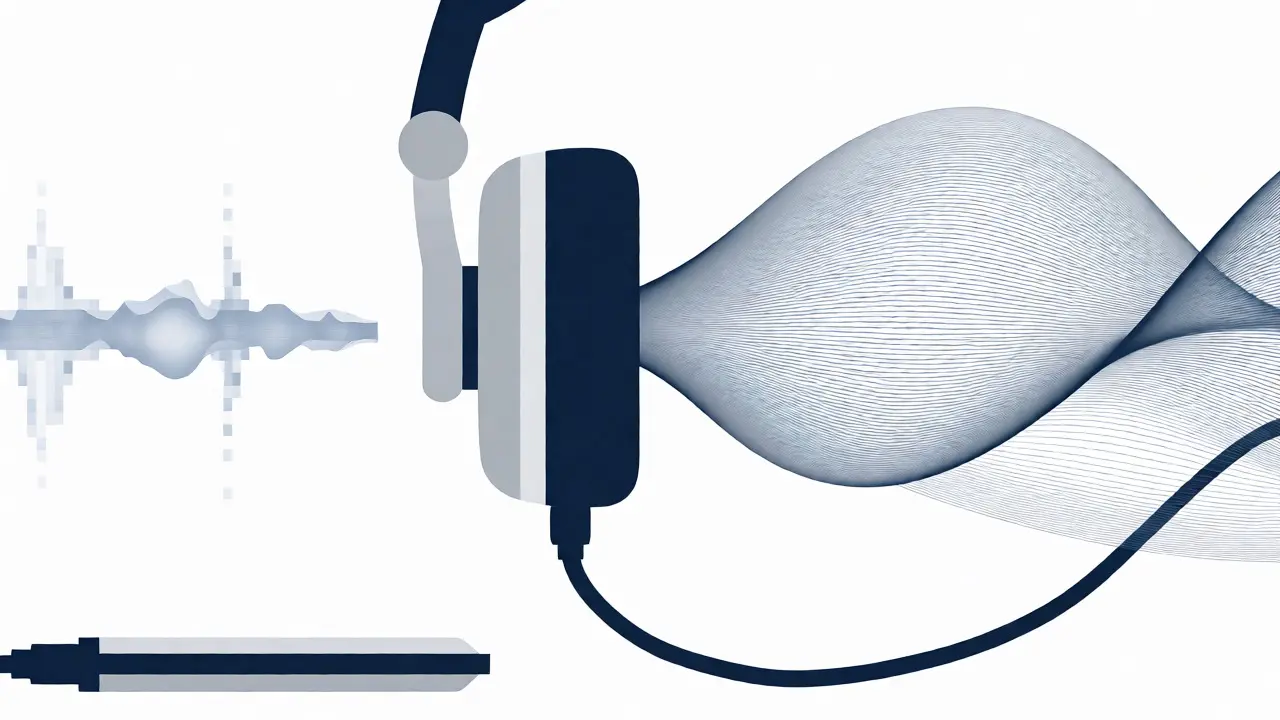
Let’s address the elephant in the room: does higher bitrate actually matter? For most people listening on Bluetooth earbuds during a commute, no. But if you have wired headphones or a decent home setup, the difference becomes audible.
Apple Music revolutionized this space by including Lossless Audio in its standard subscription price. You get access to tracks encoded in ALAC (Apple Lossless Audio Codec) up to 24-bit/192 kHz. This means the file size is larger, but the data is identical to the studio master. No compression artifacts. No muddy highs. However, you need to manually enable this setting in your iOS or macOS preferences, and it drains battery faster because your device is processing more data.
Tidal matches this quality using FLAC files. In fact, Tidal was the pioneer here, forcing Apple and Amazon to follow suit. Their "HiRes FLAC" tier offers the same technical specifications as Apple. The key difference lies in implementation. Tidal’s app allows for bit-perfect playback on Android and desktops more easily than Apple’s closed ecosystem sometimes permits on non-Apple hardware.
Spotify still lags behind technically. As of late 2026, their promised "Spotify HiFi" tier has faced repeated delays and limited rollout. Most users are still streaming Ogg Vorbis at 320 kbps or AAC at 256 kbps. While modern codecs are efficient, 320 kbps is not lossless. If you compare a cymbal crash or a complex orchestral swell side-by-side, Spotify often sounds slightly smoother but less detailed. The transient response-the sharpness of attack-is softer.
Discovery and Algorithms: Who Knows Your Taste?
Having great sound doesn’t help if you can’t find songs you like. This is where the platforms diverge sharply in philosophy.
Spotify remains the undisputed king of discovery. Its algorithms analyze billions of user interactions daily. When you listen to a niche indie band, Spotify compares your behavior to millions of others. Did they also like that obscure jazz track from 1974? If yes, Spotify pushes it to your "Discover Weekly." This feedback loop is incredibly tight. Furthermore, Spotify integrates podcasts and audiobooks directly into the interface, creating a unified media hub. If you switch between music and talk radio frequently, this convenience is hard to beat.
Apple Music relies more on human curation. While it has improved its algorithmic recommendations, its strength lies in editorial playlists curated by actual music experts. You get deep dives into genres, historical retrospectives, and exclusive interviews. For someone who wants to learn about the history of hip-hop or explore classical composers systematically, Apple’s structured approach feels more educational and less random than Spotify’s black-box magic.
Tidal takes a middle ground but leans heavily into genre-specific curation and artist-led playlists. Because Tidal markets itself to serious fans, its recommendations often skew toward deeper cuts rather than mainstream hits. You might find fewer pop stars and more underground electronic producers or neo-soul artists. If you feel Spotify is too commercial and Apple is too broad, Tidal’s niche focus might resonate with your specific tastes.
Ecosystem and Device Compatibility
Your phone and laptop dictate how smooth your experience will be. Friction kills enjoyment.
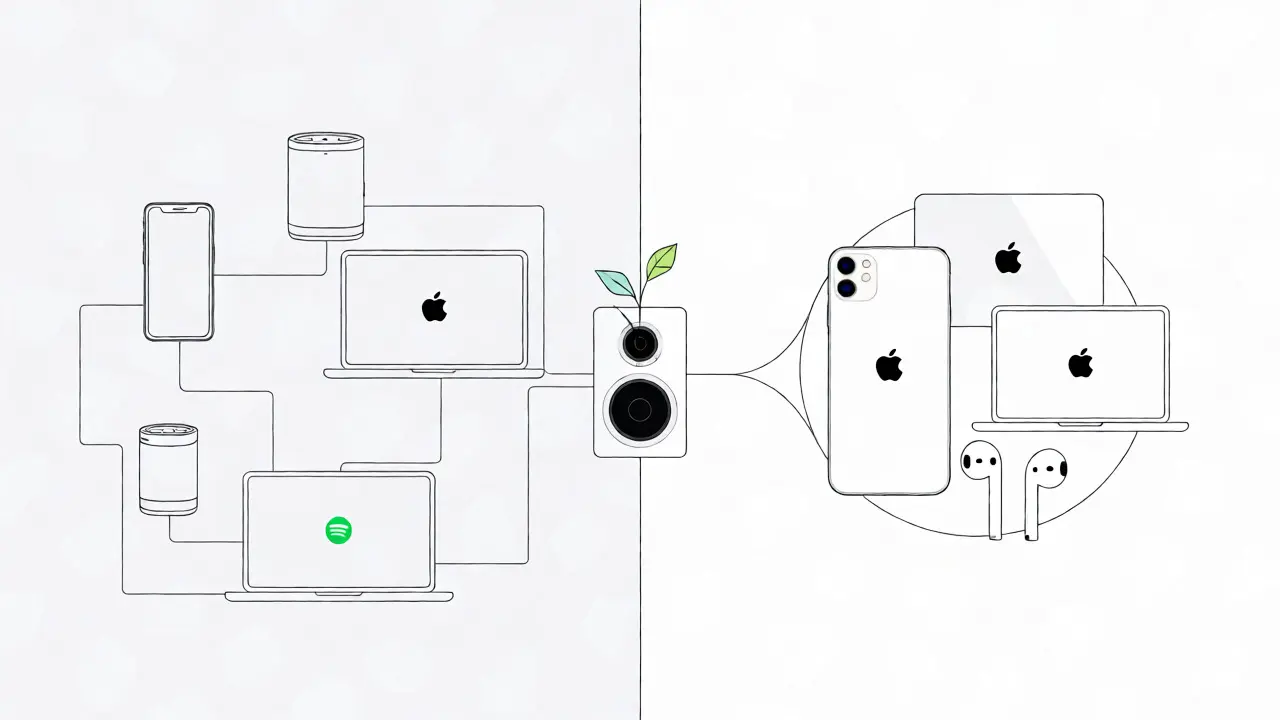
If you live in the Apple universe-an iPhone, iPad, Mac, and AirPods-Apple Music is practically free to set up. It comes pre-installed. Siri controls work flawlessly. Handoff between devices is instantaneous. Spatial audio works automatically with AirPods Pro or Max when playing supported tracks. There is zero configuration required. This seamless integration saves hours of troubleshooting compared to third-party apps.
Spotify is the chameleon. It runs on everything. Windows PCs, Linux distros, smart TVs, gaming consoles, and even refrigerators. If you have a mixed-device household-say, an Android phone for yourself and an iPhone for your partner-Spotify keeps everyone happy. The Connect feature lets you cast music from your phone to any speaker running the Spotify app. It is robust, reliable, and ubiquitous.
Tidal struggles slightly outside its core audience. While available on iOS, Android, and desktops, its integration with smart home devices is spotty. Some users report issues with Chromecast casting stability or AirPlay latency. If you rely heavily on voice assistants like Alexa or Google Home, check current compatibility lists, as Tidal’s skill sets update less frequently than Spotify’s.
Cost and Value Proposition
Price matters. Let’s look at the monthly costs for individual plans in major markets like the US, UK, and Australia as of November 2026.
- Spotify Premium: Typically $11.99/month. Offers ad-free listening, offline downloads, and unlimited skips.
- Apple Music: Also $11.99/month. Includes lossless audio, spatial audio, and lyrics sync. Often bundled with Apple One subscriptions.
- Tidal: Has split into two main tiers. The standard "HiFi" plan is around $10.99/month for CD-quality. The "HiFi Plus" plan, which includes MQA (Master Quality Authenticated) and immersive formats, costs closer to $19.99/month.
Notice the gap. Tidal’s top-tier pricing is nearly double Spotify’s. Is it worth it? Only if you have the hardware to hear the difference. A $10 pair of earbuds won’t reveal the nuance of a 24-bit file. But if you own Sennheiser HD 600s or Focal Clear headphones, the jump from Spotify to Tidal HiFi Plus is noticeable. Conversely, moving from Spotify to Apple Music costs nothing extra and gives you lossless audio, making Apple the better value for casual audiophiles.
Artist Payouts: Where Does Your Money Go?
This point resonates deeply with musicians and conscious listeners. Traditional pro-rata payment models distribute subscription revenue based on total stream share. This favors massive global stars like Taylor Swift or Drake. Small local artists get pennies per stream.
Tidal introduced a "Fan-Direct" model in recent years. Instead of pooling all money, a portion of your subscription fee goes directly to the artists you actually listen to. If you only listen to five local bands, your money supports them, not the global top 100. Early data suggests this increases payouts for mid-tier artists by 20-30%. Spotify and Apple stick to the traditional model. If supporting independent creators is a priority for you, Tidal offers a tangible ethical advantage.
Which One Should You Choose?
Stop overthinking. Match your profile to the service.
Choose Spotify if: You love podcasts, enjoy social sharing features, want the best algorithmic discovery, and use multiple operating systems. It is the safest, most versatile choice for the average listener.
Choose Apple Music if: You are already invested in Apple products, want lossless audio without paying extra, and appreciate curated editorial content. It is the best integrated experience for iPhone users.
Choose Tidal if: You are an audiophile with high-end gear, care about artist royalties, and prefer a library focused on depth over breadth. It is the specialist tool for serious music lovers.
Is Tidal really better than Spotify for sound quality?
Yes, objectively, Tidal offers higher fidelity audio. Tidal provides lossless FLAC files up to 24-bit/192 kHz, whereas Spotify currently caps out at 320 kbps compressed audio. However, you must use wired headphones or high-quality Bluetooth codecs (like LDAC) to hear the difference. On standard earbuds, the gap is negligible.
Does Apple Music cost more for lossless audio?
No. Apple Music includes Lossless Audio and Spatial Audio in its standard individual subscription price ($11.99/month). Unlike Tidal, which charges a premium for its highest quality tiers, Apple makes high-resolution audio accessible to all paying subscribers.
Can I transfer my playlists from Spotify to Apple Music?
Yes, but not natively within the apps. You need to use third-party tools like TuneMyMusic or Soundiiz. These services scan your Spotify account and recreate your playlists on Apple Music. Note that some metadata, like custom playlist images, may not transfer perfectly.
Why do artists prefer Tidal over Spotify?
Artists generally earn higher per-stream rates on Tidal compared to Spotify. Additionally, Tidal’s Fan-Direct payment model ensures that subscription revenue goes directly to the artists a user listens to, rather than being pooled and distributed based on global popularity metrics.
Do I need special equipment for Spatial Audio?
For Apple Music, you need Apple AirPods (Pro or Max) or Beats headphones for automatic head-tracking spatial audio. For other brands, you need headphones that support Dolby Atmos decoding. Tidal requires compatible DACs and amplifiers for its highest resolution files, though standard apps work on phones.