21
Taxes and Currency: How International Streaming Billing Works
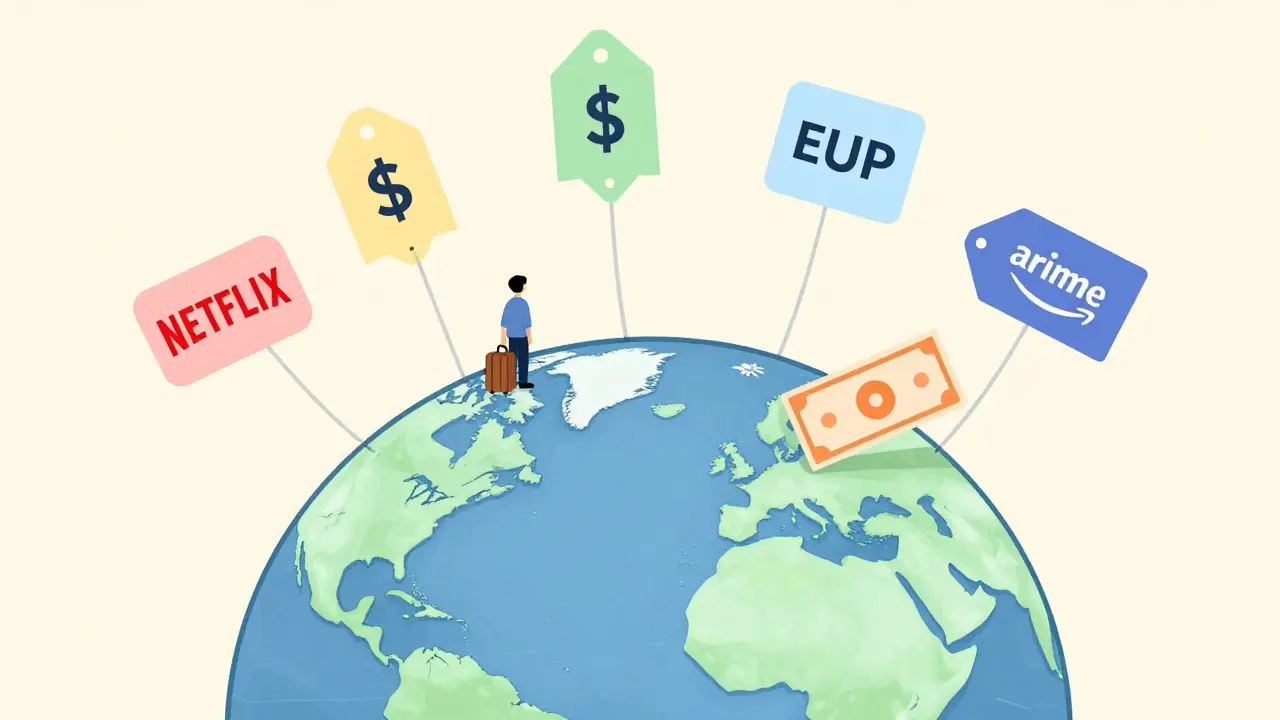
Have you ever noticed that your favorite streaming service charges you different prices depending on where you are? Or why your Netflix bill suddenly jumped by $5 after you traveled to Europe? It’s not a glitch. It’s taxes, currency, and regional billing rules working behind the scenes - and they’re more complicated than most people realize.
Why Your Streaming Bill Changes Across Borders
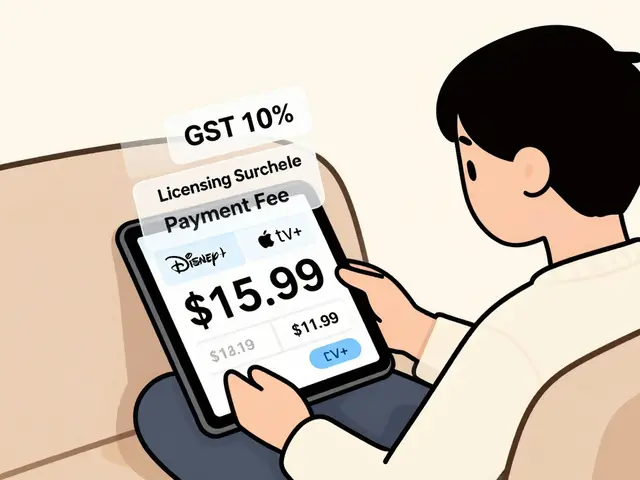
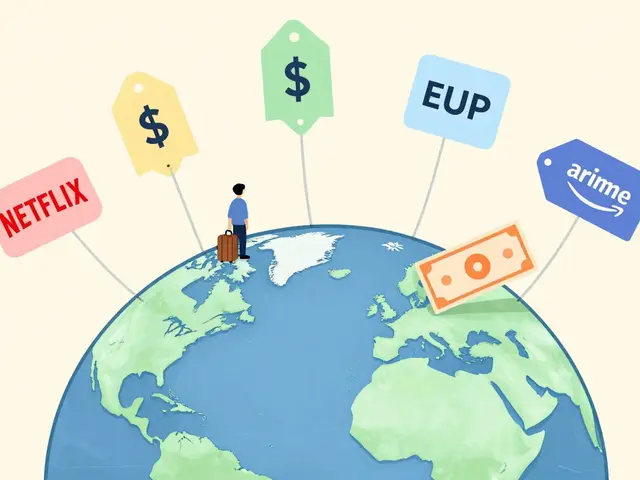
When you sign up for a streaming service like Disney+, Hulu, or Amazon Prime Video from outside the U.S., you’re not just paying for content. You’re paying for a legal and financial arrangement that includes local taxes, currency conversion, and compliance with regional laws. A subscription that costs $10.99 in the U.S. might cost €12.99 in Germany, £9.99 in the UK, or AUD $16.99 in Australia - and that’s before taxes.
These differences aren’t random. They’re driven by three core factors: local VAT or GST rules, exchange rates, and licensing agreements. Streaming companies must adjust pricing to stay legal in each country. If they don’t collect the right tax, they risk fines, account suspension, or even being blocked from operating there entirely.
How Taxes Work on International Streaming
In most countries, digital services like streaming are treated like any other product - but they’re taxed based on where the customer lives, not where the company is based. This is called the destination principle.
For example:
- In the European Union, all digital services must charge VAT based on the customer’s country. If you’re in France, you pay 20% VAT. If you’re in Sweden, it’s 25%.
- In Australia, the Goods and Services Tax (GST) of 10% applies to all digital services bought by Australian residents, regardless of whether the company is based overseas.
- In Canada, provinces charge HST (Harmonized Sales Tax) ranging from 13% to 15%, and streaming services must collect it based on your billing address.
Services like Netflix, Spotify, and Apple TV+ are required to register for tax collection in over 100 countries. They use your IP address, payment method, and billing address to determine where you are - and which tax rate to apply. If you move, your bill can change overnight.
Currency Conversion Isn’t Just About Exchange Rates
When you pay in a currency different from the service’s base currency (usually USD), you might think it’s a simple conversion. But it’s not. Streaming platforms don’t just use the live exchange rate from your bank. They use their own internal rates - and they often add a markup.
For example, if you’re in Brazil and pay for Apple TV+ in USD, Apple converts your BRL to USD using a rate that’s 3-5% worse than the real market rate. That’s their way of covering currency risk and payment processing fees. You don’t see this as a separate charge - it’s baked into the final price.
Some services, like Disney+, now offer local currency pricing in over 80 countries. That means you see prices in BRL, INR, or MXN instead of USD. But even then, the underlying cost is still calculated using a fixed conversion rate set by the company - not the real-time market. This helps them avoid sudden price swings, but it also means you might pay more than you’d expect.

Regional Pricing Isn’t Just About Cost of Living
It’s common to assume that streaming services lower prices in poorer countries to make them more affordable. That’s partly true - but it’s not the full story.
Netflix, for instance, charges $3.99/month in Egypt and $11.99/month in the U.S. But the difference isn’t just about affordability. It’s about what they can legally charge under local competition laws and licensing deals. In some countries, local broadcasters have exclusive rights to certain shows. Streaming services have to pay extra to license those rights - and those costs get passed on.
Also, in markets like India and Indonesia, where credit card usage is low, streaming companies often partner with local mobile carriers to offer bundled plans. These deals can make the service cheaper - but they’re tied to specific payment methods and can’t be accessed from abroad.
What Happens When You Travel or Move
If you’re a digital nomad or frequently travel, your streaming bill might change every time you cross a border - even if you never change your payment method.
Here’s how it works:
- You sign up for Disney+ in Canada using a Canadian credit card and address.
- You move to Spain for six months and keep using the same card.
- Disney+ detects your new IP address and billing location. Even if your card is Canadian, your profile is now flagged as Spanish.
- Your price changes from CAD $11.99 to EUR €10.99 - and 10% VAT is added.
- Your next bill reflects the new currency and tax rate.
Some services let you manually update your region, but others lock you in based on your payment details. If you’re using a U.S. card while living in Japan, you might still be charged U.S. prices - but you’ll still be taxed at Japan’s rate. This creates confusion and sometimes double taxation.
How to Avoid Unexpected Charges
If you want to keep your streaming costs predictable, here’s what actually works:
- Use a billing address and payment method that match your country of residence. Don’t use a friend’s U.S. card just to get cheaper prices - you’ll still be taxed at your real location.
- Turn off location services on your device if you travel. Some apps use GPS to detect your location and switch your billing region automatically.
- Check your service’s help page for regional pricing rules. Netflix, for example, clearly states that you can only access content from your home country unless you pay for a local subscription.
- Use a virtual card service like Revolut or Wise that lets you hold multiple currencies. This gives you more control over exchange rates and avoids hidden markups.
Don’t rely on VPNs to change your billing region. Most streaming services now detect and block VPNs used for this purpose. Even if it works temporarily, your payment processor may flag your account for fraud.

Why This Matters for Creators and Businesses
If you’re a content creator distributing through platforms like YouTube, Vimeo, or DistroKid, you need to understand this too. Your viewers’ location affects how much you earn. If someone in Germany pays €12.99 for a subscription, you don’t get the full amount. The platform takes a cut, taxes are deducted, and currency conversion eats into your payout.
YouTube, for example, pays creators in USD - even if their audience is mostly in Brazil or Turkey. That means your earnings fluctuate with the exchange rate. If the BRL drops 20% against the USD, your monthly income drops too - even if your views stay the same.
Businesses that sell digital products internationally need to account for these variables in their pricing models. What looks like a simple $9.99 subscription can end up netting you $6.20 after taxes, conversion fees, and payment processing costs.
What’s Changing in 2025
More countries are tightening digital tax rules. In 2024, Brazil started requiring all foreign streaming services to register with its tax authority (Receita Federal). In 2025, Indonesia and Nigeria are following suit. This means even smaller platforms will need to collect VAT or GST - and pass those costs to users.
At the same time, blockchain-based payment systems are starting to appear. Services like Audius and Odysee are testing crypto payments to bypass currency conversion and tax complications. But they’re still niche. For now, traditional billing rules dominate.
Also, the EU is pushing for a unified digital tax rate across all member states. If it passes, it could simplify billing for millions - but it might also raise prices in lower-tax countries like Ireland and Luxembourg.
Bottom Line: It’s Not About the Price - It’s About the System
The reason international streaming billing feels confusing isn’t because you’re being tricked. It’s because the system is built on a patchwork of laws, currencies, and corporate policies that were never designed to work together.
What you’re paying for isn’t just the show you’re watching. You’re paying for legal compliance, currency risk management, tax collection, and regional licensing - all bundled into one monthly fee.
Knowing how it works won’t make your bill cheaper - but it will help you understand why it changed, how to plan for it, and when to question unexpected charges. And that’s power.
Why does my streaming bill change when I travel?
Your streaming bill changes because services use your location - determined by your IP address, billing address, and payment method - to apply local taxes and currency rates. Even if you keep the same payment card, moving to a new country triggers a switch in pricing and tax rules. For example, if you move from the U.S. to France, your Netflix bill will switch from USD to EUR and add 20% VAT.
Can I avoid foreign taxes on streaming services?
No, you can’t legally avoid taxes if you’re a resident of a country that charges VAT, GST, or similar digital service taxes. Streaming platforms are required by law to collect these taxes based on your location. Using a VPN or foreign payment method won’t stop them - they’ll still detect your real address through billing details or device location data. Trying to bypass this can get your account flagged or suspended.
Why is the same show cheaper in some countries?
Pricing varies because of licensing deals, local competition, and purchasing power. In countries like India or Egypt, streaming services pay less for content rights and set lower prices to attract users. In wealthier markets like the U.S. or Germany, they charge more because users are willing to pay - and because local broadcasters may have exclusive rights to some shows, forcing streaming platforms to pay extra for access.
Do streaming services use real exchange rates?
No. Streaming services use their own internal conversion rates, which are often 3-8% worse than the real market rate. This covers their currency risk and payment processing fees. You won’t see this as a separate fee - it’s hidden in the final price you pay. For example, if you pay $10 USD in Australia, the service might convert it using a rate that gives you less AUD than you’d get from your bank.
What happens if I use a VPN to change my region?
Most major streaming services now detect and block VPNs used to change billing regions. Even if you manage to access a different catalog, your payment processor may flag your account for suspicious activity. If detected, you could lose access to your account, face payment holds, or be required to verify your identity with official documents. It’s not worth the risk.