29
Ridley Scott’s Worlds: Design, Scope, and Production Mastery

Have you ever watched a movie and felt like the set wasn't just a background, but a character itself? That is the Ridley Scott effect. He doesn't just direct scenes; he engineers entire ecosystems. From the dripping pipes of the Nostromo in Alien to the rain-slicked neon streets of Blade Runner, his work proves that world-building is half the battle. Most directors worry about where the actors stand. Scott worries about what the walls are made of, how the light hits the steam, and why the air smells like ozone and old oil.
The Architecture of Immersion
Scott treats every frame as an architectural blueprint. He started as a graphic designer and art director before picking up a camera, and it shows. In Gladiator, the Colosseum isn't just a prop; it's a textured, lived-in space with specific sightlines for the emperor and the crowd. He understands that scale creates awe, but detail creates belief. You can see this in his use of practical effects mixed with digital extensions. The sets are built physically so actors can touch them, smell them, and react to real textures. This tactile approach grounds the fantasy, making the impossible feel mundane and therefore believable.
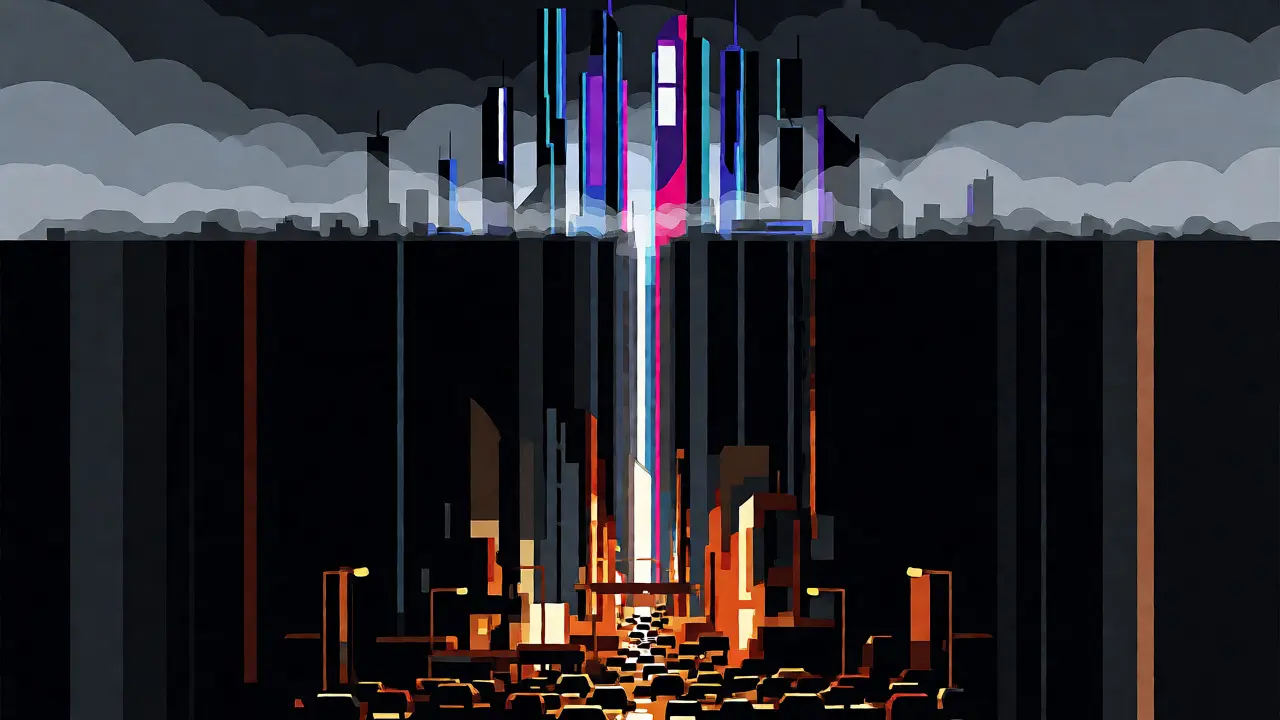
Consider the design philosophy behind Blade Runner. It wasn't just about flying cars. It was about verticality and decay. The city climbs up into smog because the ground level is too polluted to live in. Every layer of the city tells a story about class, economy, and environmental collapse. Scott uses these environmental cues to do the exposition for him. You don't need a monologue to explain that society is stratified when you see the wealthy living above the clouds and the poor drowning in street-level rain.
Lighting as Narrative Tool
If architecture builds the body of his worlds, lighting provides the soul. Scott is famous for his "atmospheric" lighting-using smoke, fog, and backlights to create depth. This technique, often called "Scottian haze," separates the subject from the background, giving the image a three-dimensional quality even on flat screens. But it's not just aesthetic. In Alien, the darkness isn't empty; it's hostile. The limited visibility forces the audience to imagine the threat, which is always scarier than seeing it clearly.
He also masters the use of natural light sources within the diegesis. If a scene is dark, there's a reason-a flickering bulb, a computer screen, a distant fire. There are no invisible lights illuminating a cave for the audience's benefit unless the narrative justifies it. This commitment to motivated lighting keeps the viewer immersed. When you watch The Martian, the harsh, unfiltered sunlight on Mars feels oppressive because it looks scientifically accurate, not Hollywood-glamorized.
Scale and Spectacle
Scott loves big numbers. Not just box office numbers, though he has plenty of those, but physical scale. His films often feature massive structures or crowds that dwarf the individual characters. In Kingdom of Heaven, the siege of Jerusalem involves thousands of extras and intricate siege engines. This sense of scale serves a thematic purpose: it reminds us of human fragility against history, nature, or technology.
However, scale without intimacy fails. Scott balances epic shots with tight close-ups. The transition from a wide shot of a spaceship fleet to a close-up of a pilot's sweating forehead creates tension. It connects the macro stakes to micro emotions. This rhythm is crucial in maintaining engagement during long epics. Without it, spectacle becomes numbing. With it, spectacle becomes meaningful.
Production Efficiency and Vision
People often think large-scale sci-fi or historical epics take forever to shoot. Scott disproves this. He is known for his speed on set. Why? Because he pre-visualizes everything. Before the crew arrives, the shots are planned down to the lens focal length and lighting setup. He doesn't waste time experimenting with angles on the day. He knows exactly what he wants.
This efficiency stems from his background in advertising and short-form content. He learned to tell a story quickly and visually. In Thelma & Louise, a road trip movie, the pacing is relentless because the visual language is concise. There is no fat in the editing. Every cut moves the plot forward or deepens character. This discipline allows him to manage complex productions without losing momentum. It’s a masterclass in preparation meeting execution.
Comparative Analysis of Key Works
To understand the evolution of his style, look at how his core principles apply across different genres. While the settings change-from space stations to ancient Rome-the underlying logic remains consistent.
| Film | Primary Setting | Design Focus | Lighting Strategy | Thematic Core |
|---|---|---|---|---|
| Alien (1979) | Industrial Space Station | Utilitarian, worn-out tech | High contrast, chiaroscuro | Survival vs. Corporate Greed |
| Blade Runner (1982) | Dystopian Los Angeles | Vertical density, retro-future | Neon, rain, atmospheric haze | Humanity vs. Artificial Life |
| Gladiator (2000) | Ancient Rome | Historical accuracy, grandeur | Natural sunlight, dust particles | Honor vs. Power |
| The Martian (2015) | Mars Surface | Scientific realism, isolation | Harsh, unfiltered solar light | Ingenuity vs. Nature |
Notice the shift from internal, claustrophobic spaces in Alien to expansive external environments in The Martian. Yet, both rely on the same principle: the environment is an antagonist. In Alien, the ship traps you. In The Martian, the planet kills you slowly. The design supports the threat.

Influence on Modern Cinema
You can see Scott's DNA everywhere today. Denis Villeneuve’s Dune owes a debt to Scott’s monumental scale and textural richness. The recent resurgence of practical effects in films like Furiosa echoes Scott’s preference for tangible sets over green-screen placeholders. Directors now understand that audiences crave authenticity. They want to see dirt under fingernails and rust on metal.
Furthermore, his approach to franchise management offers lessons. He revitalized the Predator universe and expanded the Alien lore by focusing on the mythos rather than just the monster. He asks bigger questions about creation and origin, adding philosophical weight to action movies. This elevates genre films from mere entertainment to cultural commentary.
Practical Takeaways for Creators
If you're a filmmaker or designer, what can you steal from Scott's playbook?
- Pre-visualization is king: Sketch your shots. Know your angles before you step on set. Save time and money.
- Texture matters: Add wear and tear. Nothing should look brand new unless the story requires it. Use grime, scratches, and stains to imply history.
- Light with intent: Ask yourself, "Where is the light coming from?" If you can't answer, adjust until you can.
- Use atmosphere: Smoke, dust, and rain add depth to the lens. They separate planes of focus and make 2D images feel 3D.
- Respect scale: Whether it's a small room or a battlefield, ensure the size of the space reflects the emotional state of the characters.
These aren't just tips; they are the pillars of his success. They turn a script into a world. And once the audience believes in the world, they will follow you anywhere-even into the void of space or the sands of Mars.
Why does Ridley Scott use so much smoke and fog in his films?
Scott uses atmospheric haze to create depth perception on camera. Lenses struggle to distinguish layers in clear air, especially in low-light conditions. By adding smoke, fog, or dust, he creates visible beams of light and separates foreground elements from the background. This makes the image feel more three-dimensional and immersive, enhancing the mood of mystery or danger.
How did Ridley Scott's background influence his directing style?
Before becoming a director, Scott worked as a graphic designer and art director. This background instilled in him a strong emphasis on composition, color theory, and visual storytelling. He approaches filmmaking like an illustrator, ensuring every frame is balanced and informative. This results in highly stylized, visually dense movies where the imagery carries significant narrative weight.
Is Ridley Scott known for using CGI or practical effects?
Scott prefers a hybrid approach but leans heavily on practical effects whenever possible. He believes actors perform better when interacting with real objects and environments. For example, in Alien, the Xenomorph was a suit actor. In Blade Runner, many sets were full-scale constructions. However, he embraces CGI for extending sets or creating creatures that would be impractical to build, using it to enhance rather than replace reality.
What is the significance of verticality in Blade Runner?
Verticality in Blade Runner represents social hierarchy. The wealthy live in high-rise apartments above the pollution line, while the poor inhabit the crowded, rainy streets below. This architectural choice visually reinforces themes of class disparity and environmental decay without needing explicit dialogue. It turns the cityscape into a metaphor for societal structure.
How does Ridley Scott maintain pacing in long epics?
He maintains pacing through rigorous pre-production planning and efficient shooting schedules. By knowing exactly what shots are needed, he avoids wasting time on set. Additionally, he uses dynamic camera movements and varied shot lengths to keep energy levels high. The combination of fast production workflows and rhythmic editing ensures that even lengthy films like Kingdom of Heaven remain engaging.