20
Building Your Voice as a Film Critic: Tone, Style, and Authority
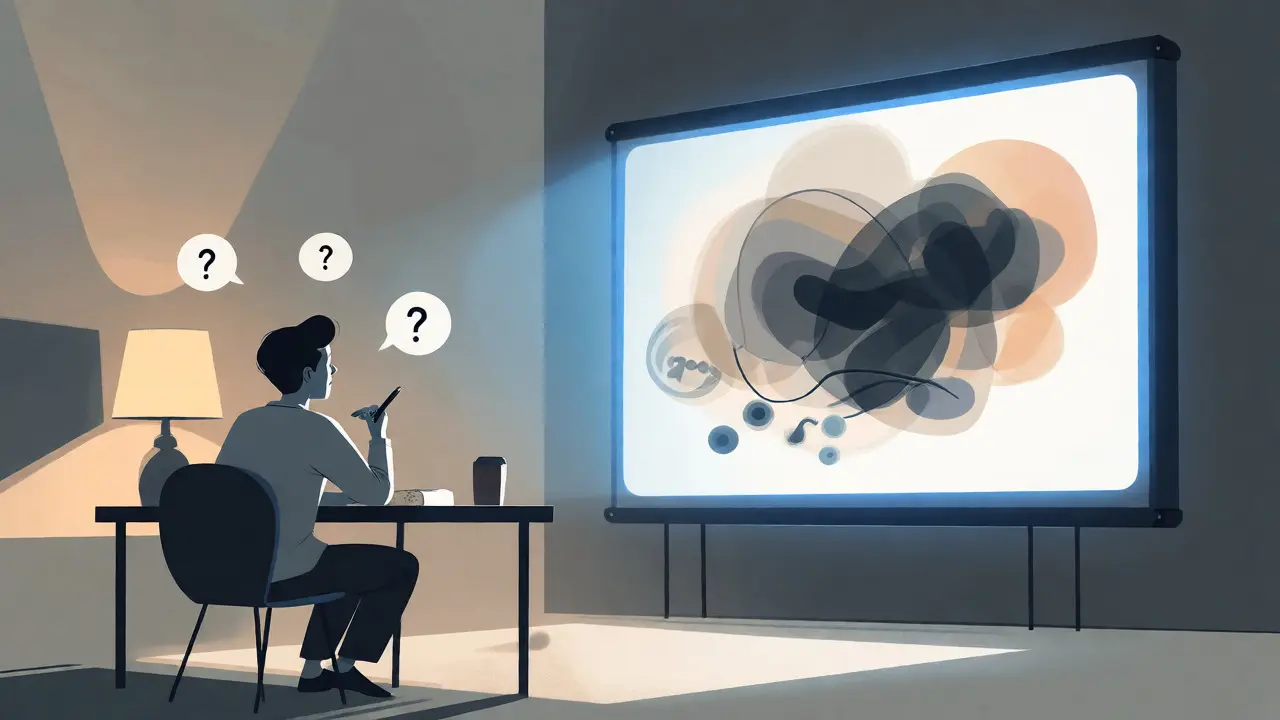
You watch the movie. You feel something. Maybe it’s joy, maybe it’s rage, maybe it’s just that hollow feeling of wasted time. But when you sit down to write about it, your words turn into mush. "The acting was good," you type. "The plot was okay." Sound familiar? That is the death knell for most aspiring film critics. Readers don’t need another summary of the plot; they already saw the trailer. They need a lens. They need a distinct perspective that helps them understand why the movie worked or failed.
Here is the hard truth: anyone can write a review. Very few people build an audience by doing it. The difference isn’t vocabulary size or how many films you’ve seen on Letterboxd. It’s your voice. It’s the specific frequency at which you communicate with your reader. If you want to move from "just another blogger" to someone whose opinion actually shifts conversations, you have to engineer your tone, refine your style, and earn your authority. This isn’t about sounding smart. It’s about being clear enough to be trusted.
Why Your Opinion Needs a Filter
Think about the last five reviews you read. How many felt like they were written by a robot trained on Rotten Tomatoes aggregates? Probably four of them. The internet is drowning in consensus. When everyone agrees a movie is "cinematically ambitious but emotionally cold," saying that adds zero value. Your job isn’t to report the consensus; it’s to challenge it, support it with new evidence, or dismantle it entirely.
This requires a filter. A filter is your bias, made explicit. Are you a formalist who cares more about camera angles than character arcs? Say so. Are you a populist who believes if the audience didn’t laugh, the joke failed? Own it. When you hide your biases behind neutral language, you sound unsure. When you expose them, you give readers a map. They know exactly where you stand before they even finish the first paragraph. This transparency builds trust faster than any credential ever could.
Consider the difference between these two sentences:
- "The cinematography was impressive." (Vague, passive, forgettable)
- "The handheld camera work created a claustrophobic tension that mirrored the protagonist’s anxiety." (Specific, active, insightful)
Defining Your Critical Persona
You don’t need to invent a persona, but you do need to define one. Ask yourself: Who am I writing for? And what kind of critic am I?
There are generally three archetypes in modern criticism, though hybrids exist:
- The Analyst: Focuses on technical execution, editing rhythms, lighting choices, and narrative structure. Think of critics who dissect the color palette of a Wes Anderson film. Their authority comes from deep knowledge of craft.
- The Cultural Contextualizer: Places the film within broader social, political, or historical trends. They might argue that a superhero movie reflects post-pandemic isolation anxieties. Their authority comes from breadth of cultural literacy.
- The Emotional Guide: Prioritizes the visceral experience. Did it make them cry? Did it keep them on the edge of their seat? They validate feelings rather than deconstruct techniques. Their authority comes from relatability and emotional intelligence.
Most successful writers blend two of these. Pauline Kael, for instance, was largely an Emotional Guide with sharp Cultural Contextualizing skills. She didn’t care if you liked the movie; she cared if you felt alive while watching it. Roger Ebert leaned heavily into the Humanist approach-was this film true to human experience? Pick your lane, but know where you’re standing.

Tone: The Difference Between Snark and Insight
Tone is where most beginners crash and burn. There is a seductive trap in modern criticism: snark. It’s easy to mock a bad movie. It feels clever. But snark is cheap currency. If your entire review is a series of jokes about how terrible the dialogue was, you haven’t critiqued the film; you’ve just performed comedy.
Good tone is conversational but rigorous. Imagine you are explaining the movie to a friend over drinks. You wouldn’t say, "The mise-en-scène was suboptimal." You’d say, "The set design felt cluttered, like the director didn’t know where to put the camera." See the shift? Same observation, different delivery.
Here are three tonal pitfalls to avoid:
- Pretentious Jargon: Using terms like "diegetic sound" or "mise-en-abyme" without explaining them. Use them if they clarify, not if they impress. If you use a term, define it in context immediately.
- Performative Outrage: Being angry at a movie because it disagrees with your politics is fine. Being angry because you think you’re smarter than the filmmaker is annoying. Attack the art, not the artist’s intent, unless the intent itself is flawed.
- Apathetic Neutrality: Trying to please everyone results in pleasing no one. If you hated a blockbuster, say it. Explain why. Don’t hedge with "While some may enjoy..." Just own your dislike.
Authority doesn’t come from being right. It comes from being consistent. If you praise slow pacing in one film and criticize it in another, explain the distinction. Was the slowness meditative in one case and boring in the other? Why? That explanation is where your voice lives.
Style Mechanics: Clarity Over Complexity
Once you have a stance and a tone, you need style. Style isn’t about using long words. It’s about rhythm, precision, and structure. Bad style obscures meaning. Good style makes complex ideas feel inevitable.
Start with your opening. Never start with "In the year 2026..." or "Director X returns with..." That is filler. Start with the strongest image or idea from your review. Did the final shot haunt you? Lead with that. Did the third act betray the setup? Hit that note immediately. Hook the reader with a claim, then spend the rest of the piece proving it.
Vary your sentence length. Long sentences create flow and nuance. Short sentences punch. Use short sentences for emphasis. Like this. If every sentence is twenty words long, the reader’s eye glazes over. If every sentence is five words long, it feels choppy. Mix them up. Read your draft aloud. If you run out of breath, cut words. If you stumble, rewrite.
Also, kill your adverbs. "Very scary" is weak. "Terrifying" is strong. "Ran quickly" is lazy. "Sprinted" is vivid. Specific verbs and nouns do the heavy lifting. Adjectives should be rare and precise. If you find yourself stacking adjectives ("beautiful, majestic, stunning scenery"), delete two of them.
Earning Authority Through Evidence
Authority isn’t given; it’s accumulated through proof. You can’t just say a performance was great. You have to show it. Quote a line. Describe a gesture. Reference a specific scene timestamp if necessary. Generalities are the enemy of credibility.
Compare and contrast effectively. Don’t just say "This is better than Movie Y." Explain how. Does it handle the same theme with more subtlety? Does it use a different genre framework to achieve a similar emotional result? Comparisons anchor your argument in shared knowledge.
| Approach | Focus | Strengths | Risks |
|---|---|---|---|
| Technical Analysis | Camera, editing, sound, script structure | Objective, educational, appeals to filmmakers | Can feel dry, misses emotional impact |
| Cultural Commentary | Social themes, historical context, politics | Relevant, engaging, sparks debate | Can become preachy, ignores craft |
| Personal Essay | Reader’s reaction, memory, emotion | Relatable, unique voice, high engagement | Subjective, lacks universal applicability |
Notice how each approach has trade-offs. The best critics know which tool to use for which film. A horror movie might benefit from a Personal Essay approach (did it scare me?), while a historical epic might demand Technical Analysis (is the period detail accurate?). Matching your method to the material shows sophistication.
The Editing Phase: Where Voice Sharpens
Your first draft is never your voice. It’s your raw thought. The magic happens in revision. After you write, step away for a day. Come back and read it as a stranger. Is it clear? Is it boring? Does it sound like you, or does it sound like everyone else?
Cut the first paragraph. Often, we warm up by writing fluff. The real insight usually starts in paragraph two. Delete the throat-clearing. Then, look for repetitive ideas. If you made the point about the bad CGI in the intro, don’t restate it in the conclusion unless you add new information.
Check your transitions. Do paragraphs flow logically? Or did you just jump from topic to topic? Use connective tissue: "However," "Conversely," "More importantly." These aren’t just filler words; they guide the reader’s logic. If a transition feels forced, your argument might be weak there. Fix the logic, not just the word.
Do I need a degree in film studies to be a credible critic?
No. While formal education provides vocabulary and historical context, it does not guarantee good taste or clear writing. Many respected critics learned by watching thousands of films and reading widely. What matters is curiosity and the ability to articulate why a film works. A self-taught critic with a keen eye often beats a credentialed one who writes in jargon.
How do I handle spoilers in my reviews?
It depends on your platform and audience. For general audiences, avoid major plot twists in the main body and place them in a clearly marked section at the end. For analytical essays aimed at cinephiles, spoilers are often assumed. Always signal your spoiler policy early in the article so readers know what to expect.
What is the biggest mistake new film critics make?
Summarizing the plot. Readers can read Wikipedia for that. The biggest mistake is failing to provide a unique perspective or argument. A review should be an essay about an idea sparked by the film, not a synopsis with adjectives attached. If you remove the plot details, does your argument still stand? If not, you’re summarizing, not criticizing.
How important is consistency in publishing schedule?
Consistency builds habit in readers. However, quality outweighs quantity. Publishing one thoughtful, well-edited review per week is better than rushing out three mediocre ones daily. Algorithms favor regularity, but human readers favor reliability and depth. Find a pace you can sustain without burning out.
Should I rate films with stars or numbers?
Ratings are reductive. They flatten nuanced opinions into a single data point. If you must use them, treat them as secondary to the text. Some critics skip ratings entirely to force readers to engage with the prose. Others use them for quick scanning. Choose based on your platform’s norms, but remember: the rating is the headline, the review is the story.