14
Ideological Criticism: How Power Structures Shape Cinema
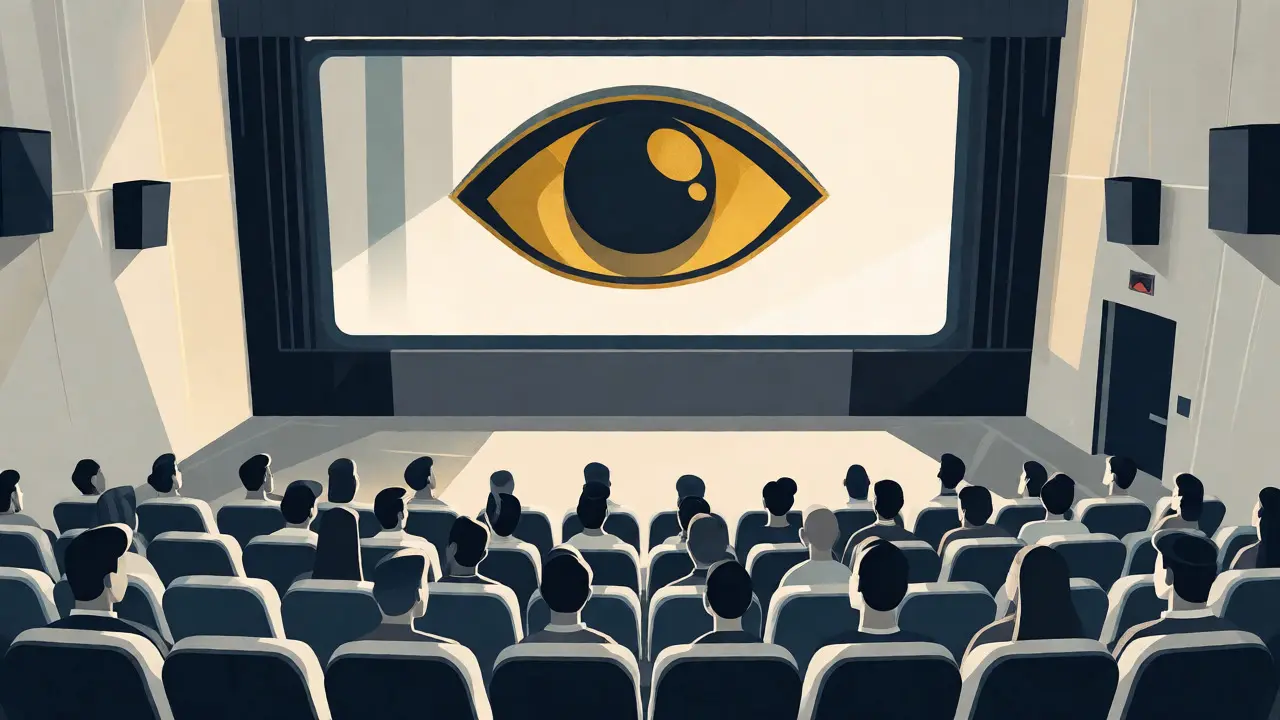
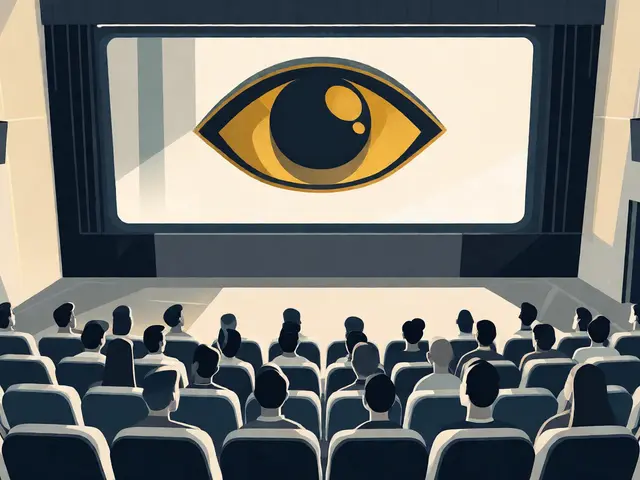
You watch a movie. You laugh at the jokes, cry during the sad parts, and maybe buy popcorn because the smell is irresistible. But have you ever stopped to think about why that specific story was told in that specific way? Ideological criticism isn't just academic jargon for people who own tweed jackets. It’s a lens that reveals how films reinforce or challenge the hidden rules of our society. It asks a simple but powerful question: Who benefits from this narrative?
When we talk about power structures in cinema, we aren’t just talking about villains with big guns. We’re talking about the invisible frameworks that dictate what we see as "normal," "natural," or "inevitable." From the way a camera looks at a character to who gets the final line in a script, every choice carries ideological weight. This guide breaks down how these forces work, why they matter, and how you can spot them in your next movie night.
What Is Ideological Criticism in Film?
Ideological criticism is a method of analyzing media texts to uncover the underlying belief systems, values, and assumptions that shape their content. Unlike formalist criticism, which focuses on aesthetics like lighting and editing, ideological criticism digs into the social and political meanings embedded in the text. It operates on the premise that no art exists in a vacuum; every film reflects the cultural moment it was made in.
This approach draws heavily from Marxist theory, particularly the concept of hegemony, developed by Italian philosopher Antonio Gramsci. Hegemony describes how ruling classes maintain power not just through force, but by shaping common sense. In cinema, this means movies often present dominant ideologies-like capitalism, patriarchy, or nationalism-as the only logical way things could be. When you realize that a "happy ending" often requires a return to traditional family structures, you’re engaging in ideological criticism.
The Mechanics of Cinematic Power
How does a director sneak ideology past your defenses? They use specific cinematic techniques that feel natural but are actually constructed. Let’s look at three key mechanisms.
- The Gaze: Originally theorized by Laura Mulvey, the "male gaze" suggests that mainstream cinema positions the viewer to look at women as objects of desire rather than active subjects. Even if a female character is driving the plot, the camera might linger on her body instead of her face, subtly reinforcing patriarchal norms.
- Narrative Closure: Most Hollywood films end with resolution. The bad guy dies, the couple kisses, the problem is solved. This structure reinforces the idea that individual action can fix systemic problems. If a hero saves the day alone, the implication is that society doesn’t need structural change, just better individuals.
- Casting and Representation: Who gets to be the hero? For decades, white men dominated leading roles, while minorities were relegated to stereotypes or sidekicks. This wasn’t accidental; it reflected and reinforced real-world power dynamics. When a studio finally casts a diverse ensemble, it’s not just a marketing move-it’s an ideological shift in whose stories are deemed universal.
Case Study: Analyzing Power in Blockbusters
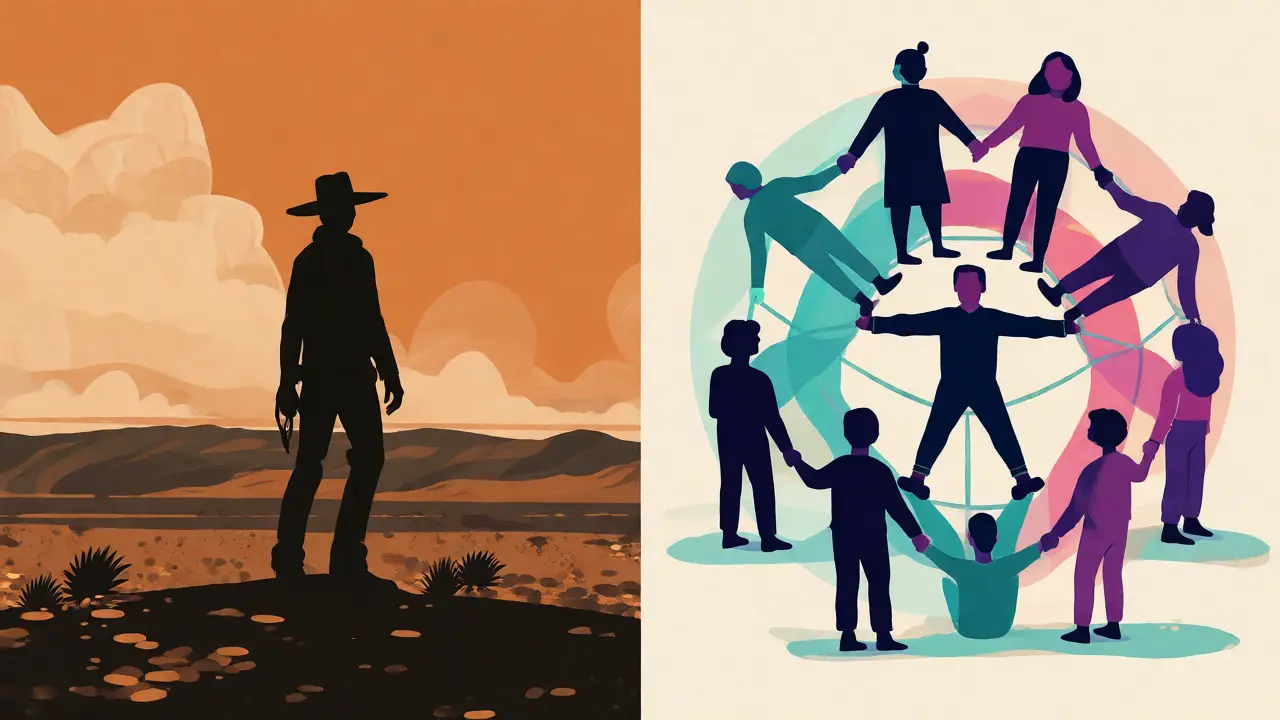
To make this concrete, let’s look at two contrasting examples. First, consider the classic Western genre. Films like Stagecoach (1939) traditionally portrayed the American frontier as empty land waiting for civilization. Indigenous peoples were often depicted as obstacles to progress. This narrative justified colonial expansion by framing it as inevitable and beneficial. The power structure here is clear: white settlers are agents of history; everyone else is scenery.
Now compare that to Dances with Wolves (1990) or more recently, Killing of the Flower Moon (2023). These films disrupt the traditional myth. They center Indigenous perspectives and highlight the violence inherent in colonization. However, even these progressive films can fall into traps. If the story still centers a white protagonist discovering the "truth," it may inadvertently suggest that Indigenous experiences need white validation to be understood. That’s a subtle ideological contradiction worth unpacking.
| Feature | Traditional Narrative | Critical/Ideological Narrative |
|---|---|---|
| Protagonist | Usually white, male, heterosexual | Diverse backgrounds, complex identities |
| Conflict Source | Individual villain or external threat | Systemic issues, societal structures |
| Resolution | Restoration of status quo | Ambiguity, call for change, or tragic realization |
| Camera Work | Objectifying, observational | Subjective, empathetic, participatory |
| Implicit Message | The current order is natural | The current order is constructed and changeable |
Hegemony and Counter-Hegemony
Not all films uphold the status quo. Some actively push back. This is where the concept of counter-hegemony comes in. Independent films, foreign cinema, and certain genres like horror often serve as spaces where dominant ideologies are questioned. Horror, for instance, has a long history of using monsters to represent societal anxieties. Get Out (2017) used the horror genre to critique liberal racism, showing how "nice" white people can still exert oppressive power. By making the audience uncomfortable, the film disrupted the comfortable narrative of post-racial America.
However, counter-hegemonic films don’t always succeed. Sometimes, the industry absorbs rebellion. A punk rock movie might sell t-shirts featuring its anti-capitalist slogan. This process, known as commodification, neutralizes the radical potential of the message. When you buy a ticket to a blockbuster that critiques corporate greed, you’re participating in the very system the film criticizes. Recognizing this irony is part of becoming a sophisticated viewer.
Practical Steps for Viewing with Intent
You don’t need a PhD to start applying ideological criticism. Here’s a simple checklist for your next viewing session:
- Identify the Norm: What behavior is presented as normal? Is it okay for the hero to break laws? Is romance the ultimate goal?
- Spot the Exceptions: Who is different? How are they treated? Are they funny, scary, or pitiable?
- Analyze the Ending: Does the world change, or do characters just adapt to it? If nothing changes structurally, the film likely supports the status quo.
- Check the Credits: Who wrote it? Who directed it? Who financed it? Demographics of the crew often influence the perspective of the story.
- Ask "Who Pays?": In a capitalist system, funding dictates content. Big studios take fewer risks. Indie films might offer fresher perspectives because they answer to smaller investors or grants.

Beyond the Screen: The Audience Role
It’s tempting to think that ideology is injected directly into passive viewers. But audiences aren’t blank slates. Reception theory suggests that how we interpret a film depends on our own background. A working-class viewer might read a film about luxury differently than a wealthy one. We engage in negotiated readings, accepting some messages while rejecting others. You might love the cinematography of a propaganda film while rolling your eyes at its politics. That tension between aesthetic pleasure and ideological critique is where critical thinking happens.
Also, remember that context matters. A film released in 1950 had different ideological constraints than one released today. Censorship boards, market expectations, and cultural taboos shaped what could be said. When reviewing older films, try to separate your modern sensibilities from the historical context. Was the depiction of race in a 1940s film progressive for its time, or did it reinforce harmful stereotypes that persist today?
Frequently Asked Questions
Is ideological criticism subjective?
While interpretation involves personal perspective, ideological criticism relies on evidence within the text. You point to specific scenes, dialogue, or visual choices that support your argument. It’s not just "I felt this was sexist," but "The camera angle objectifies the character, reinforcing a patriarchal view." Consistency and textual evidence make the analysis robust.
Can a film be both entertaining and ideologically critical?
Absolutely. Many great films balance mass appeal with subversive messages. Parasite (2019) is a thriller that entertains while critiquing class disparity. The key is whether the entertainment serves the critique or distracts from it. Often, the most effective ideological films wrap their message in compelling storytelling so the audience engages without feeling lectured.
How does streaming affect ideological criticism?
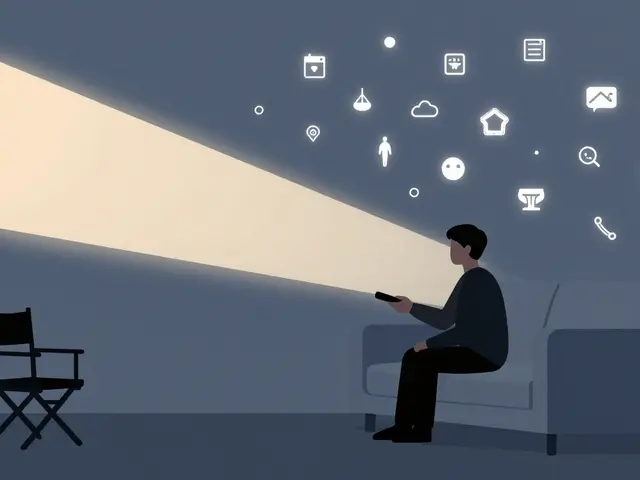
Streaming platforms use algorithms that can create echo chambers, potentially limiting exposure to diverse viewpoints. However, they also allow niche films with strong ideological voices to find global audiences faster than traditional distribution allowed. Critics now must consider not just the film’s content but the platform’s role in curating and promoting it, which adds another layer of ideological influence.
What is the difference between ideology and politics in film?
Politics refers to explicit government policies or partisan views. Ideology is broader-it’s the underlying worldview that shapes how we understand reality. A film can be politically neutral (no mention of elections) but ideologically charged (reinforcing gender roles or consumerism). Ideological criticism looks at these deeper, often unspoken assumptions.
Do documentaries escape ideological bias?
No. Documentaries are constructed narratives. The choice of interviewees, music, editing pace, and even what footage is left out all reflect the filmmaker’s perspective. A documentary about climate change will frame the issue differently depending on whether it focuses on economic impact or environmental justice. All representation is selective, and selection is ideological.